The Ward Valley Nuclear Waste Dump That Never Was

Last weekend I attended the 24th annual commemoration ceremonies of the successful anti-nuclear waste dump campaign in the Mojave Desert’s Ward Valley. This was my fourth time in attendance, and it was beautiful as always. When UC Press asked me to write a blog post linked to my forthcoming book this week, I jumped at the chance to write about Ward Valley:

Today, there is no nuclear waste dump in Ward Valley. This beautiful stretch of California’s Mojave Desert, about 25 miles west of the Colorado River, is instead home to plants, animals, and much of the culture and spirituality of the Fort Mojave Indian Tribe and other tribes of the Southern Colorado River, including the Chemehuevi, the Colorado River Indian Tribes (CRIT), the Cocopah and the Quechan. Yet at one point, this land had another likely future — as the location for a shallow, unlined trench to store nuclear waste…

To read the rest, head over to the UC Press blog.

Group photo at the annual Ward Valley commemoration ceremony. February 24, 2018.

ASA presentation: Wikipedia and Black Feminist Thought

Last week I wrote a blog post for ASU’s Center for Gender Equity in Science and Technology (CGEST). It previews the virtual presentation I will be giving with my (former Howard University student) coauthors Sophia Hussein and Lundyn Davis later today at the American Sociological Association’s annual meeting (coauthor Mariam Trent will not be joining us). CGEST focuses on women of color in science and technology, so it’s a great place to preview our presentation. Our talk is based on a paper in progress tentatively titled: “Wikipedia and the Outsider Within: Black Feminism and Racialized, Gendered Knowledge Construction Online.” The paper draws on our experience contributing to Wikipedia as part of a 2018 class on the Sociology of Food and Agriculture at Howard University. Check out the blog post, and come on by our virtual talk at 11:30 EDT if you are registered for the conference!

See also this other blog post where I describe the class assignment of contributing to Wikipedia.

New photo exhibit – HOUSING!

I have three photographs on display in a new, street-side photo exhibit on social justice issues related to housing that is now showing in Oakland, CA. I mean it when I say the exhibit is on the street – the brochure advertising the exhibit lists the location as, “Fence at 1229 23rd Ave.” The exhibit is put on by the following activist oriented groups: Class Conscious Photographers, A Working Lens Exhibitors, and the Eastside Arts Alliance. The opening reception took place on July 23rd, on the sidewalk.

One of my images speaks to redevelopment, gentrification and eviction in Washington DC. I took it as part of a larger project to document redevelopment in the neighborhoods adjacent to Buzzards Point. Two others depict historical and contemporary environmental threats to human health in San Joaquin Valley homes, especially in the form of contaminated drinking water. I took them as part of a larger project to document environmental justice activism in California (see here, here and here).

Drop by to check out the exhibit if you can. I’m very proud to be in the company of a group of excellent photographers sharing work on an important issue in this very public forum.

Photo by G. Sharat Lin

My book is coming out soon!

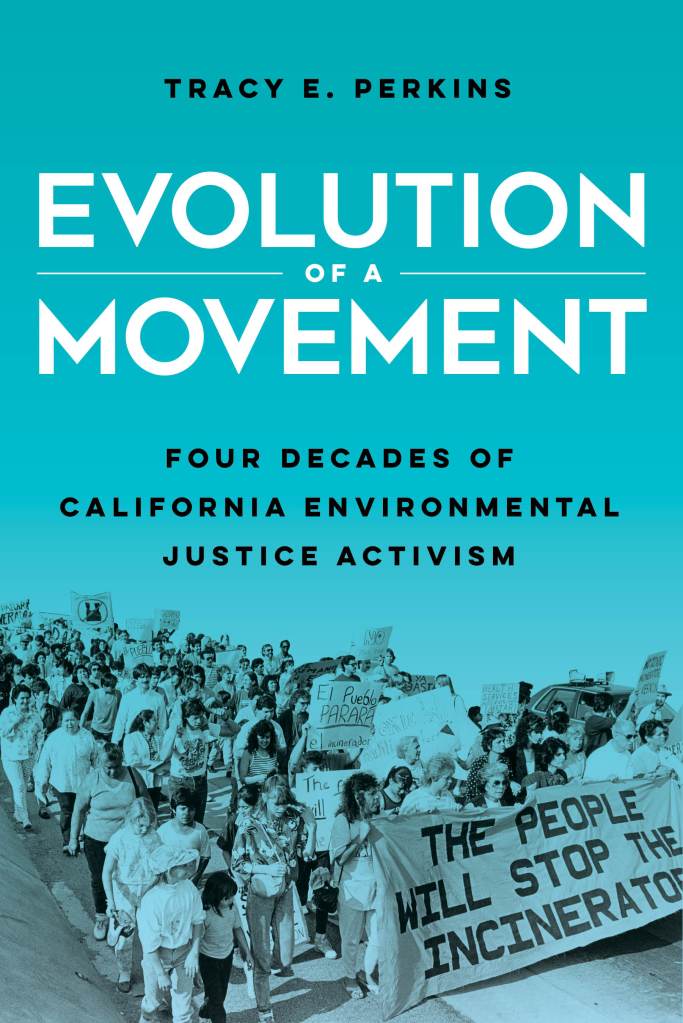
The book that I’ve been working on in one form or another for a long, long time is coming out soon! Evolution of a Movement: Four Decades of California Environmental Justice Activism will be published by the University of California Press in January. Here’s the blurb that will go on the back:

Despite living in one of the country’s most environmentally progressive states, California environmental justice activists have spent decades fighting for clean air to breathe, clean water to drink, and safe, healthy communities in which to live and work. Evolution of a Movement tells their story – from the often-raucous protests of the 1980s and 1990s to activists’ growing presence inside the halls of the state capitol in the 2000s and 2010s. Perkins offers a new lens for understanding environmental justice activism in California, tracing how shifting political contexts combined with activists’ own efforts to institutionalize their work within nonprofits and state structures.

Drawing on case studies and 125 interviews with activists from Sacramento to the California-Mexico border, Perkins explores the successes and failures of the environmental justice movement in California. She shows why some activists have moved away from the disruptive “outsider” political tactics common in the movement’s early days to embrace traditional political channels of policy advocacy, electoral politics and working from within the state’s political system to enact change. But while some see these changes as a sign of the growing sophistication of the environmental justice movement, others critique their potential to blunt grassroots power. At a time when environmental justice scholars and activists face pressing questions about the best route for enacting meaningful change, this book provides insight into the strengths and limitations of social movement institutionalization.

The book is available for pre-order now, and could be assigned for mid-semester or end-of-semester reading in the spring of 2022. See the beautiful cover below!

New publication on California environmental justice movement history

I had a new publication come out this week on a subject close to my heart, California environmental justice history. The article is titled “The multiple people of color origins of the US environmental justice movement: social movement spillover and regional racial projects in California.” It explores the origins of the national US environmental justice movement through California’s early activism. The article showcases the many, regionally specific strands of activism among racialized groups that informed the California environmental justice movement. It presents social movement geneologies of Black, Indigenous, Asian American and Latinx activists in California, with particular attention to the role of the farmworkers’ movement through the United Farmworkers of America (UFW).

Like many academic articles, this one was a long time in coming. The idea for it started when I was doing research on environmental justice activism in California’s San Joaquin Valley during my time as a master’s student at UC Davis (2006-2008). I saw how present the farmworkers’ movement was in environmental justice gatherings, at which people often sang UFW protest songs, carried UFW flags, referenced UFW leaders Cesar Chavez and Dolores Huerta, and drew on the skills of the many people in the region who had been part of the farmworkers’ movement in its heyday. These experiences informed my master’s thesis and subsequent article on what leads women into environmental justice activism, “Women’s Pathways Into Activism: Rethinking the Women’s Environmental Justice Narrative in California’s San Joaquin Valley.” They also later led to an essay titled “The Environmental Justice Legacy of the United Farm Workers of America: Stories from the Birthplace of Industrial Agriculture.” I expanded on these themes in the first chapter of my book manuscript after graduating with my PhD. However, I eventually cut the chapter from the book manuscript, as it was making a different argument than the rest of the book, which is on the political evolution of the California environmental justice movement (forthcoming with UC Press in February of 2021). Also, as the chapter kept getting longer and longer, it was clear it just wouldn’t fit. The discarded content found new life at the “Bridging the Gap: Race and the Environment” mini-conference preceding the American Sociological Association’s (ASA) 2018 Annual Meeting in Philadelphia. The mini conference was organized by the Committee on Racial Equity within the ASA section on Environmental Sociology as part of broader efforts to address racism within the section. The article has now been published in “online first” format prior to the completion of a special issue stemming from the mini-conference. Thank you to everyone who helped put on the conference and who are now shepherding the special issue through to completion, especially my assigned guest-editor, Jennifer Carrera.

Thank you also to all the environmental justice activists who have let me interview them over the years. Getting to hear about your lives is one of the highlights of my job. This article names some environmental justice activists, but others remain anonymous. This is because some of the interview excerpts already exist in the public sphere with their names attached (anonymous interviews conducted by myself for which I subsequently got permission to use real names, or interview excerpts published by others), while others do not. California activists who are named include: Maricela Mares Alatorre, Robin Cannon, Pam Tau Lee, Marta Salinas, and Lupe Martinez. A paper this short can’t provide a comprehensive history of California environmental justice history and all of the activists who were part of it. Rather, I use a few individual activists’ experiences to present themes relevant to the broader movement. It’s a fascinating history – I’m thinking about making it the subject of my next book, where I can give it the fuller treatment that it deserves.

The article is behind a paywall, but free downloads are being provided by the publisher to the first 50 people who access it at this link.

The multiple people of color origins of the US environmental justice movement: social movement spillover and regional racial projects in California

Abstract

This paper contributes to scholarship on the origins of the US environmental justice movement (EJM) through exploration of the early EJM in California. The national EJM is often seen as having grown out of the intersection of environmentalism and the Black civil rights movement in the 1982 protests in Warren County, North Carolina. This paper adds weight to alternate narratives that depict the EJM as drawing on a variety of racialized social movement infrastructures that vary regionally. These infrastructures, as they were built in California, are analyzed as regional racial projects responding to histories of white supremacy that are connected through social movement spillover. This conceptual framework illuminates the place-based ways in which racial oppression and racial justice responses create social movement infrastructure that persists across multiple movement formations, both across contemporary groups and through time. The paper draws on data gathered from existing case studies and oral histories, in-depth interviews, participant observation, and archival documents to offer a capacious view of the EJM’s origins.

Gustavo Aguirre was first involved in the farmworkers’ movement through the United Farmworkers of America (UFW), and later joined the environmental justice movement. Here he shows a letter from UFW leader Cesar Chavez. The flags of the UFW and CRPE, an environmental justice organization, hang above his desk. Photo by Tracy Perkins, 2010.

New DC-based publications: part 1

Publications from the work I initiated in Washington DC during my time at Howard University have just started coming out, even though I’ve now moved to Arizona for a new job at Arizona State University.

When I moved to DC in the summer of 2015, I started to nose around to get a sense of what kind of environmental justice work was happening in the area. I met Parisa Norouzi of Empower DC, Katrina Lashley at the Smithsonian Anacostia Community Museum, Lesley Fields at Sierra Club, Mike Ewall at Energy Justice Network, Michael Dorsey, who was then at the National Academy of Science, Rhonda Hamilton from Syphax Gardens near DC’s Buzzard Point, Fred Tutman of Patuxent Riverkeeper, Kamita Grey in Brandywine, and more. It was a pleasure to meet a whole new host of people doing important work locally and nationally. Many meetings and a few protests later, some potential synergies became clear between my role as an educator, Katrina’s work preserving the stories of people along the Anacostia River with the Anacostia Museum, Rhonda’s activism on the redevelopment of Buzzard Point, and Empower DC’s efforts to support affordable housing and people’s health, both of which were threatened by the Buzzard Point redevelopment.

During my second year in DC, we built a plan around our overlapping interests in which the students in my Environmental Inequality class would conduct oral-history interviews with Rhonda’s neighbors to document their history in the near-Buzzard Point neighborhoods, interaction with the Anacostia River, and current experiences redevelopment. Buzzard Point was undergoing a transformation from an industrial site to a mixed residential and commercial space, and the nearby residents were experiencing the resulting impacts: dust from the construction, rats that relocated from the construction site into their homes, and potential displacement from their homes.

I was pleased with how the project worked out in terms of what the students got out of it. They were introduced to research skills: the first year of the project, students practiced and conducted oral history interviews, and during the second year the next batch of students coded the interviews for cross-cutting themes. We also went on field trips to the Anacostia River and to Southwest DC. Many reported that talking to people struggling with the real-world problems we were reading about in class added a new level of gravity to their understanding of environmental inequality. The archival objectives of the project have also been largely met. Transcripts of the first round of interviews we conducted with Rhonda’s neighbors in Syphax Gardens are held by the Smithsonian Anacostia Community Museum, while a second round with residents of broader Southwest DC conducted by graduate student Jesse DiValli (formerly Card) are available at the DC Public Library. However, as often happens, we can’t say that any particular improvement in the material lives of the people we interviewed came out of the work.

Still, we are hopeful that the project was valuable not only for the students and myself, but will also in some small way help raise the visibility of the challenges faced by residents impacted by the redevelopment of Buzzard Point.

Here is the first piece to come out of that work, a profile of the indomitable Rhonda Hamilton, long-time resident and elected representative of her neighborhood in the city’s Advisory Neighborhood Commission:

Rhonda Hamilton: Community Leader and Public Housing Advocate in Southwest D.C.
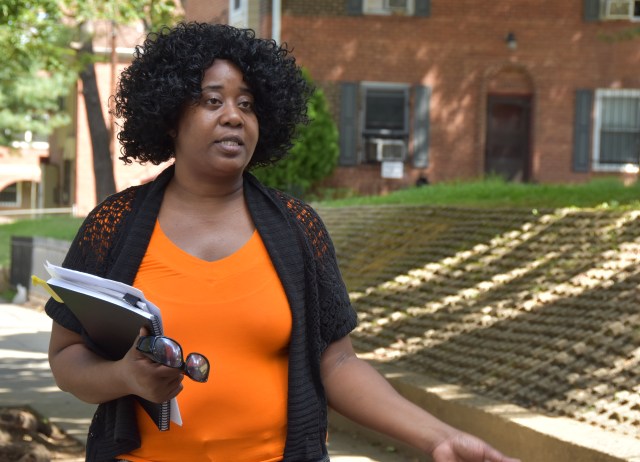
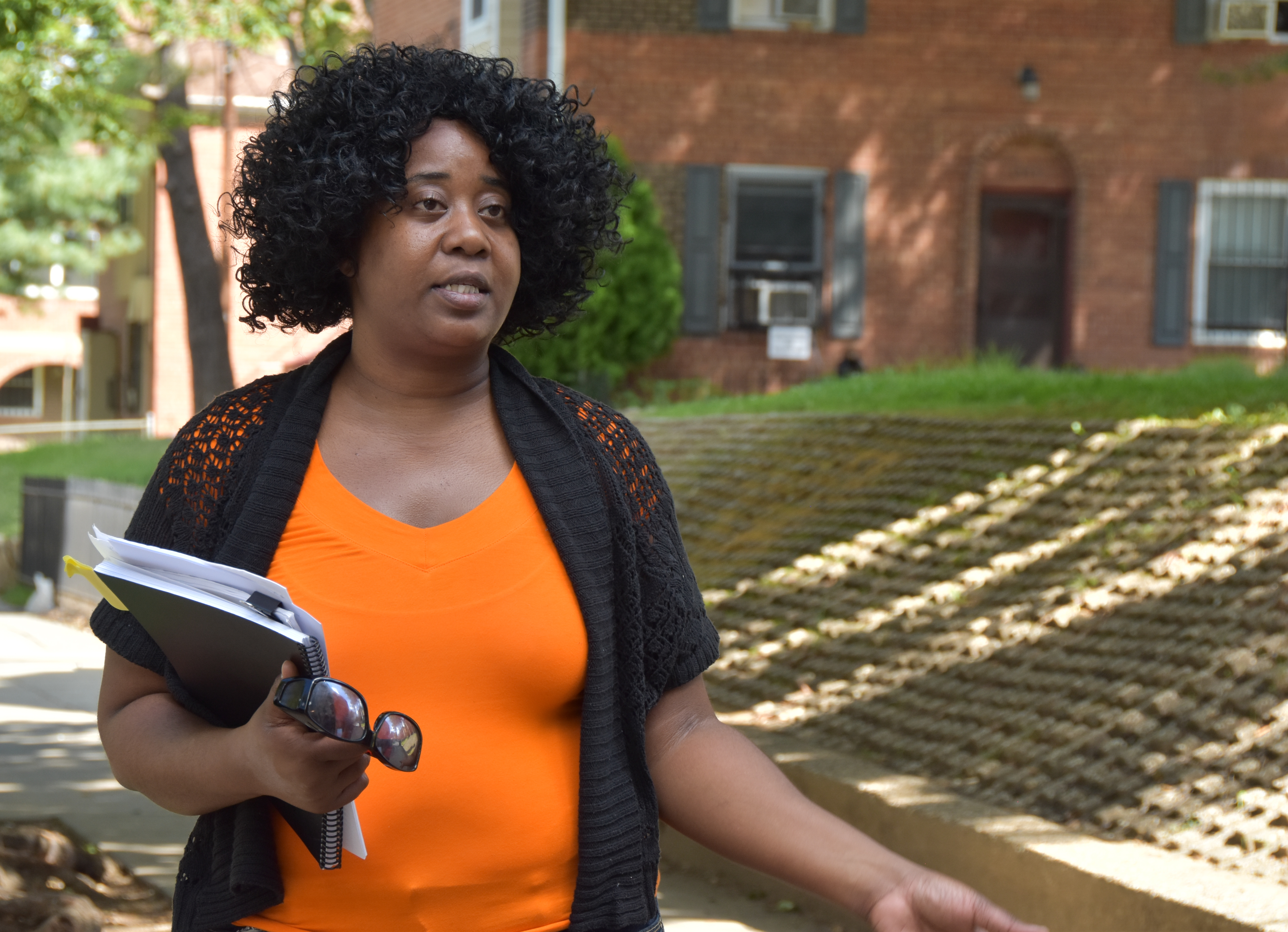
Rhonda Hamilton, talking with my students in Southwest Washington DC. September 9, 2017.


Two other prior blog posts about the class project:

New job at Arizona State University

This week I began a new position as an Assistant Professor in the School for Social Transformation at Arizona State University. I come to this position after working for five years as an Assistant Professor in the Department of Sociology and Criminology at Howard University in Washington DC.

My time at Howard went quickly. When I drove cross-country to DC with my luggage and my cat in May of 2015, I was excited about many things: having a job with benefits, a new role as a faculty member after many years as a graduate student, new opportunities for learning at Historically Black University, and starting a new life in Washington DC. The transition from Santa Cruz to Washington DC went smoothly. Even though I’d never lived anywhere more than an hour away from the San Francisco Bay area for more than five months, life in Washington DC wasn’t hard to adapt to. People are people, after all. I (mostly) got used to the fact that it rains in the summer, gloried in the fireflies, tried to adopt the more formal dress-code and mode of address (“hello, Dr. so-and-so”), and then settled into a middle ground between Santa Cruz and DC professional standards. I met wonderful new friends and quirky, smart colleagues, got to know dedicated students, and developed what I believe will be a lasting interest in Black Studies.

I drove back across the country to Arizona this spring a little older and a little wiser. A few things were different this time. My cat and I were accompanied by my partner, I was six months pregnant, and we drove a rented RV to minimize our exposure to the coronavirus pandemic that had exploded in the US a short time before. The pandemic restrictions got looser and looser as we traveled west from DC. When we arrived in Arizona hardly anyone was wearing masks, and the host of our RV campground referred to the virus making scare quotes around the term with her hands as she talked (“virus”). Soon after, George Floyd was murdered. Protests across the nation, including here in Pheonix, have brought longstanding anti-black police violence more forcefully into the national eye. The resulting conversations led to working with my partner Vernon Morris, my tech mentor Allen Gunn and several of Vernon’s colleagues on a public letter to address systemic racism in the academy. It was one of many such letters, the results of which are still unspooling.

I miss my friends at Howard and in Washington DC, but I’m looking forward to new adventures here in Arizona. My position in the School for Social Transformation promises many new and interesting colleagues, even if it will be a while before I meet them anywhere other than on Zoom. The coronavirus pandemic, soaring temperatures in Tempe and a newborn at home mean I have rarely left the house since arriving. But the weather will cool off eventually, and I look forward to exploring the desert and the mountains that surround Phoenix when that happens. I’m grateful to have stable employment and health care in these troubled times – so far, ASU has not announced any layoffs or furloughs.

Going forward, please contact me at my new ASU e-mail address.

First siting of saguaro cacti as we drive West, as seen through a very dirty windshield.

Nora McDowell speaking about women’s environmental leadership at the Smithsonian Castle

This spring I was honored to host Nora McDowell as the inaugural speaker at the Smithsonian Anacostia Community Museum’s first “Dinner and Discussion” series, which is part of their Women’s Environmental Leadership programming.

I met Nora through my research on California environmental justice activism, and in particular through a project to document the 1990s-era fight against the construction of a nuclear waste landfill in the Mojave Desert’s Ward Valley, on the traditional lands of the Mojave people. Nora grew up in Needles, California and currently lives on the Fort Mojave reservation in Mojave Valley, Arizona. She was elected as chairperson of the Fort Mojave Tribe at age 24, a position she held from 1985 to 2007. During that time she helped lead a decade-long campaign to block the construction of a nuclear waste landfill in the Mojave Desert’s Ward Valley nearby. Additionally, she was part of forming the Ten Tribes partnership to represent Colorado River tribal water rights to the Colorado River Water Users Authority. She also started the water and sewer company as well as the electrical company owned and operated by the Fort Mojave Tribe.

Now, Nora is the Project Manager of the Topock remediation project at the AhaMakav Cultural Society of the Fort Mojave Tribe. Topock is the name of the place that is the passageway to the spirit world for the Mojave people. PG&E built a natural gas compression station there in 1950, which leaked chromium six into the groundwater for over 40 years. Nora focuses much of her time on the cleanup of this site, and in particular trying to minimize the impact on the remediation process on Mojave landforms and artifacts. She also serves in an advisory capacity in a number of other settings, including on the Tribal Advisory Committee to the California EPA. She also serves on the Colorado River Basin-wide tribal advisory board, which advises a consortium of federal agencies, tribes and NGOs active on the Colorado River. She is also on the Fort Mojave telecommunications board and is a founding board member of WEWIN – Women Empowering Women for Indian Nations.

The Anacostia Museum hosted the evening in the Smithsonian Castle on the National Mall. It was an intimate event. I asked Nora questions about her leadership experiences in front of 40 or so attendees, and then we all discussed the themes she raised and shared a meal together. You can find the audio recording below, as well as photos taken by Susana Raab. Audio, photographs and captions are provided by the Smithsonian Anacostia Community Museum.

The next “Dinner and Discussion” event will take place in September, this time featuring Dr. Adrienne Hollis, hosted by Vernice Miller-Travis.


Tracy Perkins and Nora McDowell Thumbnail

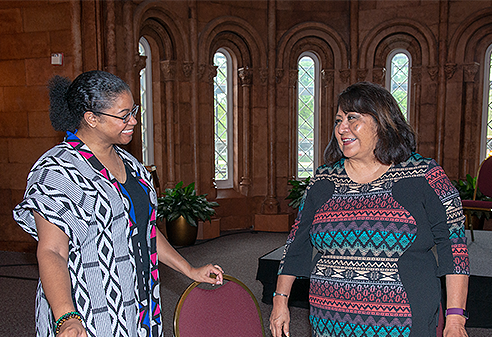
Dr. Tracy Perkins (left) and Ms. Nora McDowell (right).

Ms. Katrina Lashley Introduces Special Guests Thumbnail

Ms. Katrina Lashley introduces Dr. Tracy Perkins and Ms. Nora McDowell.

Nora McDowell and Alexis Dickerson Thumbnail

Ms. Alexis Dickerson and Ms. Nora McDowell.

Tracy, Nora, Lisa, Katrina

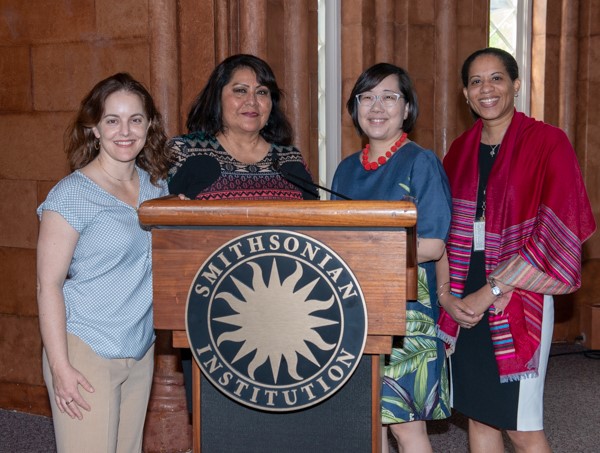
Dr. Tracy Perkins, Ms. Nora McDowell, Ms. Lisa Sasaki, and Ms. Katrina Lashley.

Dr. Elgloria Harrison Thumbnail

Dr. Elgloria Harrison thanks special guests.


New(ish) journal article on public engagement in the environmental humanities

2018 zoomed by without me stopping to share a co-authored journal article to which I contributed on public engagement in the environmental humanities. Without further ado, here it is!

The article describes our varied experiences doing publically engaged work in the environmental humanities and nearby disciplines. My contribution focuses on the practicalities of producing scholarship on independently built, multi-media websites. I enjoyed the opportunity to give a shout-out to my tech-mentor Allen Gun and the other good people at Aspiration.

The article takes a question and answer format in which Julie Sze poses questions and the rest of us answer them. We wrote the first draft together in one sitting (via Skype’s chat feature, if I remember correctly). Basically, we all logged on remotely, Julie wrote questions, and we all typed in our answers simultaneously. Sometimes we would see each other’s responses and then respond to them in our responses as well. At the end of the extended “chat,” Julie pulled the conversation into a word-processing document and that became our first draft. We edited to flesh out ideas from there. One drawback is that because we were writing simultaneously our answers in the finished piece don’t engage with each other as much as they might. Nonetheless, it was a fun way to quickly get a lot of content down to work from. I’ve continued to experiment with simultaneous writing since. This semester I am working on a co-authored piece with three Howard undergraduates who took my Sociology of Food and Agriculture class last semester. We are regularly meeting to have co-writing sessions in which we simultaneously contribute to our draft on Google Docs. We first built a general outline and then each selected sub-sections to work on. So far, it has been working well.

Enjoy the article!

Teaching students to contribute to Wikipedia

This week I crossed the threshold in which summer no longer seems to stretch out endlessly before me and I start to think about updating my fall classes. I’ll be teaching two, a graduate seminar on the Sociology of Environmental Health, and an upper-division undergraduate class on the Sociology of Food and Agriculture. Last year was my first time teaching the latter class. I have a few tweaks in mind for the readings compared to last year’s syllabus, and I intend to once again center the class project around teaching students how to contribute new content to Wikipedia.

I was pleased with how the Wikipedia assignment worked out last year. The good people at Wiki Education helped me set it up before the class began by walking me through the various assignment modules they have available for instructors to adapt to their own purposes. Some are short assignments that teach students how to add images or citations to existing articles. I chose the most extensive model, in which students spend the entire semester learning how to, 1) evaluate existing Wikipedia content, 2) identify areas that need improvement, 3) read the existing scholarly literature on their chosen topic, 4) summarize that scholarship on Wikipedia, and, 5) respond to other Wikipedia contributors who may alter, delete, or add to their work. These are all transferable skills for traditional academic research, as well as for critical thinking, writing and collaborative work in general.

The assignment also gave us an opportunity to discuss the social construction and politics of knowledge. Wikipedia contributors skew heavily white and male, and this impacts the kinds of content available on the site (articles on military history and video games are apparently particularly well-developed). This leaves a number of topics wide open for student contribution. Accordingly, one of my students created an article on Black Land Loss in the United States. Others added content to existing articles: one student added a description of the Freedom Farm Cooperative that Fannie Lou Hamer organized as part of her civil rights work; another added content on the challenges faced by female farmworkers to the Agriculture in the United States article. Another researched labor conditions on organic farms to add to the article on Organic Food, though her content was ultimately never added to Wikipedia.

This assignment generated more student interest in assessing the credibility of what they read and supporting their own work with strong citations than I have seen in other assignments. Some of this is likely due to the fact that real people all around the world will read their work. Indeed, Wikipedia has become a massive online encyclopedia with global reach. The dashboard available to instructors tracks how many “views” there are of the articles that students create or edit. Less than one year later, the articles to which my students contributed have been viewed 661,000 times (actually, I suspect the number is higher – students sometimes added their contributions without remembering to sign in to their user profile first).

While the Wikipedia protocols for adding content and interacting with other users are a bit cumbersome to learn, I was impressed by how much support Wiki Education offers. Beyond the adaptable assignment modules and training videos they have created, they also assigned my class two staff helpers. The helpers were on hand throughout the semester to answer my questions and to interact directly with my students, they even provided direct feedback on their writing.

This semester I’ll make an effort to streamline my assignment somewhat, which ended up confusing myself and the students with a few too many due dates for editing and revising. Beyond that, I plan to stick with last year’s winning formula. If you teach with Wikipedia, I’d be interested to hear about your experiences. And if you teach Food and Agriculture, send your students over to my students’ work to continue to improve upon it.