Today’s the day!

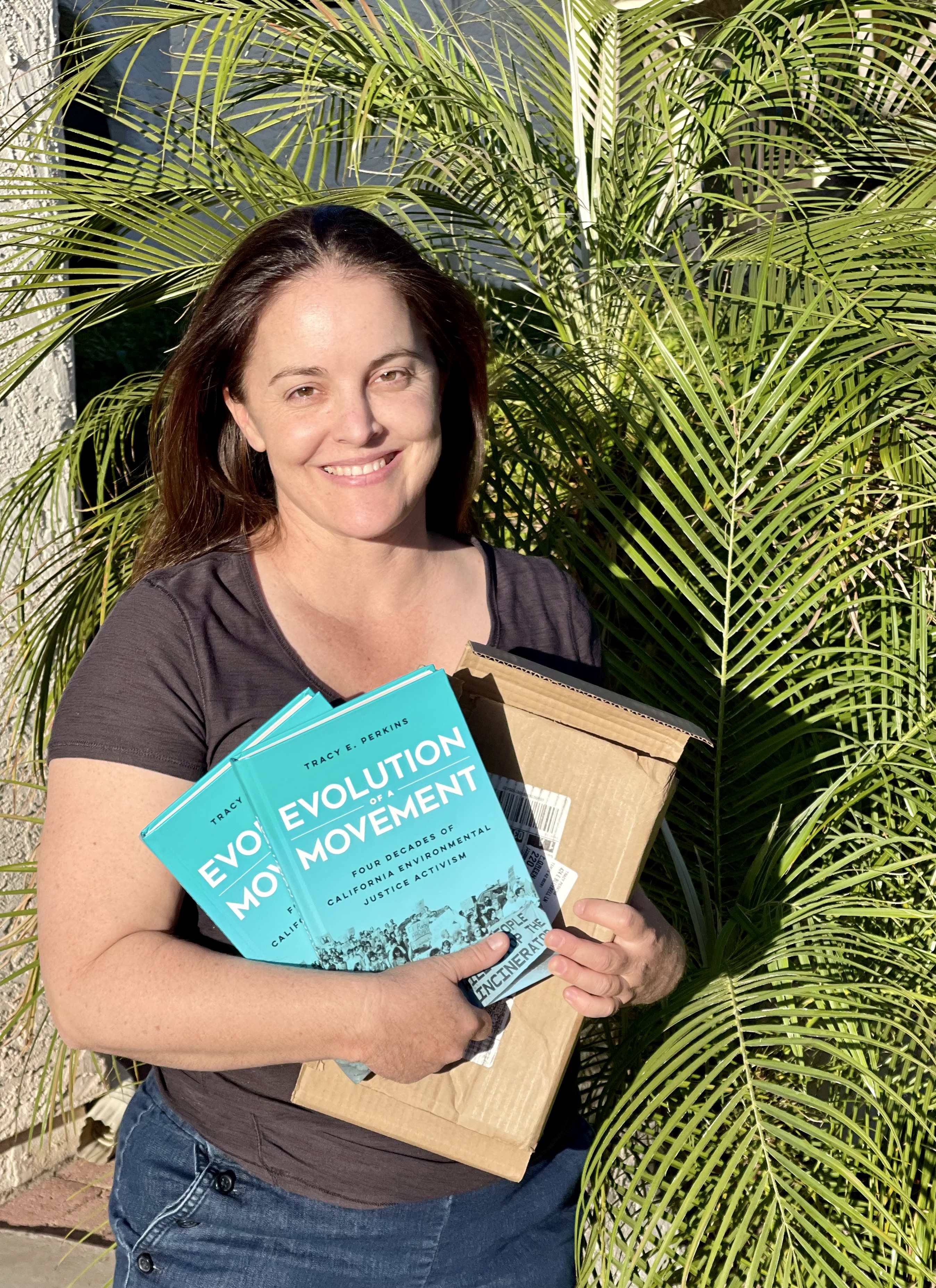
My book is officially published today! I’ve received my hardcover and paperback copies from UC Press, two friends have texted me pictures of their copies, and my mom forwarded me an e-mail saying that her copy has been delayed until April 15th. It’s been a long process to get here, and I look forward to seeing the work move out into the world.

I’ve given a few talks on it so far. Last fall, I presented the chapter on California’s climate policy AB 32 at the new University of California Center for Climate Justice run by Tracey Osborne. In February, I got to discuss the book with Martha Matusoka, Michael Méndez, Danielle Purifoy and Jonathan London at the American Association of Geographers’ annual meeting. Next week, I’ll zoom into Michelle Glowa’s graduate seminar on research methods at the California Institute of Integral Studies. My undergraduate students in Environment and Justice here at Arizona State University are also reading it now. I’ve enjoyed these opportunities and hope to have more of them. I’m even more interested know where the book may travel to without me. I hope I’ll get messages in a bottle from unexpected places with signs that the book has been there.

Perkins, Tracy. 2022. Evolution of a Movement: Four Decades of California Environmental Justice Activism. Oakland, CA: University of California Press.

My book is coming out soon!

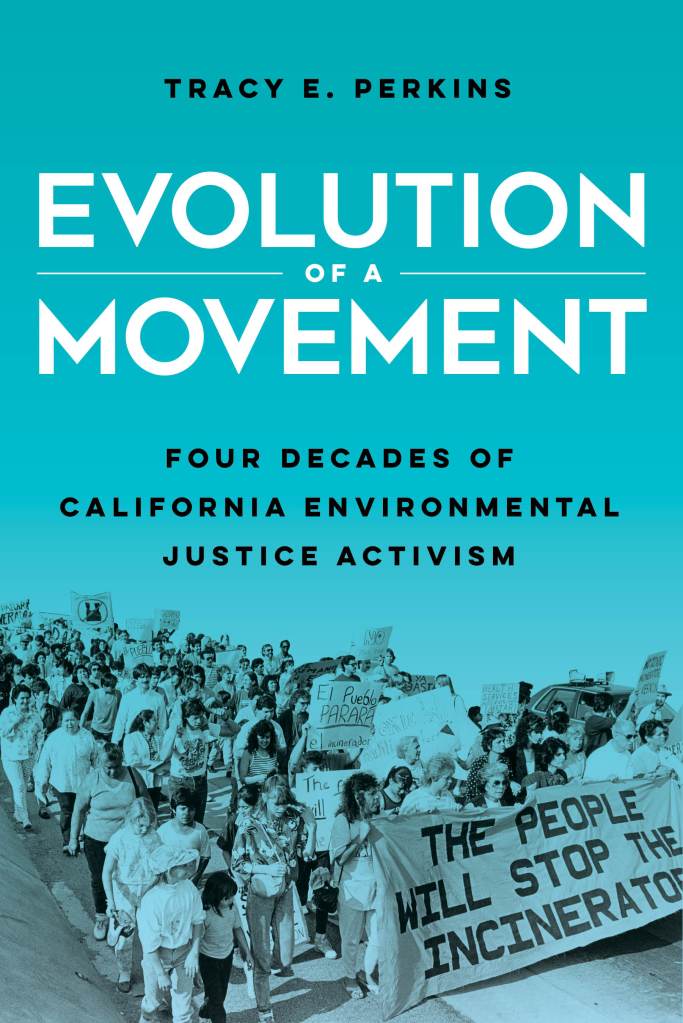
The book that I’ve been working on in one form or another for a long, long time is coming out soon! Evolution of a Movement: Four Decades of California Environmental Justice Activism will be published by the University of California Press in January. Here’s the blurb that will go on the back:

Despite living in one of the country’s most environmentally progressive states, California environmental justice activists have spent decades fighting for clean air to breathe, clean water to drink, and safe, healthy communities in which to live and work. Evolution of a Movement tells their story – from the often-raucous protests of the 1980s and 1990s to activists’ growing presence inside the halls of the state capitol in the 2000s and 2010s. Perkins offers a new lens for understanding environmental justice activism in California, tracing how shifting political contexts combined with activists’ own efforts to institutionalize their work within nonprofits and state structures.

Drawing on case studies and 125 interviews with activists from Sacramento to the California-Mexico border, Perkins explores the successes and failures of the environmental justice movement in California. She shows why some activists have moved away from the disruptive “outsider” political tactics common in the movement’s early days to embrace traditional political channels of policy advocacy, electoral politics and working from within the state’s political system to enact change. But while some see these changes as a sign of the growing sophistication of the environmental justice movement, others critique their potential to blunt grassroots power. At a time when environmental justice scholars and activists face pressing questions about the best route for enacting meaningful change, this book provides insight into the strengths and limitations of social movement institutionalization.

The book is available for pre-order now, and could be assigned for mid-semester or end-of-semester reading in the spring of 2022. See the beautiful cover below!

New DC-based publications: part 1

Publications from the work I initiated in Washington DC during my time at Howard University have just started coming out, even though I’ve now moved to Arizona for a new job at Arizona State University.

When I moved to DC in the summer of 2015, I started to nose around to get a sense of what kind of environmental justice work was happening in the area. I met Parisa Norouzi of Empower DC, Katrina Lashley at the Smithsonian Anacostia Community Museum, Lesley Fields at Sierra Club, Mike Ewall at Energy Justice Network, Michael Dorsey, who was then at the National Academy of Science, Rhonda Hamilton from Syphax Gardens near DC’s Buzzard Point, Fred Tutman of Patuxent Riverkeeper, Kamita Grey in Brandywine, and more. It was a pleasure to meet a whole new host of people doing important work locally and nationally. Many meetings and a few protests later, some potential synergies became clear between my role as an educator, Katrina’s work preserving the stories of people along the Anacostia River with the Anacostia Museum, Rhonda’s activism on the redevelopment of Buzzard Point, and Empower DC’s efforts to support affordable housing and people’s health, both of which were threatened by the Buzzard Point redevelopment.

During my second year in DC, we built a plan around our overlapping interests in which the students in my Environmental Inequality class would conduct oral-history interviews with Rhonda’s neighbors to document their history in the near-Buzzard Point neighborhoods, interaction with the Anacostia River, and current experiences redevelopment. Buzzard Point was undergoing a transformation from an industrial site to a mixed residential and commercial space, and the nearby residents were experiencing the resulting impacts: dust from the construction, rats that relocated from the construction site into their homes, and potential displacement from their homes.

I was pleased with how the project worked out in terms of what the students got out of it. They were introduced to research skills: the first year of the project, students practiced and conducted oral history interviews, and during the second year the next batch of students coded the interviews for cross-cutting themes. We also went on field trips to the Anacostia River and to Southwest DC. Many reported that talking to people struggling with the real-world problems we were reading about in class added a new level of gravity to their understanding of environmental inequality. The archival objectives of the project have also been largely met. Transcripts of the first round of interviews we conducted with Rhonda’s neighbors in Syphax Gardens are held by the Smithsonian Anacostia Community Museum, while a second round with residents of broader Southwest DC conducted by graduate student Jesse DiValli (formerly Card) are available at the DC Public Library. However, as often happens, we can’t say that any particular improvement in the material lives of the people we interviewed came out of the work.

Still, we are hopeful that the project was valuable not only for the students and myself, but will also in some small way help raise the visibility of the challenges faced by residents impacted by the redevelopment of Buzzard Point.

Here is the first piece to come out of that work, a profile of the indomitable Rhonda Hamilton, long-time resident and elected representative of her neighborhood in the city’s Advisory Neighborhood Commission:

Rhonda Hamilton: Community Leader and Public Housing Advocate in Southwest D.C.
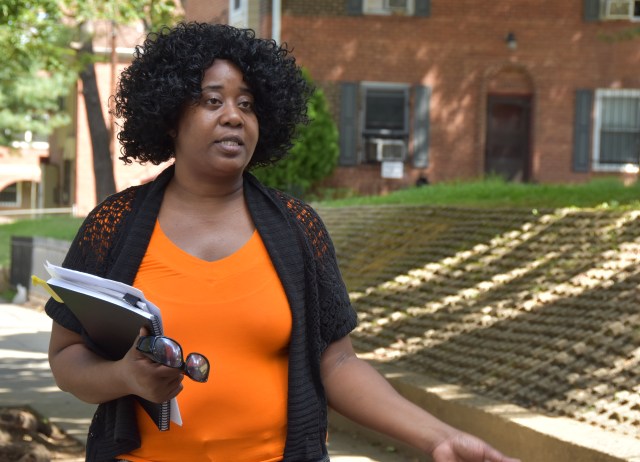
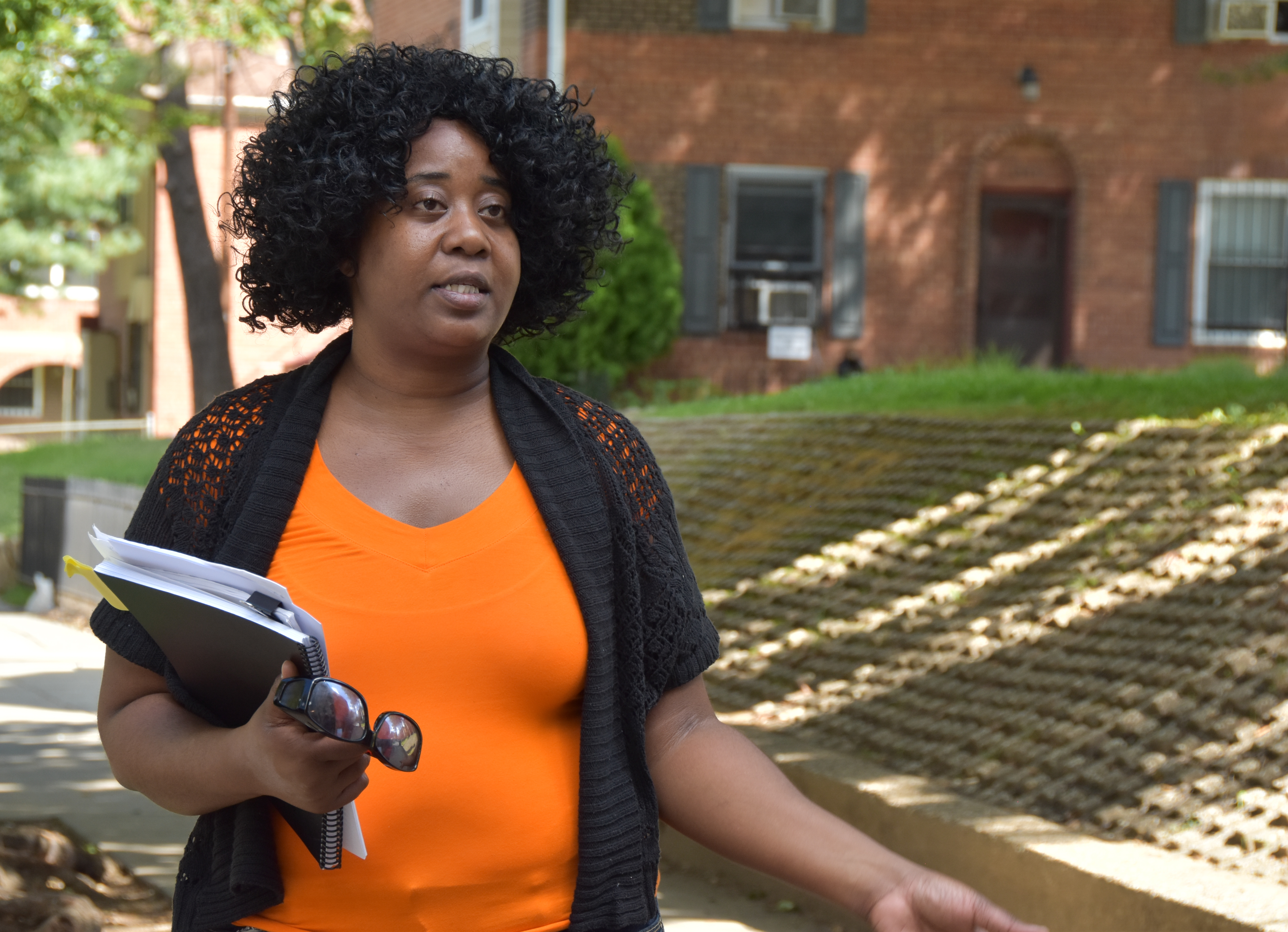
Rhonda Hamilton, talking with my students in Southwest Washington DC. September 9, 2017.


Two other prior blog posts about the class project:
New job at Arizona State University

This week I began a new position as an Assistant Professor in the School for Social Transformation at Arizona State University. I come to this position after working for five years as an Assistant Professor in the Department of Sociology and Criminology at Howard University in Washington DC.

My time at Howard went quickly. When I drove cross-country to DC with my luggage and my cat in May of 2015, I was excited about many things: having a job with benefits, a new role as a faculty member after many years as a graduate student, new opportunities for learning at Historically Black University, and starting a new life in Washington DC. The transition from Santa Cruz to Washington DC went smoothly. Even though I’d never lived anywhere more than an hour away from the San Francisco Bay area for more than five months, life in Washington DC wasn’t hard to adapt to. People are people, after all. I (mostly) got used to the fact that it rains in the summer, gloried in the fireflies, tried to adopt the more formal dress-code and mode of address (“hello, Dr. so-and-so”), and then settled into a middle ground between Santa Cruz and DC professional standards. I met wonderful new friends and quirky, smart colleagues, got to know dedicated students, and developed what I believe will be a lasting interest in Black Studies.

I drove back across the country to Arizona this spring a little older and a little wiser. A few things were different this time. My cat and I were accompanied by my partner, I was six months pregnant, and we drove a rented RV to minimize our exposure to the coronavirus pandemic that had exploded in the US a short time before. The pandemic restrictions got looser and looser as we traveled west from DC. When we arrived in Arizona hardly anyone was wearing masks, and the host of our RV campground referred to the virus making scare quotes around the term with her hands as she talked (“virus”). Soon after, George Floyd was murdered. Protests across the nation, including here in Pheonix, have brought longstanding anti-black police violence more forcefully into the national eye. The resulting conversations led to working with my partner Vernon Morris, my tech mentor Allen Gunn and several of Vernon’s colleagues on a public letter to address systemic racism in the academy. It was one of many such letters, the results of which are still unspooling.

I miss my friends at Howard and in Washington DC, but I’m looking forward to new adventures here in Arizona. My position in the School for Social Transformation promises many new and interesting colleagues, even if it will be a while before I meet them anywhere other than on Zoom. The coronavirus pandemic, soaring temperatures in Tempe and a newborn at home mean I have rarely left the house since arriving. But the weather will cool off eventually, and I look forward to exploring the desert and the mountains that surround Phoenix when that happens. I’m grateful to have stable employment and health care in these troubled times – so far, ASU has not announced any layoffs or furloughs.

Going forward, please contact me at my new ASU e-mail address.

First siting of saguaro cacti as we drive West, as seen through a very dirty windshield.

Nora McDowell speaking about women’s environmental leadership at the Smithsonian Castle

This spring I was honored to host Nora McDowell as the inaugural speaker at the Smithsonian Anacostia Community Museum’s first “Dinner and Discussion” series, which is part of their Women’s Environmental Leadership programming.

I met Nora through my research on California environmental justice activism, and in particular through a project to document the 1990s-era fight against the construction of a nuclear waste landfill in the Mojave Desert’s Ward Valley, on the traditional lands of the Mojave people. Nora grew up in Needles, California and currently lives on the Fort Mojave reservation in Mojave Valley, Arizona. She was elected as chairperson of the Fort Mojave Tribe at age 24, a position she held from 1985 to 2007. During that time she helped lead a decade-long campaign to block the construction of a nuclear waste landfill in the Mojave Desert’s Ward Valley nearby. Additionally, she was part of forming the Ten Tribes partnership to represent Colorado River tribal water rights to the Colorado River Water Users Authority. She also started the water and sewer company as well as the electrical company owned and operated by the Fort Mojave Tribe.

Now, Nora is the Project Manager of the Topock remediation project at the AhaMakav Cultural Society of the Fort Mojave Tribe. Topock is the name of the place that is the passageway to the spirit world for the Mojave people. PG&E built a natural gas compression station there in 1950, which leaked chromium six into the groundwater for over 40 years. Nora focuses much of her time on the cleanup of this site, and in particular trying to minimize the impact on the remediation process on Mojave landforms and artifacts. She also serves in an advisory capacity in a number of other settings, including on the Tribal Advisory Committee to the California EPA. She also serves on the Colorado River Basin-wide tribal advisory board, which advises a consortium of federal agencies, tribes and NGOs active on the Colorado River. She is also on the Fort Mojave telecommunications board and is a founding board member of WEWIN – Women Empowering Women for Indian Nations.

The Anacostia Museum hosted the evening in the Smithsonian Castle on the National Mall. It was an intimate event. I asked Nora questions about her leadership experiences in front of 40 or so attendees, and then we all discussed the themes she raised and shared a meal together. You can find the audio recording below, as well as photos taken by Susana Raab. Audio, photographs and captions are provided by the Smithsonian Anacostia Community Museum.

The next “Dinner and Discussion” event will take place in September, this time featuring Dr. Adrienne Hollis, hosted by Vernice Miller-Travis.


Tracy Perkins and Nora McDowell Thumbnail

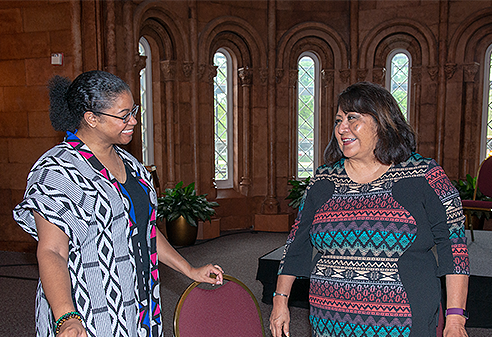
Dr. Tracy Perkins (left) and Ms. Nora McDowell (right).

Ms. Katrina Lashley Introduces Special Guests Thumbnail

Ms. Katrina Lashley introduces Dr. Tracy Perkins and Ms. Nora McDowell.

Nora McDowell and Alexis Dickerson Thumbnail

Ms. Alexis Dickerson and Ms. Nora McDowell.

Tracy, Nora, Lisa, Katrina

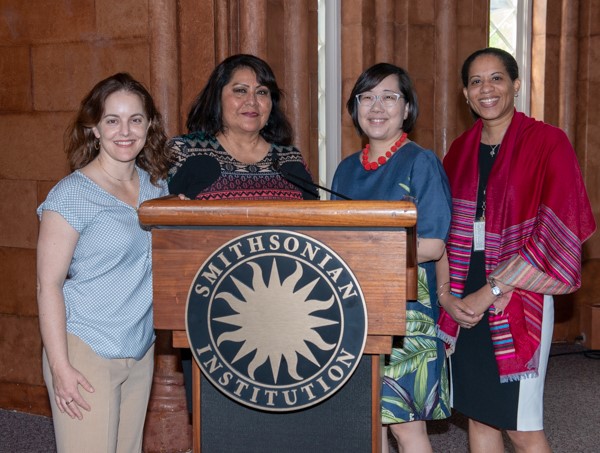
Dr. Tracy Perkins, Ms. Nora McDowell, Ms. Lisa Sasaki, and Ms. Katrina Lashley.

Dr. Elgloria Harrison Thumbnail

Dr. Elgloria Harrison thanks special guests.


Hello, Tucson!

Hello from sunny Tucson, Arizona! I’m spending the spring semester here as a Visiting Associate at the University of Arizona through the Agnese Nelms Haury Program in Environment and Social Justice.  Here’s a description of the project I’m working on pulled from the press release:

I’ll be using my time in Arizona to create a digital archive of a 1990s era campaign against a nuclear waste landfill. In particular, the project will highlight the role of five tribes along the lower Colorado River in the landfill’s eventual defeat. The visiting associateship at the Haury Program is enabling me to do the kind of scholarship that isn’t always well supported – projects developed with off-campus partners that create digital products designed to be available to a broad audience. I hope the rich stories that emerge will also inspire university libraries to create environmental justice archives out of the many personal collections currently being held in closets, garages and storage units. If these archives are lost over time, many of the experiences of environmentalists of color, in particular, will continue to be left out of the narrative of US environmental history.


Specifically, I’ll be working on the successful anti-nuclear waste landfill campaign in the Mojave Desert’s Ward Valley, with support from Greenaction for Health and Environmental Justice, and the AhaMakav Cultural Society, a Department of the Fort Mojave Indian Tribe. Campaign participants gather every year to celebrate their victory at the site where the landfill would have been built, but for their actions. I’ve been to this event twice before, and look forward to continued interviewing at this year’s 20th anniversary ceremonies.

In the lead up to that event, I’m enjoying meeting new people, exploring the desert landscape on the weekends, and having focused time to work on my research. See below for a few snapshots of what I’m seeing at the University of Arizona, Tucson, and the surrounding Sonora Desert.


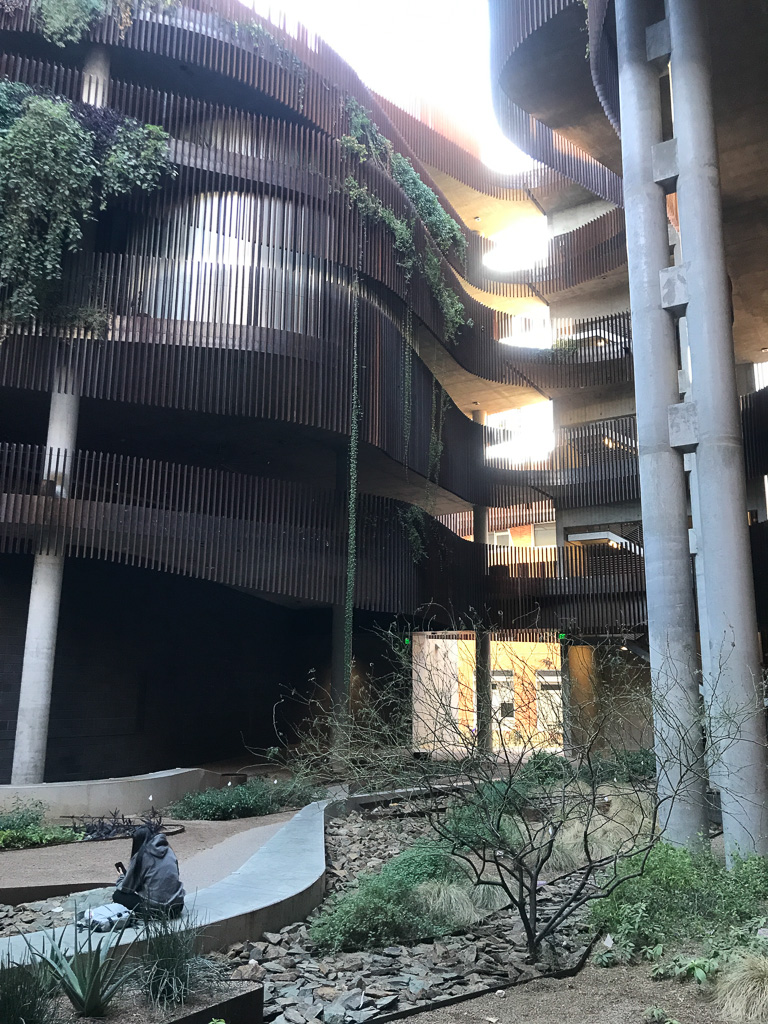
IMG_2575

The design of my building at the UofA was inspired by a slot canyon. I think.

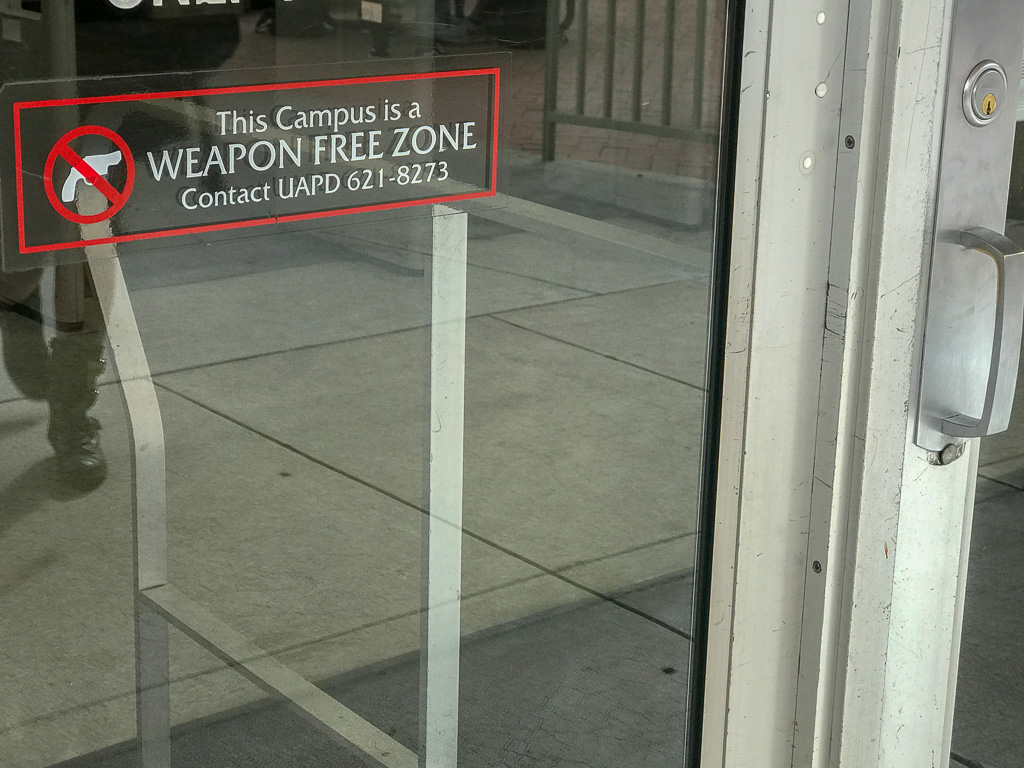
IMG_2703

Arizona is an “open carry” state. Hence the signs.

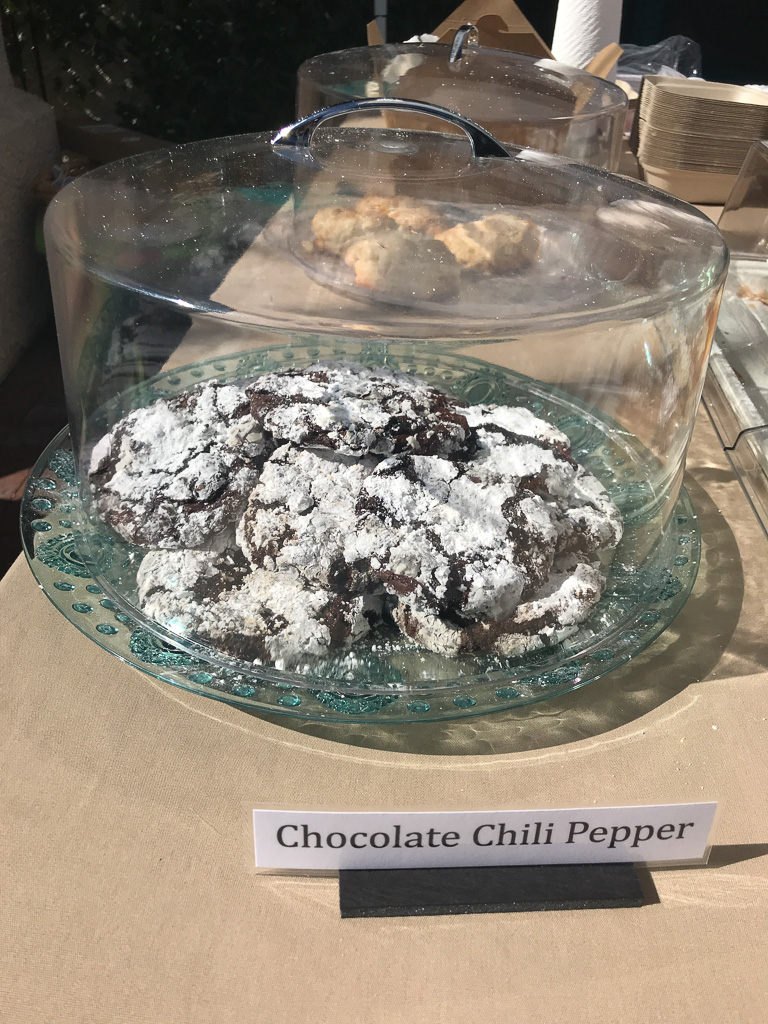
IMG_2583

Chili pepper everywhere!

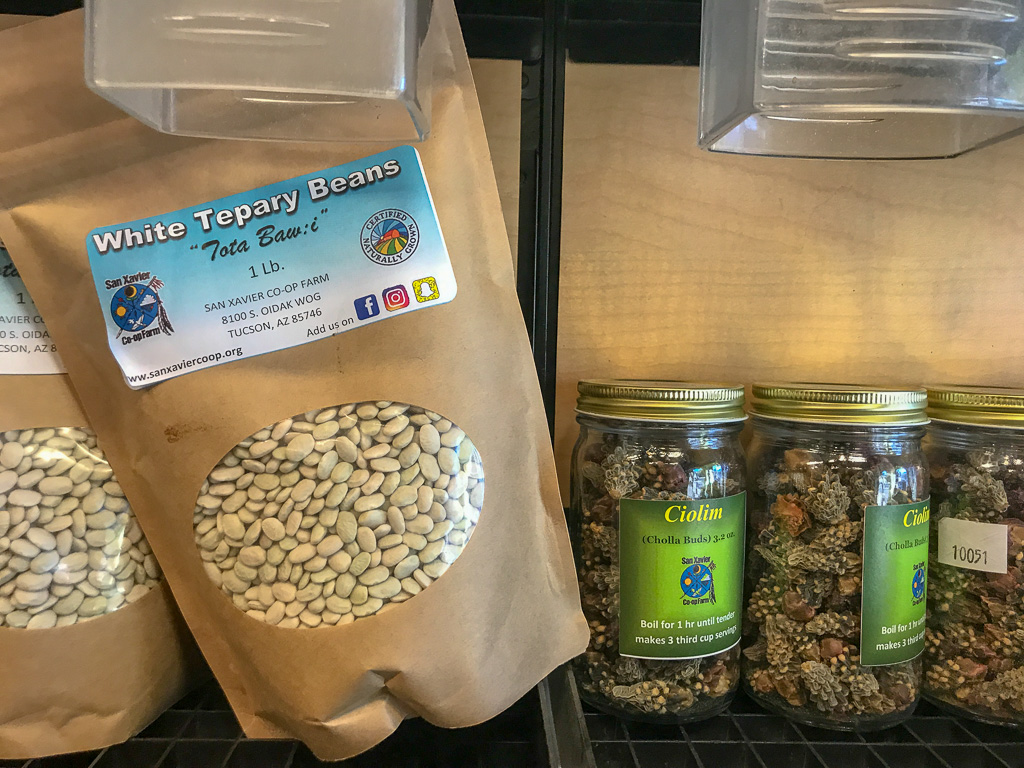
IMG_2688

Local foods from the San Xavier Co-op Farm.

IMG_2690

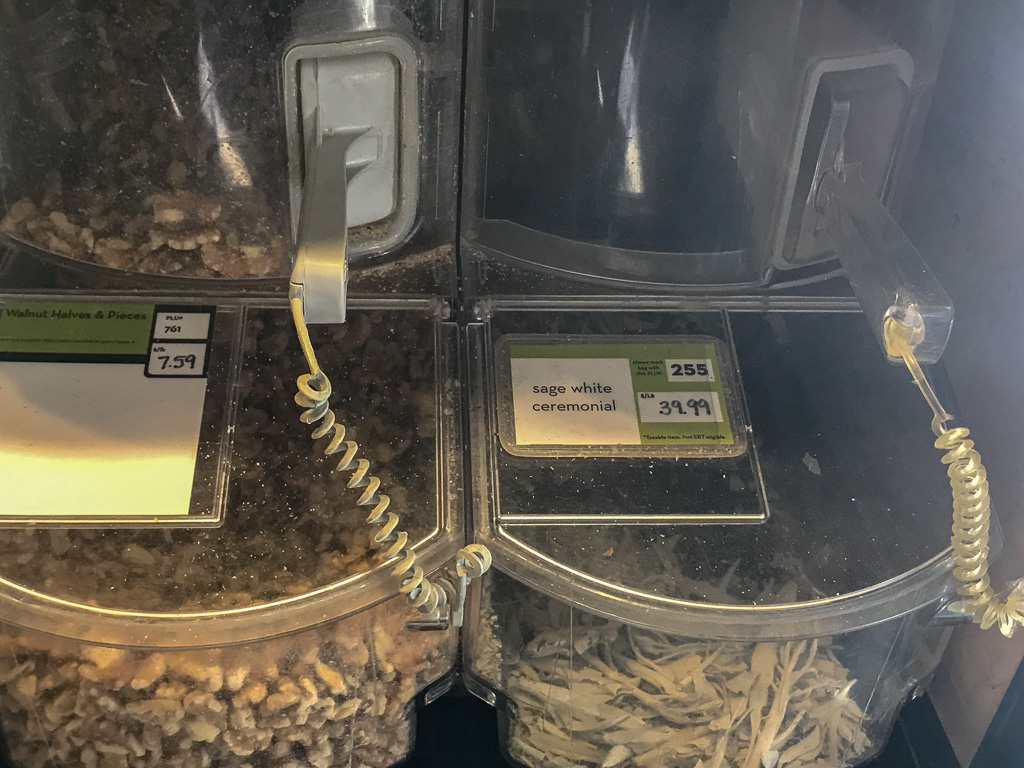
The food coop carries ceremonial white sage in the bulk section.

IMG_E2614

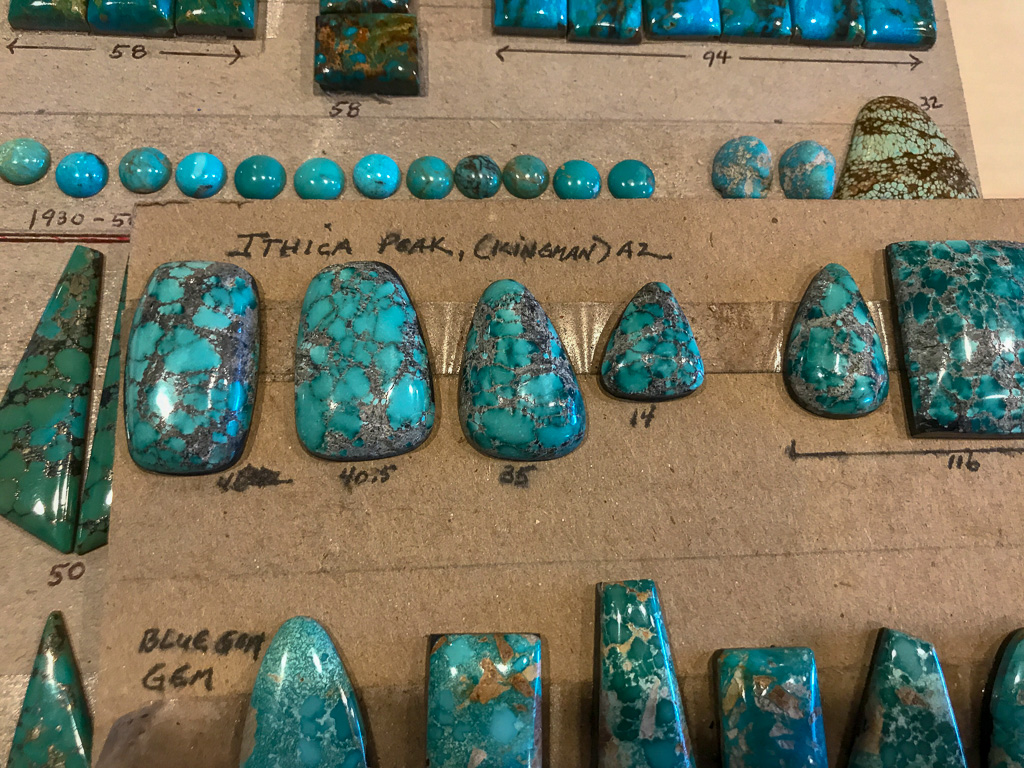
Arizona turquoise on display at the annual Tucson Gem Show.

IMG_2629

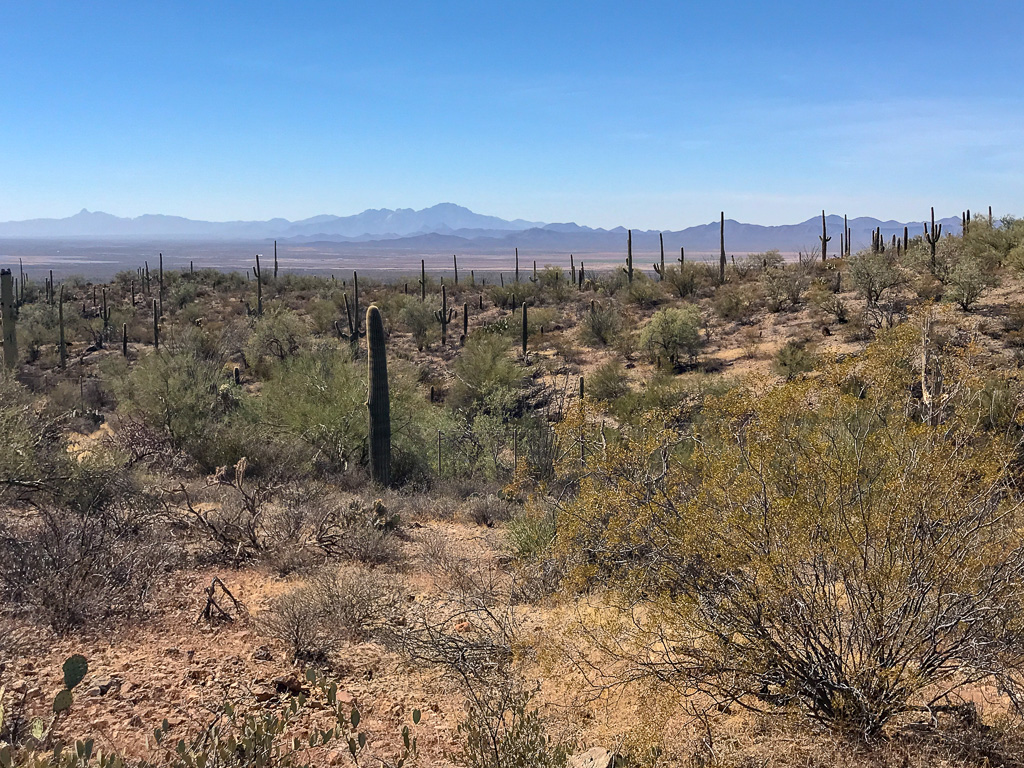
The Sonora Desert!

IMG_2623

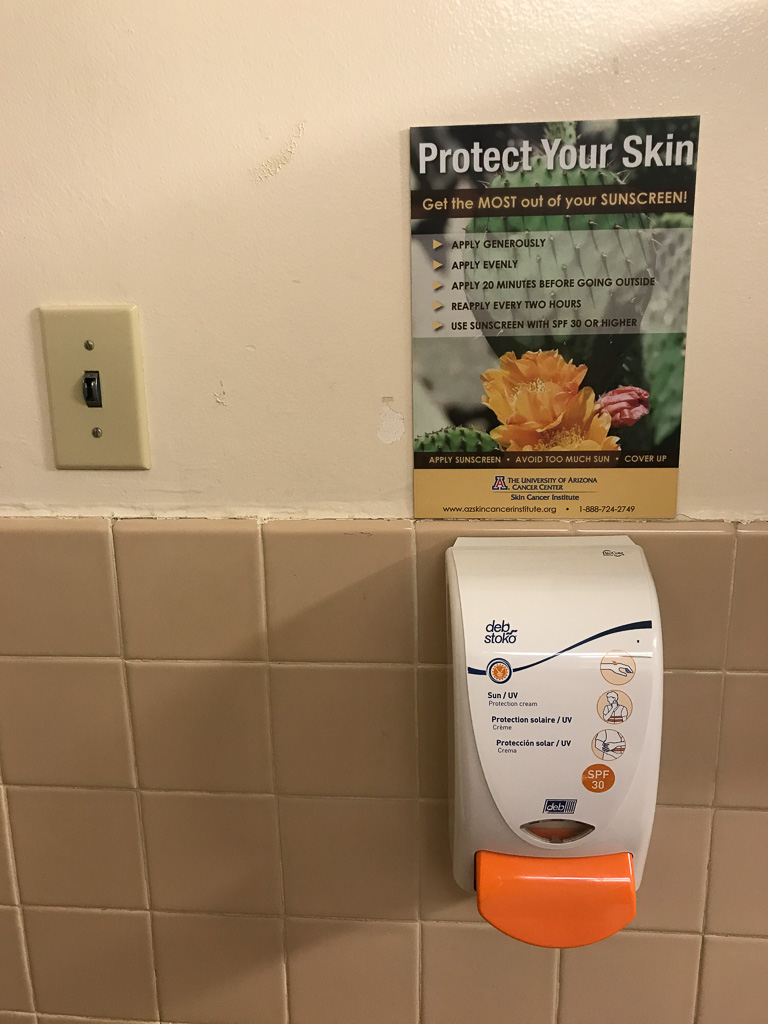
Sunscreen in the public bathroom. Hey, thanks.


Back-to-school checklist

Although the weather continues to be hot here in Washington D.C., summer has come to an end for the students and workers of Howard University. I attended the American Sociological Association’s annual meeting just as school was beginning. This conference is spectacularly ill-timed to take place right before or during many schools’ first week of classes every year. I cancelled  my first day of classes and taught two days later after getting off a red-eye from the West Coast at 6am.

Regardless of  how you spend the last few days of summer, you may feel overwhelmed by the administrative details associated with resuming classes and committee work each fall. Because I think there are few life-problems that a good list can’t help address, I created a Back to School Checklist this year to help me remember some of the details that need to get taken care of for a smooth start. Feel free to adapt it for your own purposes as you like, I know I’ll be adding things as I remember them. And if you’re really list-crazy, take a look at the fun ones available at Knock-Knock (I find their “Pack This!” list particularly helpful). Or check out Atul Gawande’s book The Checklist Manifesto – if nothing else, it’ll make you glad you don’t have to worry about whether you left a pair of scissors inside the last person you did surgery on before sewing them up.


Back to School Checklist

Classes

  • Confirm class time and space
  • Check audio-visual supplies: screen, projector, speakers
  • Finalize Syllabus
    • Update readings
    • Add new dates for each class meeting that correspond to this calendar year
    • Look at campus academic calendar and add dates to syllabus as needed (campus closed, last day to drop, etc)
    • Update assignments
    • Schedule guest-speakers
    • Schedule office-hours
  • Create course website (Blackboard, etc)
    • Make sure that enrolled students are in the system
    • Add syllabus
    • Upload readings
    • Set up places for students to turn in work for each assignment
    • Set up gradebook
    • “Publish” site so it is visible to students
  • Create attendance sheet
  • Create sign-up sheets (for example, if students will each facilitate a day of classroom discussion)
  • Order required books at campus bookstore
  • Put required books on reserve at campus library
  • Add chalk, eraser, or whiteboard pens to teaching bag as needed
  • Add paper and pens for big nametags on desk as needed
  • Prepare lesson plan and slides for first day of class. Make time to:
    • Do names and/or ice-breaker
    • Introduce self
    • Introduce class – with hook!
    • Review syllabus – use screenshots of book covers when possible
    • Sign up for assignments that are date-specific
    • Take attendance
    • Collect information of students hoping to get in to class


Research Assistants

  • Get students signed up for independent study classes as appropriate
  • Create proxy library accounts that let students check out books to my library account
  • Schedule first team meeting with students
  • Reserve room for team meeting
  • Prepare for first meeting
    • Review and organize prior student work
    • Prepare list of projects and tasks to be divvied up amongst group. Decide how many people are needed for each project
    • Create agenda
    • Create sharable to-do lists and timesheets
    • Update IRB “how to” document that details what students need to give me in order to be approved by the IRB as research assistants
    • Update all other “how-to” documents as needed to support student tasks
    • Select and upload introductory readings to help frame research tasks
    • Add students to Google Drive folder that houses group files
  • At first meeting
    • Introductions
    • Background on research projects and descriptions of tasks
    • Divide up tasks
    • Describe optional events happening this semester that students can participate in as part of their weekly hours to supplement their learning
    • Share contact information
    • Assign background reading
    • Give overview of the IRB and the describe the documents students need to provide to be approved by IRB as research assistants
    • Get familiar with the documents in the shared folder on Google Drive
    • Review project communications and tracking (to-do list, hours sheet)
    • Schedule training for students with librarian on how to find scholarly articles
    • Pick weekly meeting time
    • Schedule meeting between each project group and myself to provide training about how to get started with their task


Other

  • Add campus calendar dates to personal calendar (due dates for grades, last day of classes, etc)
  • Add dates on department calendar to personal calendar (faculty meetings, report due dates, etc)
  • Make work plan for year/semester
  • Post office hours on door
  • Return or renew library books
  • Clean office!


Overcoming Corporate Threats to Academic & Community Research on Industrial Animal Production

I chaired a panel discussion on “Overcoming Corporate Threats to Academic and Community Research on Industrial Animal Production” earlier this month at the annual meeting of the Association for Environmental Studies and Sciences. The panel was organized by Zoe Ackerman at the the Rachel Carson Council. It focused on the experiences of people whose health is impacted by the North Carolina hog industry. More specifically, panelists discussed industry intimidation and legal tactics designed to suppress research on the health impacts of concentrated animal feeding operations (CAFOs) on their nearby human neighbors. Steve Wing, the leading scholar on this topic, was part of the panel design, but in the end was unable to join. However, the following panelists gave a great overview of the issue and how it relates to broader threats to research in the public interest.

Keep an eye out for more work to come on this subject coordinated by the Rachel Carson Council. Also look out for announcements about the North Carolina Environmental Justice Network’s annual summit. In the meantime, the video below provides a short overview of our conversation. See also the following pinterest board where I collected articles I used to inform my framing remarks, which are not included in the video. I linked Steve Wing to Ignacio Chapela, William Cronon, Tyrone Hayes, and Anita Sarkeesian, who have all experienced serious push-back from the industries and social groups threatened by their research. Like many of the other panelists, I emphasized how industry relation against scholars has a chilling effect on the kinds of questions that we ask.


The view from faculty seating – HU Commencement with President Obama

Last Saturday Howard University hosted its 148th graduation ceremony. I donned my (borrowed) academic robes to celebrate our graduates and hear President Obama, our commencement speaker. I’ve shared my snapshots below to convey what it was like to attend and participate. They show: workers setting up for graduation during the last week of the semester, getting through security and onto campus on the day of the ceremony, faculty waiting for the event to begin and then processing into the the yard together, President Obama being “hooded” while he receives his honorary Ph.D., and the commencement ceremony. The last photo is of Sociology graduate Diamond Crumby showing off her awesome cap. Congratulations Diamond and the Howard class of 2016!

This slideshow requires JavaScript.

For the full text of President Obama’s commencement address, click here. For video, click here. And for summary and analysis, try the following:

Classes are over now, but next year I plan to show the President’s commencement speech toward the end of my Introduction to Sociology class. I’ll ask the students to analyze it according to sociological concepts we’ve been learning (structure, agency, social stratification, intersectionality, theories of change, American individualism, etc.). Then I’ll have them chew on a few of the wide array of responses to his speech listed above. I like doing these sorts of activities to underscore how the concepts we are learning in the classroom get used in the political world, even if they are not always referenced by the same names. If any of you do something similar with the speech, let me know how it goes. I won’t be teaching Intro to Sociology again until next spring, so there’s plenty of time to build on your experience.

Film Screening and Discussion

This Thursday I’m hosting a screening of Come Hell or High Water: The Battle for Turkey Creek at Howard University. The event is open to the community so please join us if you live in the area!

Here’s the film description:  “Come Hell or High Water: The Battle for Turkey Creek  follows the painful but inspiring journey of Derrick Evans, a Boston teacher who moves home to coastal Mississippi when the graves of his ancestors are bulldozed to make way for the sprawling city of Gulfport. Over the course of a decade, Derrick and his neighbors stand up to powerful corporate interests and politicians and face Hurricane Katrina and the BP oil disaster in their struggle for self-determination and environmental justice.”

After the screening, the following speakers will help us discuss the film:

  • Leslie Fields: Director of the Environmental Justice Program, Sierra Club
  • Brentin Mock: Staff writer, The City Lab
  • Terri Adams-Fuller: Department of Sociology and Anthropology, NOAA Center for Atmospheric Sciences, Associate Dean of College of Arts and Sciences, Howard University.

The screening is timed to honor Earth Day (the next day), and also to promote Howard’s new Environmental Studies undergraduate major, which begins in the fall of 2016. Please join us!

When: Thursday April 21st, 6-8pm

Where: Screening Room West, CB Powell Building, School of Communications, Howard University

Co-sponsors: Department of Sociology and Anthropology, NOAA Center for Atmospheric Sciences, School of Communications, Environmental Studies Program