Teaching research methods – lab curriculum

With the click of a button I’ve just uploaded all of my students’ final grades and am officially done teaching for the 2010-2011 school year!  The class I just wrapped up was my department’s undergraduate research methods class, and I’ve posted what I’ve been doing with them below for others who teach similar classes.  You’ll find a basic overview of everything I did, some online resources, and some things I wish I had done.

I’ve worked as a teaching assistant for this class twice now, and it is the class I’ve enjoyed the most so far.  By the end of the class the students have picked a research question to answer, found out what work has already been done on it and modified their question accordingly to make it improve on what has already been done, written a basic literature review, chosen research methods to answer their question, designed their research tools (survey, interview questions, etc), pre-tested and modified their research tools, and speculated on where the research might take them if they were to actually pursue the rest of it.

It’s a difficult task but some of the students get really excited about their projects, and learn a lot about scholarship in the process.  The “Big Assignments” listed below were assigned by the professor leading the class, Gabby Sandoval, and appear here with my edits.  Some of the “lab assignments” listed below I adapted from the research design class I took with Katherine Masyn when I was a masters student at UC Davis.  The important thing is to help the students break down what can be an overwhelming project into manageable weekly tasks, especially during the first half of the class as they are getting started with their projects.

The lab plan below was designed around a teaching workload that involved students going to lecture twice a week with the professor, and then attending a 2 hour lab once a week with me.  I was responsible for two labs of twenty students each.  Students each sat at their own computer, enabling me to combine lectures, group-work, and time for students to work on their projects individually while I moved around the room to consult with them.  During individual work time, I made an effort to check in with each student instead of only those that sought my help, which helped nip problems with their projects in the bud.

Week 1: No Lab

Week 2 Lab

  1. Students bring first draft of their research question to lab
  2. Mini-lecture: Research methods are cool!
  3. Mini-lecture: What is the difference between a research proposal and a term paper?
  4. Go over handout: Common Problems With Research Questions and How to Fix Them
  5. Peer review of draft research questions
  6. Introduce Lab Assignment 1: 5 new and improved versions of their research question
  7. Individual and partner work on Lab Assignment 1
  8. Turn in first draft of research question and peer-review sheet

Week 3 Lab

  1. Students get back the first draft of their research question with my feedback on it
  2. Mini lecture: Operationalizing research questions
  3. Demo: Read aloud my first and final drafts of “key terms” for my thesis research, discuss significance of the changes made on my findings
  4. Demo: 2-3 students volunteer their research questions and we work on operationalizing them as a group
  5. Lab Activity: Individual and partner work to revise and operationalize research questions
  6. Mini-lecture: review literature review assignment
  7. Introduce Lab Assignments 2 and 3: find 20 sources and fill out one article summary table
  8. Hand back lab assignment 1
  9. Individual work and student-TA check-ins
  10. Students turn in lab activity and lab assignment 1

Week 4 Lab

  1. Hand back lab assignment 1 and week 3 lab activity – review operationalization
  2. Literature Review Quiz
  3. Check in on progress on lab assignments 2 and 3 – discuss common problems with finding sources
  4. Introduce Lab Assignments 4 and 5: literature review outline and more article review tables
  5. Workshop literature review outlines for 1-2 student research questions
  6. Individual work and student-TA check-ins
  7. Students turn in lab assignments 2 and 3

Week 5 Lab

  1. Mini lecture: Review Big Assignment #1 – Literature Review
  2. Guided discussion: trouble-shoot literature review problems
  3. Mini lecture: In-text citations
  4. Individual work and student-TA check-ins: Hand back and discuss lab assignments 2 and 3 while students work on literature reviews
  5. Students turn in lab assignments 4 and 5

Week 6 Lab

  1. Students hand in Big Assignment #1: Literature Review
  2. Peer review: literature review drafts
  3. Review requirements for Big Assignment #2: Methods Section
  4. Review class calendar
  5. Introduce Lab Activity: methods worksheet
  6. Introduce Lab Assignment 6: research tool
  7. Workshop methods that could be used to answer research questions for several students
  8. Groupwork: divide by method students plan to use, and discuss how they could design research to answer their question

Week 7 Lab

  1. Methods Quiz
  2. Workshop: discuss ways to pre-test the methods of several students’ research questions
  3. Mini lecture: filling out Institutional Review Board forms
  4. Mini lecture: assessing the ethical implications of your proposed research
  5. Students get back graded literature reviews
  6. Individual work and student-TA check-ins: students work on methods section

Week 8 Lab

  1. Students hand in Big Assignment #2: Methods section
  2. Mini-lecture: Pre-testing
  3. Individual work and student-TA check-ins

Week 9 Lab

  1. Review requirements for Big Assignment #3: Final Research Proposal
  2. Hand back graded methods sections and research tools
  3. Individual work and student-TA check-ins: Students work on revising literature reviews, methods sections, or research tool as needed

Week 10 Lab

  1. Students conducting surveys as their pre-test of their research tools conduct surveys in class and get feedback from the rest of the students
  2. Hand out and review Editing check-list
  3. Individual work and student-TA check-ins

Finals Week

  1. Students turn in Big Assignment #3: Final Research Proposal


Other resources for students:

To do list for next time:

  • Create a handout that shows one basic research question reformulated in many different ways.  For example, a quantitative version of the question and a qualitative version.  Versions that would require different methods to answer:  in-depth interviews, textual analysis, participant observation, survey, etc.  The students often have a hard time imagining all the different ways that their topical interest could play out in a research project, so I think seeing one question that has been developed in many different directions will give them a sense of the array of options they have.
  • Prepare some materials to teach different approaches to writing a literature review. In particular, I’m interested in helping the students explore the slightly different role of  the literature review for an applied research project as compared to a theoretical research project.
  • Create “Areas for Improvement” feedback forms.  The form lists common errors that many students need to improve on in their papers.  As I read a paper, I circle all the items that apply to that particular paper, add a few hand-written comments and then staple it on the back.  This has worked reasonably well when I’ve used it for other classes.
  • Mark up the model research proposal that I shared with the students. The proposal I shared was written by one of my students when I taught this class last year.  It seems like it was very helpful for the students to see a model written by a peer to meet the same requirements they had instead of looking at models written by established scholars for other purposes.  It was an excellent proposal, but still had some flaws and areas for improvement that confused the students since it was being held up as a model.  I think I’ll just make a few comments on it in ‘track changes’ and share that version instead in the future.  I’ll also add a few more models that I requested from my students this year, so future students get a sense of the range of research questions and methods that they can tackle.
  • In the future I’d also like to spend more time helping the students understand examples of research projects that have had real world outcomes so they can make better links between their own research ideas and the changes they would like to see in the world.
New presentation software

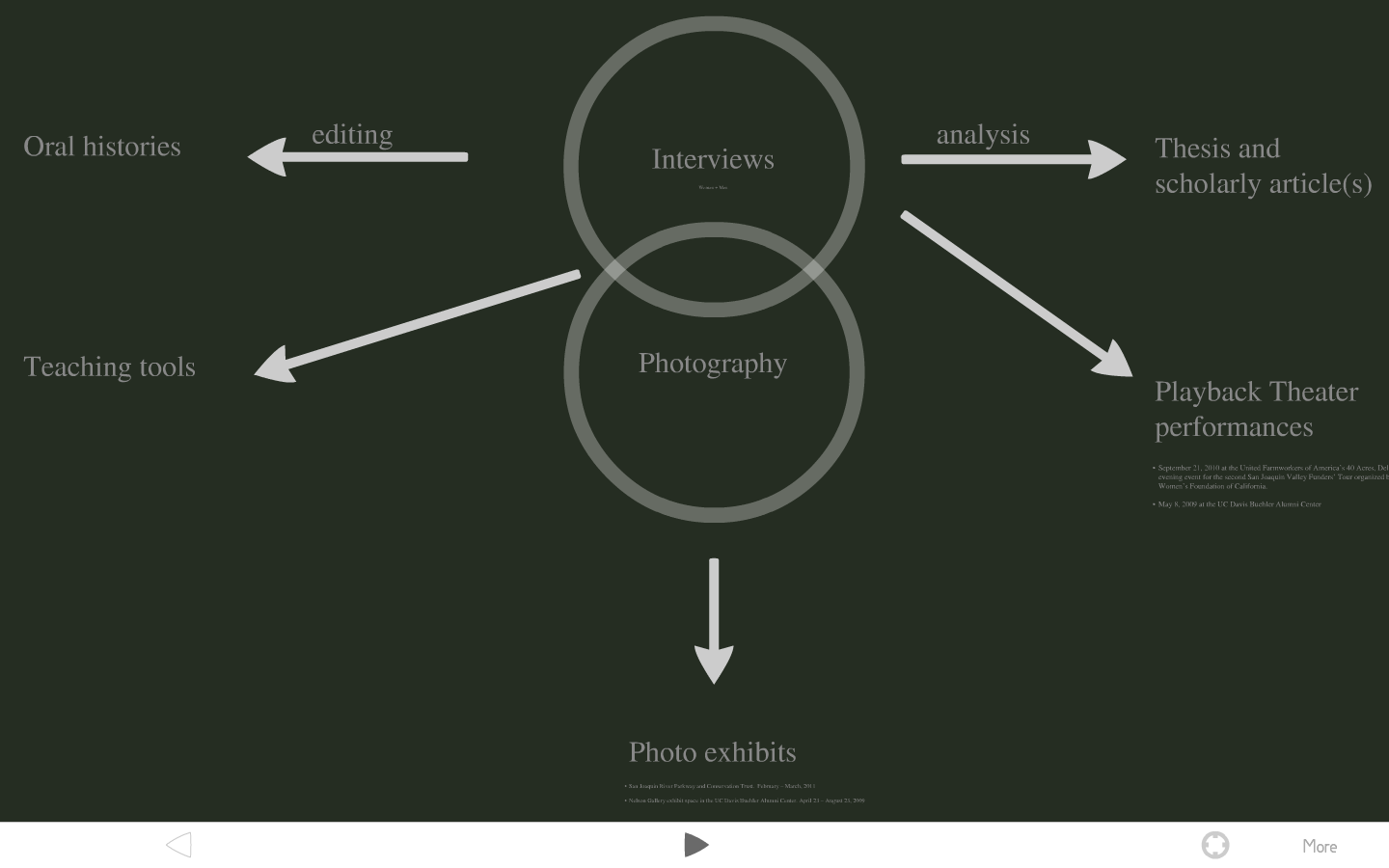
I know there’s a lot of Powerpoint haters out there but I’m not one of them.  I remember using it for the first time towards the end of college and being thrilled with how easy it was to show photos, and I still enjoy it as a visually rich medium today.  Yes, some powerpoint presentations are terrible, but many other kinds of presentations are terrible too.  I’ll risk following the lead of the gun lobby to say that ‘Powerpoints don’t bore, people do.’

Nonetheless, I was excited to see a different kind of software in action for the first time at a recent conference, and used it in a presentation of my own on Friday.  Prezi let’s you create one big canvas and zoom around on it to focus on different aspects of what you want to say.  Your presentation lives online so you can access it from any computer with an internet connection, and you can e-mail people a link to your presentation for them to view on their own.

That said, it seems just as easy to go wrong with Prezi as it is with Powerpoint.  The zoom effect is fast enough that you could easily get overzealous and end up with a roomful of disoriented audience-members.  The canvas-like starting point gives you more leeway to present your ideas in a non-linear fashion, but it still won’t organize them into something meaningful for you. If your presentation doesn’t have a clear organizing thread there’s nothing the software can do to help.

Check it out yourself! Clicking here will take you to the online version of what I showed on Friday.  If you have any suggestions for improvement, let me know!

Grading season

I made the mistake today of calculating the number of pages of student work I need to grade and hand back by the end of the quarter: 1,160.

I enjoy my students, and often their ideas are really interesting, but this is the time of the quarter when this magnet on my fridge feels sadly realistic:

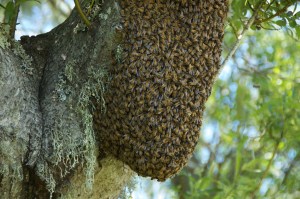
How to catch a swarm of honeybees

1.  Find swarm.  If the swarm is someplace you can reach with a ladder, and isn’t inside a wall or tree-trunk, you’re all set.

2.  Put on protective clothing, especially gloves!

(that’s me in the middle)

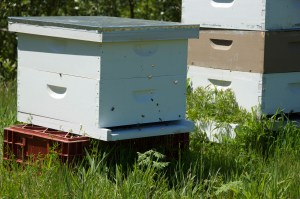
3.  Put an empty hive out in the place you want the bees to live.
4.  Find a bucket.
5.  Set up a ladder so you can reach the swarm.
6.  Climb ladder and brush swarm gently into bucket with your hands.  Most of the bees will fall into the bucket in clumps.


7.  Show off bucket of bees to admiring friends and family.


8.  Pour bees into new hive.

9.  Voila!

(Close-ups taken by me; photos shot from a safe distance taken by my friends and family)

The week that was

This week I:
– traded stories over an impromptu lunch with an old friend and occasional collaborator.  It was a warm day in Berkeley, we ate outside, and I felt good.
– caught a swarm of bees!  Very satisfying except for the fact that it does not seem to want to stay put in its new home.
– participated in Greenaction’s first annual Walk for Environmental Justice in Golden Gate Park, and then had an apré-walk lunch with friends from the Inner Sunset farmer’s market. My friends traded stories of their favorite parasites (for the record, one was an ‘ant zombie fungus‘ and the other was a parasite that takes over the body of a snail, grows up through its eyes and sprouts little blinking lights at the top).
– celebrated my birthday! Twice!
– ate fresh berries at the UCSC farm and garden’s Strawberry and Justice Festival
– went to a lecture on how to save the world with simple pictures, but was unconvinced
– listened to the last podcast of my advisor’s “Contemporary Sociological Theory” class from last quarter and began the podcasts for his current class, “Environmental Inequalities.” Don’t you wish you were my driving companion?
– got some good advice about online advocacy from the genius in charge of Aspiration
– was given this fabulous update on on the Beany Baby, the Beany Ball bee:

Tech tools for graduate students

I seem to spend half my time keeping up with my computer.  It updates itself, deals with its own viruses, and is generally a miracle of the modern world.  Still, each update means some new twists to the programs I use, and figuring out how to make use of its massive capabilities feels like a full-time job.  Here’s a list of some of the tricks and tools I’ve been trying to master.

  • Backup your work!  Who hasn’t heard a horror story of the student who lost all their work in the final stages of writing their dissertation?  I double up.  My Mac uses Time Machine to automatically back itself up to an external hard drive.  I also use Carbonite for automatic online backup to a remote site (in case my house burns down and said hard drives become a gooey mess).
  • Accessing documents on my computer when you’re not actually at your computer (you know, in case inspiration hits while you’re on vacation or otherwise enjoying a perfectly good day away from your desk): Carbonite
  • Creating a virtual library to house all the crazy pdfs that would otherwise suffocate my desktop: Zotero.  I used to use End Note, but just switched over to Zotero.  So far it seems a lot easier to use.  Plus, it’s free!  They both also automatically format your citations and bibliographies in the style of you choice.  Wow!  Can they do my laundry too?
  • Finding things on the rabbit’s warren that is my computer: Google Desktop.  I just downloaded this yesterday so I haven’t used it much yet, but my friend Bernie assures me it does the trick.  It searches not only file names, but also what’s INSIDE the files.  Crazy!
  • Sharing massive documents and syncing e-mail accounts and other information across computers.  I use Mobile Me, but I hear Google does this pretty well too.
  • For when you go back to your desk and realize that although you thought you understood it at the time, you actually have no idea what your advisor was talking about:  Recorder app on a smart phone.  Record the conversation now, make sense of it later. Kind of like interviewing.
  • For organizing and analyzing interview transcripts: NVivo.  NVivo is designed for PC’s, so using it on a Mac also requires using Bootcamp or Parallels.
  • For recording and calculating student grades: Excel or Numbers.  They both work but I like Numbers because it has a pre-fab grading worksheet that automatically transforms number grades (92%) into letter grades (A-).
  • For staying up to date with the outside world: Google ReaderTweet Deck, and that old fashioned thing called the phone
  • Task management software (otherwise known as to-do lists): OmniFocus.  I was thrilled with this when I first got it, now I’m closer to lukewarm.  I’m back to using my whiteboard for day-to-day to-do lists, but I still like it for storing my longer term to-do lists.
  • One of my writing buddies uses Foxit Reader to read pdfs online and highlight and take notes on them, but it doesn’t look like it works for Macs. Plus, I don’t like reading things online.  Still, I may snoop around and see what’s out there for Macs and give it a go.

And that marks the end of my tech savvy.

Californians without clean drinking water – slideshow

This slideshow requires JavaScript.

When I talk to people about my research in the San Joaquin Valley, one of the things they are surprised to learn is that many small communities there don’t have safe drinking water.  It’s the kind of problem people associate with third world countries, not the USA.  Nonetheless, pollutants from pesticides, fertilizers, mega-dairy sewage and old pipes as well as naturally occurring arsenic get into the drinking water in some Valley towns.  Sometimes what comes out of the tap is brown and smells like sewage.

In our interviews, some women described the notices they get in the mail that tell them their drinking water is contaminated, but is safe to keep drinking. Further down the page, however, the flyer often states that if they drink the water for many years they could be more likely to get cancer.  For women who had already been drinking the tap water in these towns for many years, these notices were frightening to say the least.  Other women described having their water systems shut down, driving long distances to purchase bottled water, or having skin problems and hair loss.

So, I’ve been pleased to see the drinking water problems in the Valley getting more attention recently.  Yesterday California Watch reported on the “Human Right to Water” package of bills now in Congress.  Schwarzenegger vetoed many of them in the past, but perhaps they’ll have better luck with Gov. Brown.  Earlier this year the UN Special Rappoteur  on the Human Right to Water and Sanitation also visited the Central Valley to raise the visibility of drinking water problems.

Press

Videos
Reports

Creating “Principles of Collaboration” documents

Activists and scholars often have a tough time working together.  One way to make it easier is by deciding the rules of the game ahead of time.  Some partnerships formalize these agreements into “Principles of Collaboration” documents.  The idea is that if everyone knows what is expected of them ahead of time, problems are less likely to come up.

I used these documents as a key part of a guest lecture I gave recently in an environmental justice class. I started out with a Daily Show clip to get the conversation rolling (see my post on the clip here).  We talked about the tensions between environmentalists and environmental justice activists, and then segued into discussing the similar tensions between environmental justice activists and scholars.

After the “problems” conversation we talked about “solutions.”  I described how I’ve navigated the scholar/activist divide in my project 25 Stories from the Central Valley (see also here).  I also described the San Joaquin Valley Cumulative Health Impacts Project. This activist-scholar partnership resulted in maps that document the many toxins that San Joaquin Valley residents are exposed to, together with demographic data on their “social vulnerability.”  I showed the students the project’s “Principles of Collaboration” documents (see here and here), and we read through a few of their specific agreements to see how they protected both the activists and the scholars.

The students were going to be working in groups on service-learning projects to support local environmental justice organizations. I wanted them to think more about collaboration by creating their own documents to guide their group-work (the professor had already worked out the details of the partnership between the students and the environmental justice organizations ahead of time).  I adapted an activity I learned from another organization for the purpose – you can download my version here.  The students interview each other about their best experiences with group work, categorize these experiences, and then turn them into a contract to guide their work together.  When I facilitated this activity for the first time in a previous job, I was paired with a high-school student for the interview.  It was great to get to reflect on things that have actually gone well in my experiences with group work, and to think about how to make them more likely to happen again.

As it turns out, we only had enough time for the students to do the interviewing part of the activity.  I was going to come back during the next class period to guide them through the rest, but got sick and had to cancel at the last minute (sorry Flora!).  So, I haven’t tested the whole activity in this particular context.  If you give it a try, let me know how it goes!

More about the San Joaquin Valley Cumulative Health Impacts Project:

More on working across the campus-community divide:

A shout-out to the teachers

I count among my friends a number of people who work with teenagers: A Spanish teacher, a librarian, a social studies teacher, etc.  I’ve worked with teenagers in the past, and sometimes I miss it. When everything goes right, there’s a kind of life-changing intensity to their learning experiences that just doesn’t seem to happen as much with older students.  But in the end I’m always glad to be working at a university instead, especially on days like today. I got to talk with every single one of my students about the research projects they are putting together – what they think is important about them, how they want to shape them, what the ideas mean to them. I love seeing them so engaged.

Of course, teaching isn’t always fun.  Laughing at ourselves and the circumstances we sometimes find ourselves in is a great coping technique!  If you’re a teacher, I hope these videos give you a laugh and a bit of energy to keep up the good work.  If you’re not, give a teacher you know a hug.

1. Cribs: Teacher Edition (The Daily Show)

2. Tom Cruise on Teaching Composition

The week that was

This week I:

– saw a banana slug on my way to class – the first one I’ve seen since I’ve been able to call the banana slug my school mascot!

– made a loaf of rye buttermilk bread from this newly released cookbook.  Yum!

– took advantage of an office-mate’s recommendation to back up my computer with Carbonite.  Besides backing up your files, it also lets you access everything on your computer anywhere you have an internet connection. Awesome!

– after two and a half years of revisions, submitted an article based on my master’s research findings to its first academic journal.  I felt proud and productive for about 45 minutes, and then fell into a sad, empty kind of state.  My writer and researcher friends tell me this is common.  : (

– guided my students into the murky waters of writing a literature review. So far so good.

– had some of my photos published as an accompaniment to an article on the recent agreement to allow California industries to offset their pollution by purchasing pollution credits in Chiapas, Mexico and Acre, Brazil. Check out the backstory in my post.

– read the following in preparation for the Supreme Court case on climate change that was heard on Tuesday. (Now I need to find out what the actual verdict was, and how it impacts the case in Alaska I described in a recent post)

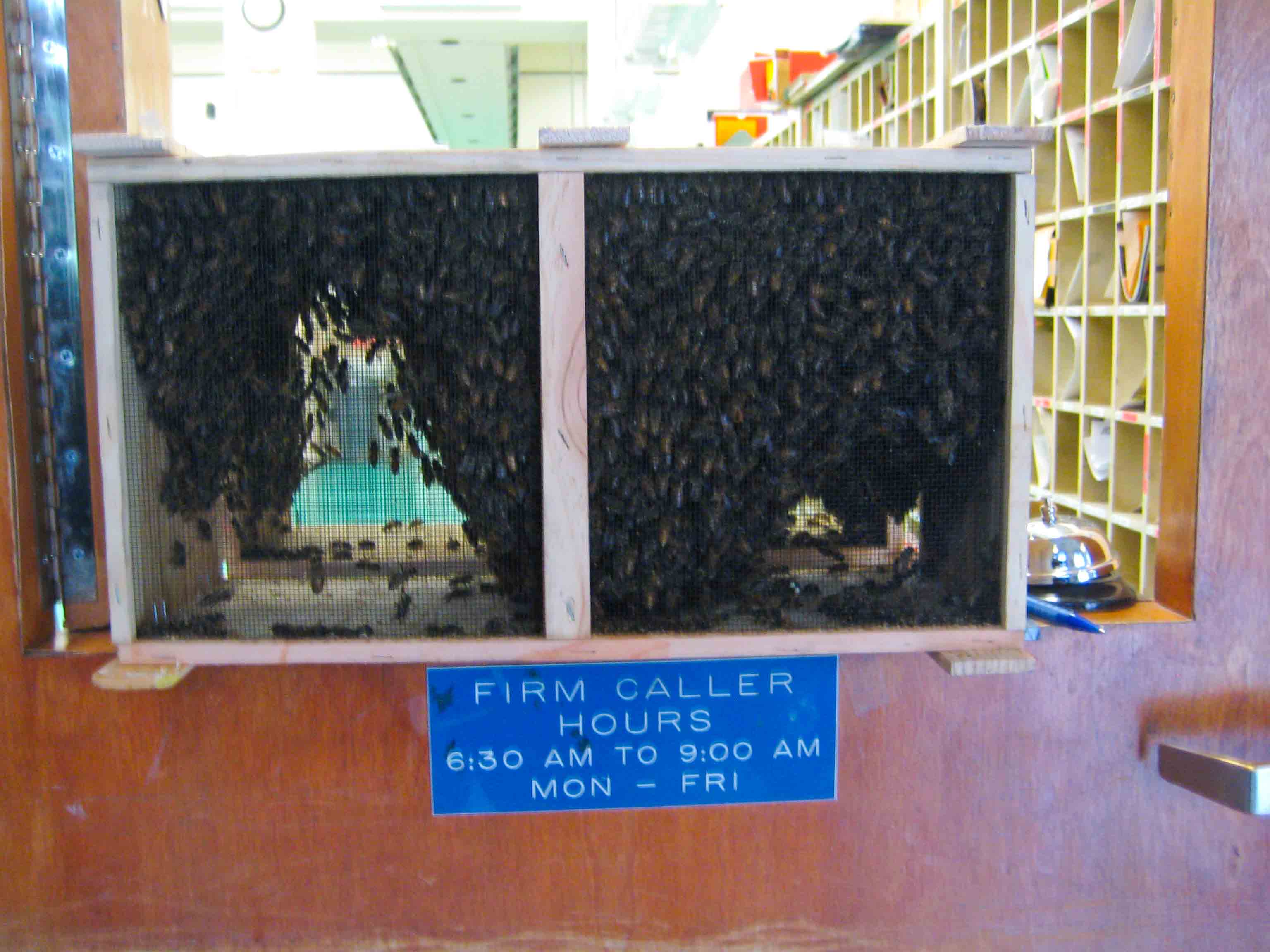
– got a phone call from the post office saying that my new bees had arrived in the mail!  They are now settled safely into their new diggs, and being, well, busy little bees.

– indulged my fantasy of being a scholar-farmer by doing some grading at 5th Crow Farm.  The fantasy part, however, doesn’t involve my car smelling like PSG after lending a hand with errands (that’s Peruvian Seagull Guano for those of you not in the know). It also doesn’t involve the earth trying to eat my shoes as I navigate the mud in my “stylish and inappropriate” footwear of choice: clogs.

– realized, again, that nothing makes me feel incompetent faster than trying to hang out with farmers while they are working.

Bees at the post office – in the box they were shipped in