Podcast interview at Water Talk

I did an interview recently with the podcasters at Water Talk about my book, Evolution of a Movement: Four Decades of California Environmental Justice Activism. We had a great conversation about the California environmental justice movement, it’s history and trajectory, and my current work. Check it out here!

“Being part of these organizing lineages is something that gives people energy, a sense of possibility, a sense of pride, a sense of that you’re standing on somebody’s shoulders, which is really different than just feeling completely alone.”
— Tracy Perkins

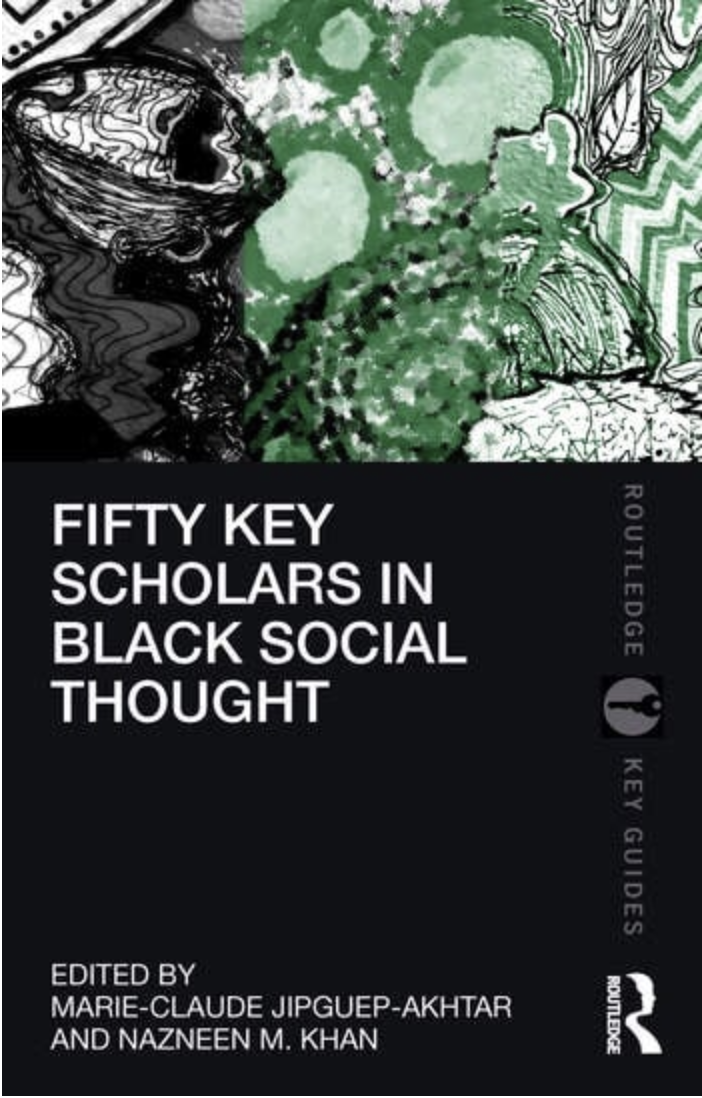
New publication – E. Franklin Frazier Entry in 50 Key Scholars in Black Social Thought

I’m pleased to have contributed a chapter to the just-published book 50 Key Scholars in Black Social Thought, co-edited by Marie-Claude Jipguep-Akhtar and Nazneen M. Khan. The book brings together the work of 55 scholars, including two others from my institution, who write about 50 Black thinkers. One of the appealing parts of the book is that it includes profiles of intellectuals, researchers and writers from the 1800s to the present day.

The co-editors selected the people who would be featured in the book, and then found authors to write their profiles. My colleague from my time at Howard University, Marie Jipguep-Akhtar, first invited me to write the chapter on the Combahee River Collective. That would have been a great chance to deepen my understanding of their work. I would have also revisited the excellent oral histories included in How We Get Free: Black Feminism and the Combahee River Collective, which I had previously read with my graduate students in a seminar on Multiracial Organizing in the United States. However, I ended up opting to write about E. Franklin Frazier instead.

I switched partly because I thought that while there would be plenty of other authors interested in writing about the Combahee River Collective, there were probably fewer who might want to write about Frazier; he is farther behind us in history and has a less positive reputation among contemporary scholars. I also chose him out of personal curiosity to learn more about him. Frazier was the long-time chair of the Sociology department at Howard University where I had my first faculty job. For the first few years of my time there we worked out of the same set of offices that he did – there was a rather grand office for the department chair with built-in wooden bookcases and a fireplace that he would have occupied.

Writing about Frazier gave me a chance to improve my understanding of the period of Black intellectual history to which he contributed and its relationship to the department and university where I began my faculty career. This meant grappling with the the fact that while much of his career was dedicated to fighting anti-Black racism, his sexism harmed Black women. As a result, his writing was part of the body of scholarship that necessitated the corrective work of Black feminists such as those of the Combahee River collective.

New job at Arizona State University

This week I began a new position as an Assistant Professor in the School for Social Transformation at Arizona State University. I come to this position after working for five years as an Assistant Professor in the Department of Sociology and Criminology at Howard University in Washington DC.

My time at Howard went quickly. When I drove cross-country to DC with my luggage and my cat in May of 2015, I was excited about many things: having a job with benefits, a new role as a faculty member after many years as a graduate student, new opportunities for learning at Historically Black University, and starting a new life in Washington DC. The transition from Santa Cruz to Washington DC went smoothly. Even though I’d never lived anywhere more than an hour away from the San Francisco Bay area for more than five months, life in Washington DC wasn’t hard to adapt to. People are people, after all. I (mostly) got used to the fact that it rains in the summer, gloried in the fireflies, tried to adopt the more formal dress-code and mode of address (“hello, Dr. so-and-so”), and then settled into a middle ground between Santa Cruz and DC professional standards. I met wonderful new friends and quirky, smart colleagues, got to know dedicated students, and developed what I believe will be a lasting interest in Black Studies.

I drove back across the country to Arizona this spring a little older and a little wiser. A few things were different this time. My cat and I were accompanied by my partner, I was six months pregnant, and we drove a rented RV to minimize our exposure to the coronavirus pandemic that had exploded in the US a short time before. The pandemic restrictions got looser and looser as we traveled west from DC. When we arrived in Arizona hardly anyone was wearing masks, and the host of our RV campground referred to the virus making scare quotes around the term with her hands as she talked (“virus”). Soon after, George Floyd was murdered. Protests across the nation, including here in Pheonix, have brought longstanding anti-black police violence more forcefully into the national eye. The resulting conversations led to working with my partner Vernon Morris, my tech mentor Allen Gunn and several of Vernon’s colleagues on a public letter to address systemic racism in the academy. It was one of many such letters, the results of which are still unspooling.

I miss my friends at Howard and in Washington DC, but I’m looking forward to new adventures here in Arizona. My position in the School for Social Transformation promises many new and interesting colleagues, even if it will be a while before I meet them anywhere other than on Zoom. The coronavirus pandemic, soaring temperatures in Tempe and a newborn at home mean I have rarely left the house since arriving. But the weather will cool off eventually, and I look forward to exploring the desert and the mountains that surround Phoenix when that happens. I’m grateful to have stable employment and health care in these troubled times – so far, ASU has not announced any layoffs or furloughs.

Going forward, please contact me at my new ASU e-mail address.
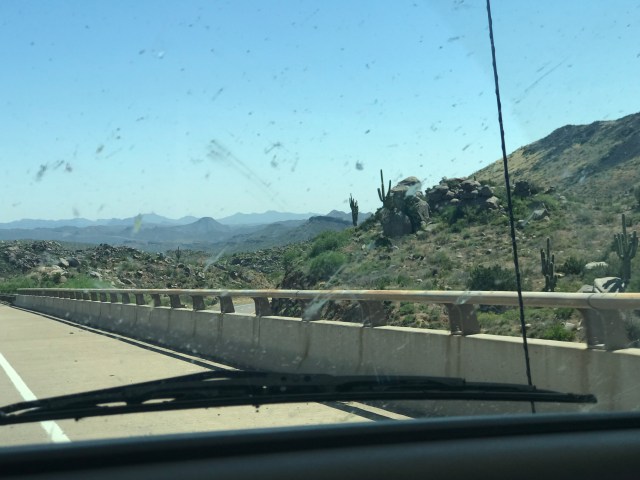
First siting of saguaro cacti as we drive West, as seen through a very dirty windshield.

Teaching Environmental Inequality: 2016 Syllabus

This post is the first of several about the the Environmental Inequality class that I finished teaching at Howard earlier this month. It was my third time teaching the class.  I wrote about its first incarnation at UC Santa Cruz in 2012 here, and shared my Howard University syllabus from 2015 here. Here’s what I did this time around:


The first time I taught the class, I kept the assignments simple with pop-quizzes and take-home essay exams. The second around, I had students do research and writing on websites they built themselves. You can find an overview of that assignment and all of the prompts I gave the students to complete it here.

This year we did a community-based research project. I’ve wanted to do a class project like this for a long time but the timing has never been right. The first time I taught Environmental Inequality at UC Santa Cruz I was filling in for my advisor for one semester only. It didn’t seem to make sense to do an intricate community-based project when I couldn’t design the project to last over multiple semesters. Also, it was my first time teaching my own college-level class as a graduate student. Also, my dad was ill. The second time I taught the class, last fall, I was brand new to Washington D.C. and didn’t yet have local contacts with whom to collaborate. This fall the timing was finally right. I had put some time into getting to know local organizations, and thought I could use the project to continue to get my bearings on the world of Washington D.C. environmental justice activism. Here’s the project overview from the syllabus above:

This semester we will work on a collaborative research project with the Smithsonian Anacostia Community Museum, Empower DC, and ANC commissioner Rhonda Hamilton from the neighborhood directly adjacent to Buzzard Point in Washington, D.C. Buzzard Point is currently being redeveloped. It will be the site of the new DC United Soccer Stadium and many other new construction projects. Our work will involve conducting oral history interviews with residents living near Buzzard Point to document their family history in the neighborhood, relationship to the community and to the adjacent Anacostia River, and experiences with pollution and development. We will host guest speakers as well as go on field trips and conduct off-campus research activities as part of this project. The Anacostia Community Museum will then add the transcripts to their archives and create a booklet based on your interviews to distribute to research participants in the winter of 2017. When the booklet is ready (early 2017), there will be an optional reception at the Smithsonian Anacostia Community Museum to which you will be invited. This effort is a pilot project to upon which I hope to build a longer-term research relationship with our off-campus partners. You will be provided with detailed assignment prompts to guide each stage of your work as the course progresses.

In the next few posts, I’ll share reflections on the boat tour we took as a class on the Anacostia River, the interviews the students conducted, and some of our in-class activities. Some of the posts will also have slideshows. Stay tuned!

Back-to-school checklist

Although the weather continues to be hot here in Washington D.C., summer has come to an end for the students and workers of Howard University. I attended the American Sociological Association’s annual meeting just as school was beginning. This conference is spectacularly ill-timed to take place right before or during many schools’ first week of classes every year. I cancelled  my first day of classes and taught two days later after getting off a red-eye from the West Coast at 6am.

Regardless of  how you spend the last few days of summer, you may feel overwhelmed by the administrative details associated with resuming classes and committee work each fall. Because I think there are few life-problems that a good list can’t help address, I created a Back to School Checklist this year to help me remember some of the details that need to get taken care of for a smooth start. Feel free to adapt it for your own purposes as you like, I know I’ll be adding things as I remember them. And if you’re really list-crazy, take a look at the fun ones available at Knock-Knock (I find their “Pack This!” list particularly helpful). Or check out Atul Gawande’s book The Checklist Manifesto – if nothing else, it’ll make you glad you don’t have to worry about whether you left a pair of scissors inside the last person you did surgery on before sewing them up.


Back to School Checklist

Classes

  • Confirm class time and space
  • Check audio-visual supplies: screen, projector, speakers
  • Finalize Syllabus
    • Update readings
    • Add new dates for each class meeting that correspond to this calendar year
    • Look at campus academic calendar and add dates to syllabus as needed (campus closed, last day to drop, etc)
    • Update assignments
    • Schedule guest-speakers
    • Schedule office-hours
  • Create course website (Blackboard, etc)
    • Make sure that enrolled students are in the system
    • Add syllabus
    • Upload readings
    • Set up places for students to turn in work for each assignment
    • Set up gradebook
    • “Publish” site so it is visible to students
  • Create attendance sheet
  • Create sign-up sheets (for example, if students will each facilitate a day of classroom discussion)
  • Order required books at campus bookstore
  • Put required books on reserve at campus library
  • Add chalk, eraser, or whiteboard pens to teaching bag as needed
  • Add paper and pens for big nametags on desk as needed
  • Prepare lesson plan and slides for first day of class. Make time to:
    • Do names and/or ice-breaker
    • Introduce self
    • Introduce class – with hook!
    • Review syllabus – use screenshots of book covers when possible
    • Sign up for assignments that are date-specific
    • Take attendance
    • Collect information of students hoping to get in to class


Research Assistants

  • Get students signed up for independent study classes as appropriate
  • Create proxy library accounts that let students check out books to my library account
  • Schedule first team meeting with students
  • Reserve room for team meeting
  • Prepare for first meeting
    • Review and organize prior student work
    • Prepare list of projects and tasks to be divvied up amongst group. Decide how many people are needed for each project
    • Create agenda
    • Create sharable to-do lists and timesheets
    • Update IRB “how to” document that details what students need to give me in order to be approved by the IRB as research assistants
    • Update all other “how-to” documents as needed to support student tasks
    • Select and upload introductory readings to help frame research tasks
    • Add students to Google Drive folder that houses group files
  • At first meeting
    • Introductions
    • Background on research projects and descriptions of tasks
    • Divide up tasks
    • Describe optional events happening this semester that students can participate in as part of their weekly hours to supplement their learning
    • Share contact information
    • Assign background reading
    • Give overview of the IRB and the describe the documents students need to provide to be approved by IRB as research assistants
    • Get familiar with the documents in the shared folder on Google Drive
    • Review project communications and tracking (to-do list, hours sheet)
    • Schedule training for students with librarian on how to find scholarly articles
    • Pick weekly meeting time
    • Schedule meeting between each project group and myself to provide training about how to get started with their task


Other

  • Add campus calendar dates to personal calendar (due dates for grades, last day of classes, etc)
  • Add dates on department calendar to personal calendar (faculty meetings, report due dates, etc)
  • Make work plan for year/semester
  • Post office hours on door
  • Return or renew library books
  • Clean office!


Overcoming Corporate Threats to Academic & Community Research on Industrial Animal Production

I chaired a panel discussion on “Overcoming Corporate Threats to Academic and Community Research on Industrial Animal Production” earlier this month at the annual meeting of the Association for Environmental Studies and Sciences. The panel was organized by Zoe Ackerman at the the Rachel Carson Council. It focused on the experiences of people whose health is impacted by the North Carolina hog industry. More specifically, panelists discussed industry intimidation and legal tactics designed to suppress research on the health impacts of concentrated animal feeding operations (CAFOs) on their nearby human neighbors. Steve Wing, the leading scholar on this topic, was part of the panel design, but in the end was unable to join. However, the following panelists gave a great overview of the issue and how it relates to broader threats to research in the public interest.

Keep an eye out for more work to come on this subject coordinated by the Rachel Carson Council. Also look out for announcements about the North Carolina Environmental Justice Network’s annual summit. In the meantime, the video below provides a short overview of our conversation. See also the following pinterest board where I collected articles I used to inform my framing remarks, which are not included in the video. I linked Steve Wing to Ignacio Chapela, William Cronon, Tyrone Hayes, and Anita Sarkeesian, who have all experienced serious push-back from the industries and social groups threatened by their research. Like many of the other panelists, I emphasized how industry relation against scholars has a chilling effect on the kinds of questions that we ask.


Reading Ta-Nehisi Coates with Introduction to Sociology students

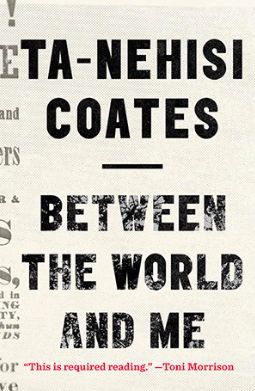
Screen Shot 2016-05-27 at 10.11.14 PMI assigned Ta-Nehisi Coates’s award-winning book Between the World and Me to my Introduction to Sociology students during both the fall and spring semesters of this last academic year. In both classes it was the last assigned reading. The book gave me an opportunity to do a number of things:

  1. Build on the conceptual work we had already done by training students how to identify sociological concepts when they are presented in different language than what they are learning in the classroom
  2. Show how ideas we are learning about in the classroom circulate in the real world
  3. Provide space to reflect on racial inequality as experienced by Coates’s life story and his efforts to pass on his knowledge to his son, for whom the book is written.
  4. Learn a bit more about Howard’s history and help students get excited about using their time there to learn and grow (Coates attended Howard University and writes glowingly about his time there in this book)

The first time I taught the course, I had students practice identifying concepts we had learned about in the as they appeared in the book. I used a variation of this worksheet to do so. After they worked on this task in small groups, I had students read the passages aloud and describe which sociological concepts they thought each illustrated. (This led to one of my favorite moments in that class when the students broke into spontaneous applause at the conclusion of a particularly impassioned reading).

Here are the concepts they worked with:

  • essentialism and anti-essentialism
  • intersectionality
  • structural racism
  • structure and agency
  • race as neither “essence nor illusion” (from Omi and Winant)
  • monolithic
  • race vs. class

Here is one of the excerpts they analyzed (from p. 103):

It is not necessary that you believe that the officer who choked Eric Garner set out that day to destroy a body. All you need to understand is that the officer carries with him the power of the American state and the weight of an American legacy, and they necessitate that of the bodies destroyed every year, some wild and disproportionate number of them will be black.

The students discussed how this excerpt illustrates the concept of structural racism because of the way that the disproportionate death of black Americans at the hands of the police is not dependent on individual racist intent of any single police officer.

In the second version of the class, which was much larger, I read the excerpts aloud myself and we discussed them as a large group without the benefit of small group work first. I also showed this video of Coates speaking about his book. I thought the video would help bring the text alive and underscore that authors are real people, just like them.

Next time I teach a small version of the class, I’ll return to having the students fill out the worksheet I provide in small group, followed by large group discussions. This approach gave them the best chance to really work through the ideas and learn from how others did the same. Then I’ll consider skipping the video and instead have students read and discuss reviews of the book from a wide variety of political perspectives. I would assign at least one from the left that criticizes the book for not going far enough, perhaps written from a feminist perspective, and one from the right that sees the book as racially inflammatory in a world that is now “post-race.” This would broaden the students’ thinking about the book itself, and could also be used as an opportunity to learn about intellectual and political discourse.

Trash as a renewable resource?

Over the last few years I’ve been involved with a multi-campus group thinking about the many different ways that the concept of sustainability is used. Under the able leadership of Miriam Greenberg, this group recently launched an collection of digital essays called Critical Sustainabilities: Competing Discourses of Urban Development in California. It features short case-studies to show how the idea of sustainability is used for competing political purposes. It also features essays about key-words that underpin sustainability debates. The project’s focus on Northern California complicates the ways in which the area is often seen as a model of sustainability efforts.

My contribution, with co-author Lindsey Dillon, analyzes efforts to create a policy mechanism by which energy created from trash could qualify for sale as renewable energy in California. This poses the strange prospect of categorizing trash as a “renewable resource.” We locate this debate in the small farmworker town of Gonzales. A proposal to locate what was alternatively called a “waste-to-energy plant” or an “incinerator-in-disguise” was recently defeated there. Though the case center on Gonzales, the broader conflict is happening nationwide. You can read our piece here.

Those of you with overlapping research interests may be interested in submitting a paper to the group’s proposed panel at the 2016 annual meeting of the Association of American Geographers.

Worker.GonzalesLandfill

Workers cover the existing landfill at the site of the proposed “waste-to-energy” facility in Gonzales.

Goodbye, UC Santa Cruz. Hello, Howard University!

This summer I graduated with my Ph.D. from UC Santa Cruz, packed up my home, and drove across the country to Washington DC. Since August 16th I have been working as an Assistant Professor at Howard University‘s Department of Sociology and Anthropology. The department is in developing an area of expertise in environmental justice scholarship, and next year the campus will launch a major in environmental studies. So, it’s an exciting time to join Howard’s faculty. I’m also looking forward to helping to bridge the new emphasis on environmental justice with the department’s existing expertise in medical sociology through research on environmental health. I hope to continue to collaborate with environmental justice/health scholars and activists in California and also make new connections here in Washington D.C.

When I left UC Santa Cruz, the campus was in the final stages of becoming a federally designated “Hispanic Serving Institution.” In the Sociology department, about 65% of the undergraduate majors were part of the first generation to go to college in their family. I enjoyed working with first-generation college students and the campus’s growing population of undocumented students, and am proud to now work at a historically black university also committed to populations underserved by higher education.

This year I am teaching “Introduction to Sociology” and “Environmental Inequality.” Over the next few years I plan to develop new courses in “Sociology of Environmental Health” and “Sociology of Food and Agriculture.” We are in our second week of classes already and the students have been great. But, I’ll miss being able to say that my school mascot is a banana slug!

If you are in the area, drop me a line to say hello!

My new professional home - Frederick Douglass Memorial Hall.

My new professional home – Frederick Douglass Memorial Hall.

Teaching “Making California”

This spring I taught a new class in the Community Studies program at UC Santa Cruz called “Making California.” Overall, the idea was to teach students about key moments in the history of California in order to help them better understand and intervene in current events. I used C. Wright Mills’s concept of the sociological imagination as a foundational theory to help students understand how individual lives are shaped by the broader historical and political context in which they exist. We also paid attention to how social movements have, in turn, helped people to change the political context in which they live. A second key theme of the course was California’s racial history and recent transition to  majority people of color state. Finally, we spent a lot of time thinking about California’s role in the nation and world. This meant we read about both how the state has influenced events outside of its borders, as well as been influenced by the broader world.

For the core class assignment, students analyzed a key moment in California’s history by explaining what happened, what led to the events described, and the current relevance of those events. They were tasked with writing for a public audience, and crafting an introduction to capture a reader’s interest and draw them in to reading the rest of their essay. Students presented their work orally, and in historical order, at the end of the course. In this way we created a partial, “People’s History of California.” The written component of the assignment took the form of multi-media essays they wrote on websites of their own design (more on this assignment in my next post). This assignment was inspired by conversations with Ildi Carlisle-Cummins about how we could incorporate her new project, Cal Ag Roots, into the class. The launch event for Cal Ag Roots will involve telling the story of three key moments in the history of California agriculture. So, several of my students chose her stories as their “historical moments” to work on for the purpose of the class assignment. Their work therefore supplemented her own background research on these three key moments.

I drew on syllabi developed by Julie Guthman and Lindsey Dillon to help structure the class.  See my own syllabus below.