Academic Job Market Timeline

Later today I’m participating in a professionalization panel in my department about academic planning. My contribution will be to walk through the timeline of applying for academic jobs. I’ll break the tasks down as follows, according to my experience in the field of Sociology.

Spring of the year before you go on the market

  1. Communicate with committee members. Make sure they are supportive of you going on the market in the fall. This includes having a conversation about the likelihood of you being ready to finish your dissertation within the next year. It also means asking how much of your writing needs to be completed before they will be willing to write letters of recommendation on your behalf.
  2. Communicate with other potential letter writers not serving on your dissertation committee, and confirm whether or not they are willing to write you letters, and what their availability will be for the following year. For example, will they be on sabbatical and unable or unwilling to write letters during that time?
  3. Ask your advisors and other academic colleagues about regularly offered postdocs and think about which ones might be a good fit for you. Many postdocs require you to already be in conversation with a member of the faculty at the hosting institution when you apply. That can take the form of a requirement for a faculty member to officially sponsor you, to write you a letter of recommendation, or to work with you on a collaboratively developed research proposal. Use your academic networks to get introduced to appropriate faculty members at the host institutions. The earlier you do this, the better. However, if you don’t get to this task in the spring, keep trying in the summer and fall.

Summer

  1. Ask to see the job documents submitted by any friends who have gotten academic jobs in the last few years.
  2. Prepare the following documents for use in your applications. Not all applications will ask for every one of these documents, but if you do a large search, you will need to use all of them at some point. You may also need to prepare a Diversity Statement, though only a small minority of applications require this document.
    1. CV
    2. Cover letter
    3. Research statement
    4. Teaching Statement
    5. Evidence of Teaching Excellence
    6. Research Proposal (for postdoc applications)
    7. Transcripts
    8. References
    9. PDFs of your publications and/or writing samples
  3. Tell friends in your academic networks that you are going on the market this year, and ask them to send you job announcements that they think might be a fit for you.
  4. Sign up for job announcements. Ask your advisors and other colleagues what listserves and job banks frequently post jobs in your area, and sign up for them. I looked for job announcements in the various professional listserves that I belong to, one of which I joined specifically for their job postings. I also used the following job banks:
    1. American Sociological Association Job Bank
    2. California State University job bank
    3. Vitae
  5. Create a system for tracking jobs that you plan to apply for, or have already applied for. Here’s a copy of my JobSearchTemplate.
  6. Get access to software with which you can edit pdfs. Many of your job applications will ask for multiple documents to be put together in a single pdf, so you will need to be able to combine and divide pdfs for different purposes.
  7. Shop for interview clothes, but keep in mind you might not get any campus visit requests in which to wear them in your first year on the job market.
  8. Consider signing up for the Employment Service interview program at the August meetings of the American Sociological Association. In most cases, if you can still apply for the same jobs even if you do not do these 20 minute interviews, but it can be a good place to practice your interview skills and learn more about the positions in question. Even though these mini-interviews typically won’t require you to turn in your job documents, the more work you’ve done on all of your job documents by this time, the better prepared you will be to present yourself in an interview setting.

Fall and Winter (Sept-March)

  • Watch for new jobs to apply for, and continually add them to your centralized spreedsheet.
  • Apply for the jobs you as their due dates approach. For each application, tailor your job documents accordingly. This process will be the equivalent to taking on a part time job on top of your existing obligations, so lean on your friends and support structures for help dealing with the stress. My first job application was due (unusually early) on August 4. Application deadlines start in earnest by September 1st, and are in full swing by September 15. Postdoc applications tend to be due a bit later than tenure-track faculty applications.
  • If you get any phone or Skype interview requests, set time aside to prepare as needed.  This involves coming up with a list of questions you may be asked, preparing answers for them, and asking friends to run you through several practice interviews.
  • If you get any campus-interview requests, set aside time to prepare for them as well. You will also likely need to prepare a job-talk based on your research, and perhaps also a teaching demonstration.
  • Keep applying for jobs! I am grateful to a friend who told me to stick it out and just keep applying when my energy was starting to flag. You never know which job might end up working out.

Spring

  • By March and April, most of the tenure-track job application deadlines will have finished, but lingering postdoc opportunities will continue. At this time there will also likely be an upswing of non-tenure-track job opportunities. Calls for lecturers, adjuncts, and visiting assistant professors will continue through the spring and in some cases the summer, before the job market starts all over again the following year.

Resources

  • For guidance on how to create the job documents listed above, see Karen Kelsky’s blog The Professor is In, which covers all of them in great detail. She also covers phone interviews, Skype interviews, and campus visits. Her advice covers applicants applying to tenure-track jobs in all academic settings except for community colleges.
  • With the increased workload of the jobmarket and the increased uncertainties about your immediate future comes increased stress. Plan as much self-care as you can to help get through it. If you have access to the National Center for Faculty Development and Diversity, take a look at their webinar on “Strategies for Dealing with Stress and Rejection.”
  • Read the job-market advice at The Professor is In, The Chronicle of Higher Education, and Vitae. It is invaluable. However, these sources of insight and advice can also be demoralizing, so tread carefully. The trick is to learn how to present yourself as best as possible on the job-market, but not to get so overwhelmed and demoralized by the process that you stop applying for jobs or throw away your career plans. Unless, of course, you decide that the academic life is not for you, in which case Karen Kelsky and others also have advice about how to transition into an “Alt-Ac”  or “Post-Ac” job – a job outside of academia.

The last-day-of-class student conference: part 2

This post is a continuation of my last post on “The last-day-of-class student conference.” That post provides an overview of the project, in which students participate in a student conference modeled after a poster session at an academic conference. This post gets into the details of how to set up the event.

Few teachers have a lot of extra time to invest in event-planning, so I offer my experience here. The colleagues who guided me in shaping the assignment emphasized that planning the conference can quickly get out of hand and helped me minimize time spent nailing down logistical details. Thanks again, Ariana Kalinic and Christie McCullen!

Event planning

  • Find a location to host the event early. The campus space that I wanted was booked very early in the quarter, and many other campus spaces required use-fees that I could not provide. Sociology staffer Barbara Laurence helped on this front by suggesting, and securing access to, our department lounge. This turned out perfectly, as it made it easy for people from my department to stop by the event without having to leave the building.
  • Provide refreshments! Food makes the space more sociable and sets it apart from a regular classroom experience. My department provides $50 of funds for each class to work with. I chipped in an extra $25 so we could have coffee, tea, and snacks provided by the campus coffee-shop downstairs. Barbara Laurence took care of this for me, too. Thank you Barbara!
  • Tell guests to arrive 20 minutes or so after the event begins, to give the students time to set up their posters, as well as time for yourself to make any last announcements.
  • Make a plan for displaying posters. I told my students that at least some of them should design their posters to be able to stand on their own. These we put on a table. The rest went on a the walls or on a few easels provided by the department (thanks Barbara!). I brought blue, “paint-safe” tape to use on the walls. Unfortunately, it had very little sticking power. Many of the posters drooped or fell down and needed to be reaffixed during the event, oh well.
  • Make a plan for presenting the posters. I originally thought I would divide the students into three or four groups and have each group stand next to their poster during a pre-assigned time. This seemed excessively complicated, however, so I instead followed Christie McCullen’s advice and told everyone to spend half the time at their own poster and the other half circulating. That worked just fine.
  • How long will the event last? I had a three hour time slot to work with, but chose to use 1.5 – 2 hours instead (I set an explicit time at which the event would end, but have since forgotten exactly how long it was). There was just enough time to evaluate the work of all 40 student, but the event was was also short enough to sustain the group energy for the duration.

Structuring and evaluating the assignment

  • Group work or no group work? I had all my students write their papers separately so I wouldn’t have to deal with complaints about anyone not pulling their weight. But, I let students who wanted to team up on their posters do so. I told them that they would both receive the same grade regardless of who did what on the poster, so they should choose their partners carefully. I also told them they could “divorce” their partners if needed. There were no problems.
  • Give explicit guidelines about what is required on the poster, as most of the students will not have made one before. If I had more time, I would have liked to require them to turn in draft posters to be improved upon for the event itself in order to help them learn best practices of visual communication. Instead, I required a proposal and draft for the paper, but not the poster. You can see the assignment prompts at the bottom of this post, or download it here.
  • How will you grade the posters? On the advice of my colleagues, I graded all the posters during the event itself so I didn’t have to take home a pile of oversize, falling-apart posters and then return them to students. This plan required me to have brief conversations with each student in front of their poster during the event itself. I created a single spreadsheet with each student’s name and a series of criteria on which to judge their work. I quickly abandoned this approach in the chaos of the event and just gave each student a holistic single grade after I looked at their poster and heard them speak about their work. I worked my way around the room systematically, so students could come stand by their work as they saw me approaching. I also quickly figured out that I only had time for short conversations with each student, and in a few case watched them have conversations with others rather than directly interacting with them myself.

The last-day-of-class student conference: Part 1

Each quarter I try at least one new pedagogical idea in the classroom. Over time, this has given me a wide range of teaching experiences that have helped hone my style and priorities. As I continue this practice into the future, I hope it will also keep my teaching nimble and current.

Last quarter’s “new thing” was the student conference. As is often the case, I looked to my colleagues for inspiration. For this project, I drew on the experience of super-star teachers Ariana Kalinic and Christie McCullen. Thanks, you two! To pay forward their generosity, I share my experience with the assignment here.

The student-conference is modeled after a poster-session at an academic conference. Each student prepares a poster that provides an overview of the work they have conducted for their class research paper. They presents their posters at an end-of-the-quarter event scheduled during the allotted finals period. Students stand by their poster to answer questions for half of the event, and look at their peers’ posters for the other half.

If you’ve been to a million academic conferences already, this may not sound that exciting. But when we tried it in my Nature and Society class last quarter, I loved it!  Here’s why.

  • Students practice describing their intellectual interests in a semi-formal, semi-social setting. The give and take of the conversations that result introduces students to the pleasures of learning and discussing ideas.
  • The event emphasizes active learning by asking students to circulate and ask questions of their peers, rather than passively absorbing information in the form of end-of-the-quarter presentations.
  • Students get to learn from each other. This underscores that the teacher is not the source of all knowledge in the world, and conceptualizes all of the class participants as part of a learning community. Hopefully, decentering the teacher as the source of information positions students to become lifelong learners after they are no longer in school.
  • Students describe their projects over and over again as new people visit their posters. This improves their ability to concisely describe their work as they try new ways of saying the same thing.
  • Our event included not just the students in the class, but a handful of faculty and graduate students as well as some of my students’ friends and significant-others. This helped students meet other people that share their interests. I saw my students engage with these visitors about other writing they might want to read, other classes they could take before graduating, and the political implications of their research.
  • Students get to interact with more than one teacher in the same space. This let them have intellectual conversations with faculty and teaching assistants that cut across their experiences in separate, often siloed, classes.

A note on evaluations.  At my university, our student evaluations happen at the end of regular class meetings and before the finals period. Because we held the student conference during finals period, this meant that students were not able to reflect on the event in their course evaluations. To get a sense of what they thought in a systematic, anonymous fashion, I sent out a SurveyMonkey online evaluation after the class ended. Unfortunately, I didn’t get around to it until the students had all left campus for vacation. I also never sent out reminder e-mails after the first request to take the survey. So, only five students completed it. For what it’s worth, they all responded “yes” to this statement: “I would recommend the instructor incorporate an end of the quarter student conference into this class again in future.”

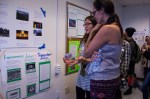
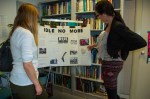
To give you a flavor of the event, I’ve posted photos below with the permission of the people depicted. Click on the thumbnails to see enlarged versions. Tomorrow I”ll post more information about how to set up the assignment.

“Nature and Society” syllabus

Last fall I taught Nature and Society in my Sociology department for the first time. A few people have been asking to see my teaching materials recently, so I’ve embedded my syllabus below. You can also download it here. I’ll post the assignment prompts tomorrow, and perhaps some of the in-class activities soon thereafter.

Overall, I’m pleased with how the course worked out. On the last day of class, I asked the students to do a five minute free-write in which they reflected on what they had learned. I told them to describe what was most interesting, surprising, or memorable about the class. After they had processed their thoughts individually through the free-write, I asked for volunteers to share their thoughts. The group discussion that followed touched on a number of class themes, but two stood out in particular. Students were moved by the realization that human society is dependent on the environment. They also appreciated learning that the environment and environmentalism isn’t just for white people.

At first the simplicity of these realizations startled me, given the wide-ranging and complex topics with which we had grappled all quarter. But on reflection, I was satisfied with these learning outcomes. Indeed, much of the world continues to act as if human society knows no physical restraints. The discipline of sociology (in which most of my students were being trained) is no exception. For the most part, our canonical thinkers treated human society as somehow separate from the environment. The more recent creation of the sub-discipline of environmental sociology is one small exception in a large field. Similarly, national environmental organizations in the US continue to be staffed largely by whites, as a recent report by Dorceta Taylor documents. So, it makes sense that many of my students had not previously given much thought to human dependence on the environment, nor the many links between race and nature.

I hope to teach this class again in future, so please feel free to send your thoughts and reading suggestions.

Valentine’s Day and Fossil Fuels

If you’ve ever been to a workshop on how to write an op-ed, you’ll know that the leaders spend a lot of time talking about the need for your piece to have a “hook.” This usually means finding a way to link what you want to say to some kind of timely news event. Most of these are fairly straightforward. On Mother’s Day, you publish your op-ed about the need for state-sponsored maternity leave. On Valentine’s Day, you write about worker abuses and pesticide poisoning in the international cut-flower industry. Or, for another Valentine’s Day idea, you write about fossil fuels.

Wait, what? How do fossil fuels go together with Valentine’s Day? Well, watch “Breaking Up With Fossil Fuels is Hard to Do” for an example of a masterful, if somewhat unexpected, media “hook.”


Then, use it in your classrooms!

  • For media studies classes, use it as an example of a media “hook,” as described above. Or use it after showing this video first. Then use both videos to analyze framing, strategic political communication, and how political actors respond to the messages of their opponents.
  • For environmental studies, social movements, or politics classes, use the video above and this video as a way to get students interested in the politics of climate change. Both videos tell simplified, politicized stories. What truth is there in both videos? What are the the different plans that already exist for lowering our use of fossil fuels? What political forces oppose these plans? How likely are the plans to succeed in the contemporary political moment? What would it take for them to succeed?
  • For gender classes, watch the first video and ask students, “How is gender being used in this vide? What does it mean that the “fossil fuels” character is female? That the narrator is female? That the story is tied to Valentine’s Day and breaking up? What stereotypes about women are being used to help make the point that we shouldn’t “Break up with fossil fuels?”

Thank you to Jean Boucher and Milton Takei for sharing these videos on the environmental sociology listserve of the American Sociological Association. Happy teaching!

New digital project in honor of Teresa De Anda

Today I released a new digital project to honor the memory of California pesticides activist Teresa De Anda, and to help educate the public about the problem of pesticide drift. In Her Own Words is an expansion of the blog post I wrote the day before Teresa’s memorial service last fall. It includes photography, new and previously published oral history, suggestions for readings to use with the website in college classrooms, links to resources to help address the problem of pesticide drift in community settings, and a short essay I wrote about Teresa.

Thank you, Valerie Gorospe, for allowing me to continue to work with your mother’s stories, and to share them with others so they might learn from everything she accomplished. Thank you also for your support Linda MacKay, Lauren Richter, Tracey Brieger, Sarah Aird, Tracey Osborne, Rachel Deblinger, Zoe Stricker and Evelyn Torres Arellano.

DSC_0153 copy

With Teresa, in front of a photo I took of her, at an exhibit of my photography in Fresno. February 10, 2011.

In Memory of Teresa DeAnda

I first met Teresa DeAnda in 2007 when I sat in on one of the monthly meetings of the Center on Race, Poverty and the Environment’s Delano Advisory Board. I was there to describe my master’s research and ask the community leaders on the advisory board if they would be willing to participate in it. At that time Teresa was the group’s president, and she was quick to say yes. I learned over time that this generosity of spirit was core to who she was.

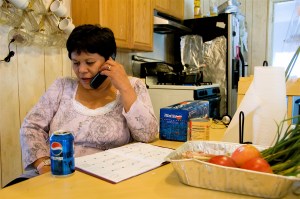
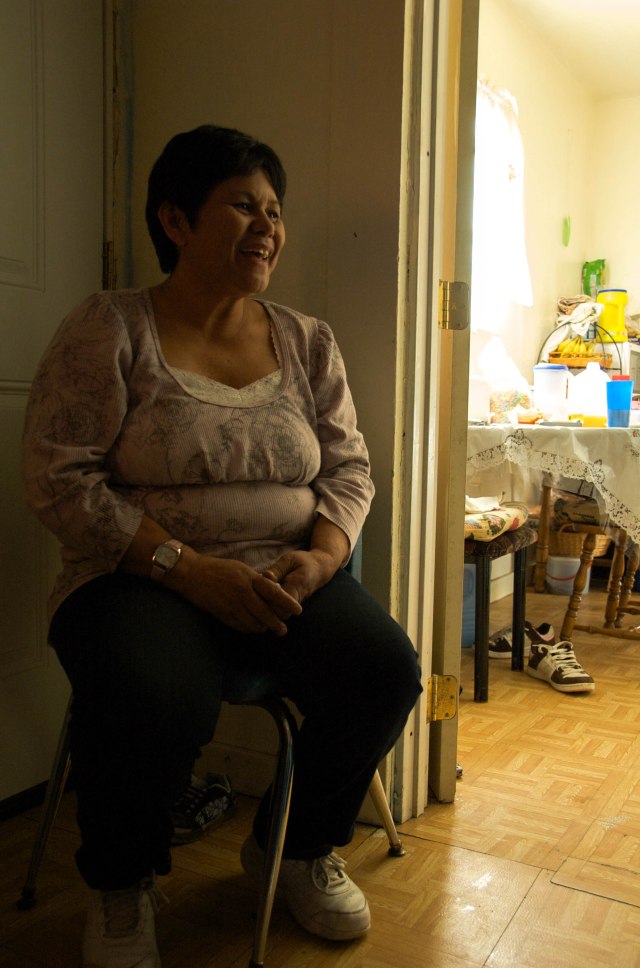
As she has done for so many others, Teresa invited me into her home to tell me about her life and her work. Over the years I continued to get to know Teresa through photographing her, through her participation in Voices from the Valley (formerly called 25 Stories from the Central Valley), and through the many other environmental justice events that led our paths to regularly cross. I came to know her as generous, fierce, and a lot of fun.

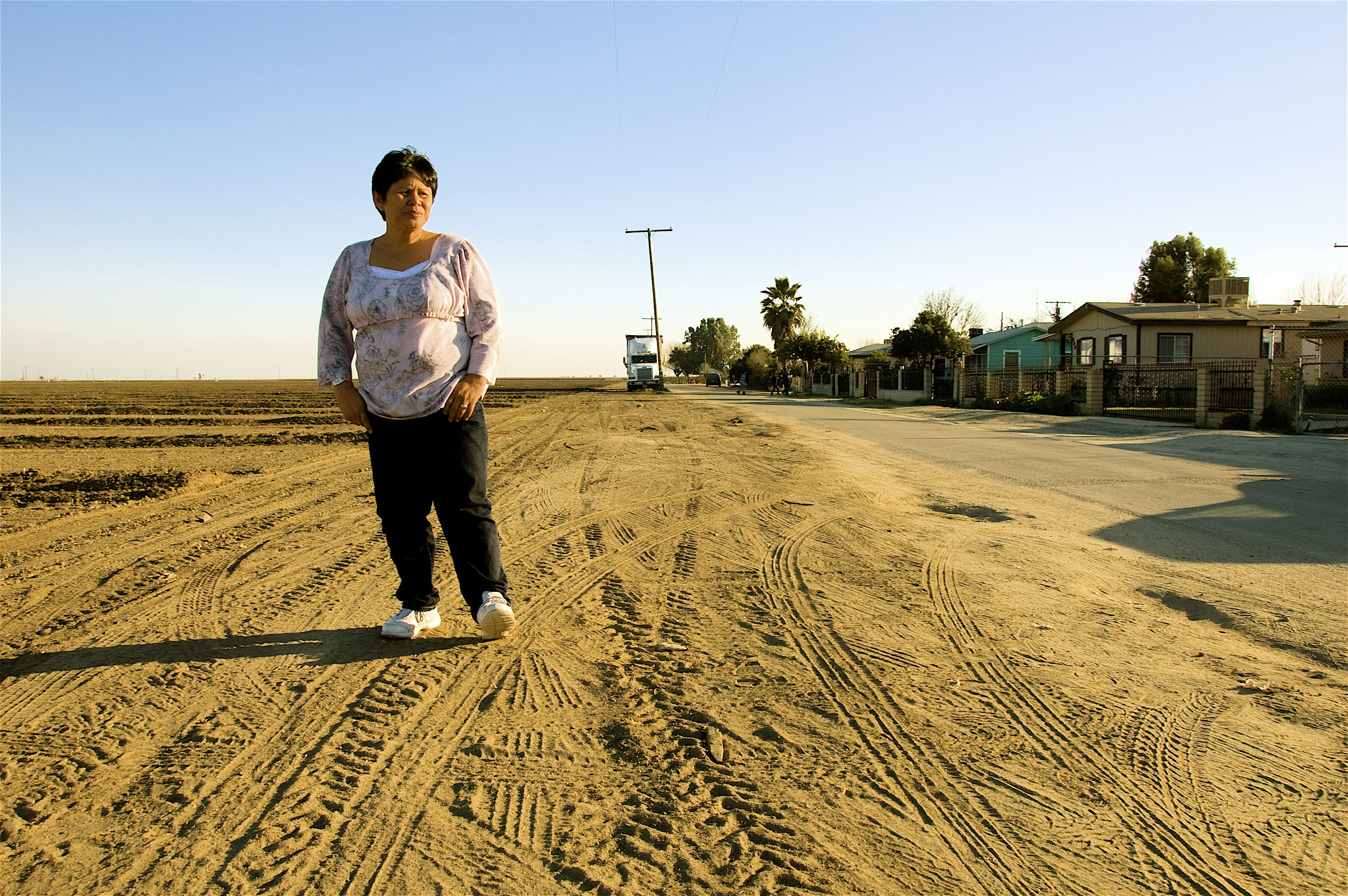
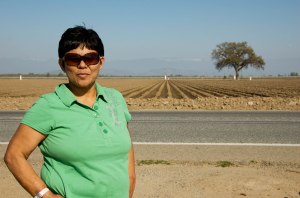
Teresa lived next to vast fields of industrial agriculture. When we first met she told me about the regular pesticide drift she experienced in her home in Earlimart. She told me about how many people in her community had cancer.

She later got cancer herself. Her death at 55 is made doubly tragic by the fact that it is hard to think of her illness as random, rather than as part of a consistent pattern of toxic exposure in politically marginalized communities. Much of her life’s work involved changing this pattern. Her efforts helped put protections into place that limit the drift of pesticides into residential areas in a number of San Joaquin Valley counties, and that improve emergency response to pesticide drift incidents statewide. She was a bright light whose loss will be deeply felt.

So others might also know of her life and her legacy, I have collected below previously published excerpts from my 2007 interview with Teresa, along with some of my favorite photos of her. I have also included links to other testaments to her life, as well as information for her memorial service in Delano tomorrow morning.

TeresaOutFront copy

Our street was the first street to get evacuated [after the pesticide drifted off the fields and into our neighborhood]. I’d driven to Delano, and when I came back there was a sheriff standing at our gate. It had just gotten dark, and my husband said, “We need to get out, because there’s something happening.” I smelled it a little bit, but I didn’t smell it that strong. But I was still very disturbed. It’s a horrible feeling, getting told you’ve got to get out, that there’s something that you shouldn’t be smelling. I got the kids, and we left in the van. My husband got my blind uncle and my 87-year-old compadre, and then we drove. But I was just so fearful for the people that were staying.

Days later, we found out what happened to everybody. I had read the newspaper, but it didn’t mention what happened to the people that Saturday night, November 13, 1999. On Wednesday the UFW [United Farm Workers] had a meeting and they had all the agencies there: the county air commissioner, the fire department, an expert on pesticides, Pesticide Watch. It was just packed with mad, angry people. That night, I found out what had happened when we left.

[When the pesticide drifted over the town] the people who were the sickest, they were told to go to the middle school. And at the middle school they told the men, women, and children to take off their clothes and go down the decontamination line. Keep in mind: these people were vomiting and had burning eyes, just coughing and coughing, and so they were scared to death. They were given no privacy, just two tarps on either side, and they were told to take off their clothes. And the people didn’t want to.

One lady said, “Where’s my rights? Where’s my rights?” They told her, “Listen, you have no rights tonight; you’ve lost your rights.” And so she took off her clothes, and she said that that was the worst feeling in the world, because her kids had never seen her without her clothes, and they could see her. This is indicative of how they did the decon [decontamination]. She took off everything, absolutely everything, but she wouldn’t take off her underwear, so they yanked it off. They yanked off her Nikes, and so there she goes through the decontamination line, which was a fire-department water hose, on a cold November night. A fire-department water hose with a guy standing there holding it. She went through one line and then the other, but they didn’t wet her hair. At the end of the decon line they were supposed to have ambulances waiting, but the ambulances weren’t there yet, so they just gave them little covers and told them to sit on the ground.

So I’m finding all this stuff out at the meeting. All these mad people are just yelling at the agencies, telling them, “How could you do this to us?” And then they told us what had happened at the hospital. The people did get transported to the hospital. Some went to Tulare Hospital, some went to Porterville Hospital, some went to Delano Hospital. Well, the lady with a lot of kids, she was baby-sitting kids too, they couldn’t take all of her kids to the same place, so they wrote their phone numbers on their stomachs, like they were animals. At the hospitals, they took their information, their names, their number, their address, but they didn’t even triage them. The doctor called poison control, and poison control said, “There’s nothing happening to them, just tell them to go back home but to try not to get re-exposed.” That’s all poison control told them. So they were sent on their way and they were given the clothes that they had been in before they got decontaminated. They just gave them back to them. Didn’t have them cleaned.

So I started learning more and getting more and more angry. I couldn’t sleep at night, ’cause I was so upset at how it had changed my kids’ health and my health. When I was growing up, my dad had always said, “Trust the government. The government’s never going to lie; the government’s good,” and all that. And I thought, “No, they’re not,” because they really let us down that night, they really, really let us down. So much for trusting the government. I couldn’t sleep at night because it bothered me so much that it happened and that still nothing was being done about the people who had gotten sick. I learned a lot about pesticides. And then at press conferences they would always ask me to speak. Even though I wasn’t one of the victims that got deconned, I was one of the ones speaking all the time. They were calling me for meetings and conferences and stuff to talk about what had happened.

WTeresaKitchen copyhat happened in Earlimart was in November, so by September, UFW and us, we had formed El Comité Para el Bienestar de Earlimart [Committee for the Well-Being of Earlimart]. All of the people were victims of the accident. They were all mostly farm workers. Just a couple weren’t. We started having meetings, our own meetings without UFW, still supporting UFW in any press conference they wanted us to, but then we started having our own meetings. And then in September of 2000 we asked the farmer and the chemical applicator to pay the medical payments for the people that had asthma. It was coming out that people had gotten asthma—didn’t have it before that night in 1999—just like that, from that night, that exposure. And it had gotten in their mucus membrane and then in their lungs. And so they needed long-term treatment. We got Wilbur-Ellis [the company hired by the farm to apply the pesticide] to pay for that.We had a big press conference, right here at the house. And that was a big victory. The State of California Department of Pesticide Regulation gave Wilbur-Ellis the biggest fine that had ever happened. It’s still peanuts compared to other fines for toxic spills and stuff, but it was the biggest for pesticides. [Note: Pesticide specialists later told the activists from Earlimart that the particular chemical they had been exposed to is activated by water and that they should not have been hosed down as part of the decontamination process.]
– Source: Perkins and Sze, 2011 

***
Once there was a guy spraying, it was May, 1999, and he was spraying over there and the fog was in the house.  He wasn’t even turning off the tractor rig when he was coming up the road.  The stuff he was spraying, it was in the house.  My kids were all puking, my husband was out of town, so it was just me here.  I didn’t know to pick them up, take them to the van, and get them out of there. It looked like London fog out there, and in here it looked like San Francisco fog.  I didn’t know whether to leave them sleeping, or to take them out to more danger.  So I called the fire department, the sheriff, and they both said the same thing: “The farmer has a right to farm.  You can’t complain about this.”  And I said, “But I don’t know if we’re going to die or live or what.  This stuff, it’s really bad out here.  I know he’s got to spray, I realize that, just tell him to turn the things off when he’s coming out of the vineyards.”  You know what a tractor rig looks like?  Kind of like a monster.  It’s a noise, and then you look out, and then there’s lights.  It was in the night, so they said that they couldn’t come out.  I said that you’d better come out here and at least look at this.  I wanted it on record that I called them.
***

The next day was a Saturday, and they applied the pesticide again.  This time instead of going west, it went south.  And south, there was a low income housing complex,  I guess about 100 people live there.  They began smelling it, and they began getting sick, a bunch of kids out on the lawn vomiting.  A bunch of people from that place were calling 911, calling for help.  And basically, this is what happened from Flores’ point of view, Flores Baptista.  She said she was baby-sitting her nine month old nephew.  She was holding him in her arms.  She has a lot of kids, all of her kids were outside, vomiting.  And the baby was in her arms, and she was on the phone with 911, and she told them, “My kids are outside vomiting, there’s something going on here, we think it’s the spray.  You need to come do something about it.  Everybody’s kids are outside vomiting, and we just need some help out here.”  And the operator told her, “Just hold on, we’re trying to figure out what’s going on.  Just calm down.  I think your being calm will have a big impact on your kids, and you need to just calm down.”  And so Flores said, “OK, well I’m trying to relax, but my kids are out here, and they’re getting sicker and sicker.  And the baby I’m baby-sitting is breathing really weird, and I’m really worried about him.  I don’t know if he’s going to make it or not.  And my nephew’s looking real bad.”  And the operator kept telling her, “Look, you’re hysterical.  You need to calm down.”  This went on for 45 minutes.  They kept them on the phone for 45 minutes.  And so after 45 minutes, Flores said, you know what, and she said some bad words, and she said “I’m just going to get out of here.  I’m not going to wait for your guys.  You guys obviously aren’t coming, and I don’t know what you’re doing, but everybody’s about to die here.  We need to get out of here.  It smells so bad.”

So she got in her van, and she drove out.  And at that time, other people slammed the phone down.  When they saw people leaving, they slammed their phone down, and they got out, and they were leaving too. And so there was a caravan of vans.  They drove out to Sunset and Weed Patch. And on the corner, it was barricaded.  It’s called a stop and freeze, or freeze and keep whatever is contaminated in. They were telling people “Go back, go back, you can’t come out.”  And they’re like “No, we’re sick, and need our kids to get to the doctor.  We’re going to drive them ourselves, cause we’re not going to wait for you any more.  We were on the phone for close to an hour with that lady, and she was just telling us to sit down, to calm down, and that we were talking crazy and stuff, but no, we’re going to get out.”  And there was a lot of people that spoke Spanish.  So one of the men just went on the dirt and drove off.  Broke the barricade.

– Source: Voices from the Valley

***

Teresa.OnRoadTeresa describing visiting residents of Arvin, CA, after a pesticide poisoning incident there in 2002:
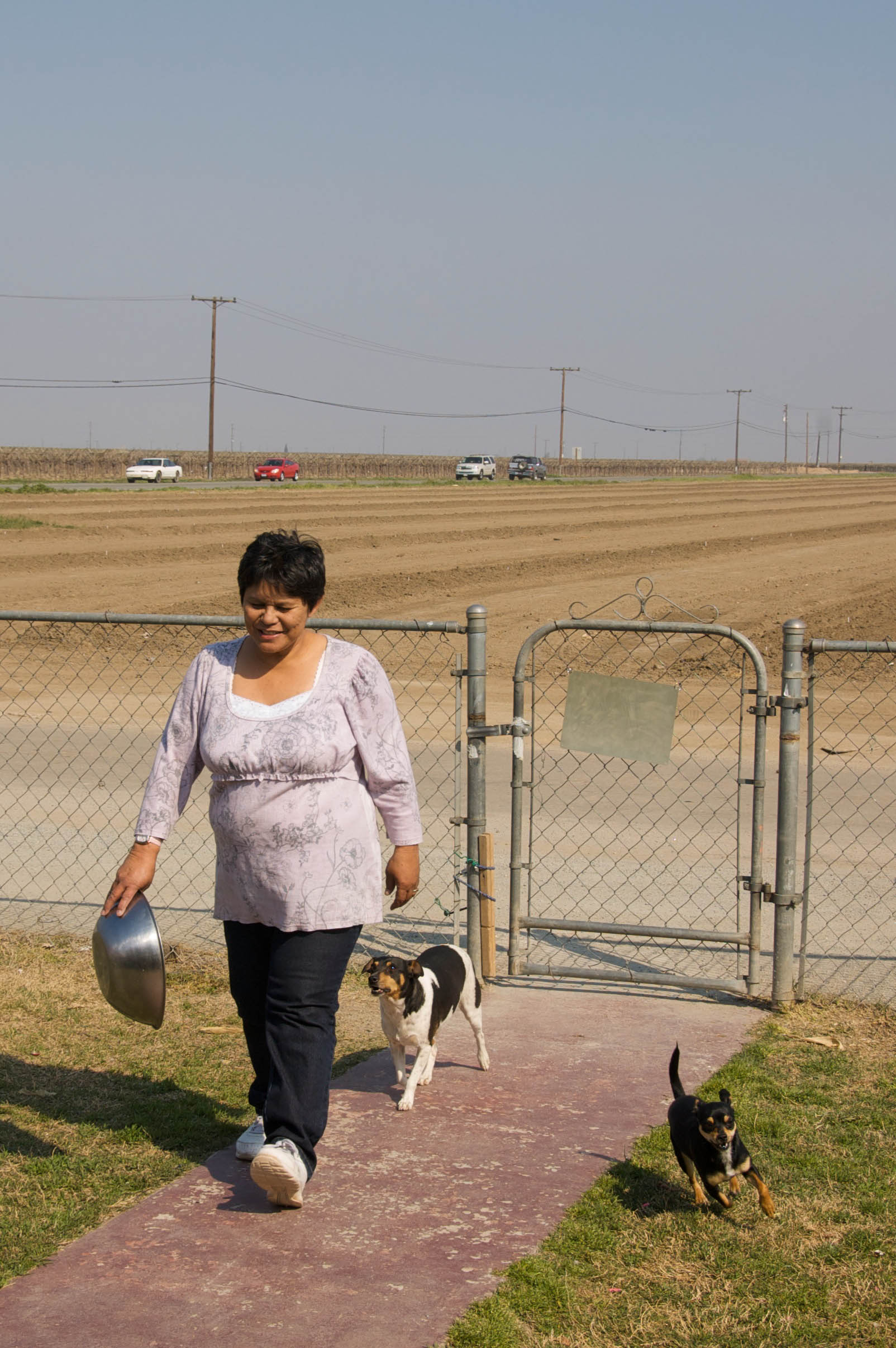
I wanted to talk to the people and let them know that when the doctors and the agencies, like the fire department or whatever, tells you it’s nothing… because they will, they’ll tell you it’s nothing.  They’ll say “Oh, it’s mass hysteria, you’re hung over,” or, “It’s just something you ate that’s making you nauseous.”  No, it’s the pesticides, and don’t doubt it.  It’s the pesticides.  Then I always want to tell them that they need to report drift.  It’s state law, drift is illegal, it shouldn’t happen.  The farmers spray the field, it leaves the field, goes on your car, goes on your property, goes on the park when you’re there. You need to report it.  I’m trying to get it across, but people still don’t call.  The numbers are so low for reports.

***
I was at a meeting with the county agricultural commissioner, and we were looking at maps of the agricultural land. I saw these little red dots on the map and asked what they were. He said, “Those mark where the bees are, they’re the buffers.” I said, “The bees have buffers and we don’t?!” He said, “Teresa….,” but I was serious.
***
I had no idea what an activist was. Now I know there’s a name to it, not just “troublemaker.”
 Teresa.InNeighbor'sHosue

Teresa.LecturingTeresa.Frontyard

Teaching low-wage work with playspent.org

Screen Shot 2014-09-28 at 8.24.40 AMOne of the activities that went particularly well in my “Women and Work” class last winter used the website playspent.org. This website is an online “game” that challenges users to make it through the month with one of three low-wage jobs without going broke. The premise is that you are one of the many Americans who have just lost your job and your home and are down to your last $1,000 in savings. Users first select a job, then choose how far away from that job to live. At each decision-point, the consequences are made clear through short pop-up text boxes and interactive features. For example, if they choose to live farther away from their job in order to reduce rent costs, their gas expenses for commuting to the job go up. After several set-up choices are made, the month begins. Users are faced with a series of real-life scenarios to respond to as the month progresses. For example,

“Your child wants to join an after-school sports team, which requires a physical and a uniform. What do you do? Say yes ($50). Say no.”

or

“Two bills are due today. What do you want to do? Pay gas bill ($100). Pay electric bill ($125). Pay them both ($225). Borrow money from a friend.”

At other moments users have to select what items to purchase at the grocery store, get paid, get strikes on their record for taking time off from work to contest a speeding ticket in court or stay home sick. At each decision point, short pop-up text puts the decision into a national context, and the amount of money they have left to get through the rest of the month changes accordingly.

I had my students “play” the game in class on one of the days dedicated to wages. I had a regular classroom, not a computer lab, so this required students to bring their own laptops. The day before I asked for a show of hands of how many people had laptops that they could conveniently bring to our next class, and enough hands went up to proceed. On the appointed day there were enough laptops in the room for students to break into groups of two to four to play the game together. Each group played the game on their own. Many went through it several times to see how they fared while making different decisions. The discussion questions below were displayed on the overhead projector while they played. I floated around the room to see how people were progressing while they played. Students got very involved with the activity, as indicated by the difficulty I had getting them to stop and the amount of noise they made!

After I called a halt to the game and got everyone to close their laptops, we discussed the experience with the questions below. (I adapted these questions from similar ones provided by Brooke Kelley on the Sociologists for Women in Society list-serve. Thanks Brooke!)

  • How many of you made it through the month without running out of money?
  • If you made it through the month without running out of money, how much longer do you think you could have made it under the conditions of the exercise?
  • What surprised you about this exercise?
  • What parallels did you see between this exercise and the Ehrenreich reading?
  • Did you make any decisions that seemed wise at the time but which you later regretted?
  • This game isn’t gender-specific. How does it relate to our class theme of Women and Work?

The students had lots to say. Those that grew up in more financially stable households found the experience of trying on low-wage work eye-opening. Students that grew up facing similar financial difficulties seemed to find the experience validating, and shared further examples with the rest of the class. All in all, this is an activity I would do again.

••••••••••••••••••••••••••••••••••••••••••••••••••••••••••••••••••••••••••••••••••••••••••••••

This activity was paired with the following readings:

Kessler-Harris, Alice. 1990. A Woman’s Wage: Historical Meanings and Social Consequences. Lexington, KY: The University Press of Kentucky.

  • “The Wage Conceived”

Sacks, N. E. and C. Marrone. 2004. Gender and Work in Today’s World: A Reader. Cambridge: Westview Press.

  • Ehrenreich: “Nickel and Dimed: Selling in Minnesota”

On Becoming a Public Sociologist: Amplifying Women’s Voices in the Quest for Environmental Justice

60853_9781452242026I received my free copy of the recently published Sociologists in Action on Inequalities: Race, Class and Gender in the mail this week, and turned immediately to the short essay I contributed. My piece, “On Becoming a Public Sociologist: Amplifying Women’s Voices in the Quest for Environmental Justice” describes my process of becoming a public sociologist through the Voices from the Valley multi-media project on environmental justice activism in California’s agricultural San Joaquin Valley. The chapter is meant to show undergrads some of where sociology might take them. It was a fun project, and I’m looking forward to reading the other contributions in the book.


Here’s the full citation for my piece:

  • Perkins, Tracy. 2015. “On Becoming a Public Sociologist: Amplifying Women’s Voices in the Quest for Environmental Justice.” Pp. 88-92 in Sociologists in Action on Inequalities: Race, Class and Gender edited by S. K. White, J. M. White and K. O. Korgen. Los Angeles, CA: SAGE Publications.


And here’s a citation to the scholarly article that grew out of the same set of interviews that formed the basis of Voices from the Valley:

  • Perkins, Tracy. 2012. “Women’s Pathways Into Activism: Rethinking the Women’s Environmental Justice Narrative in California’s San Joaquin Valley.” Organization & Environment, 25(1):76-94.