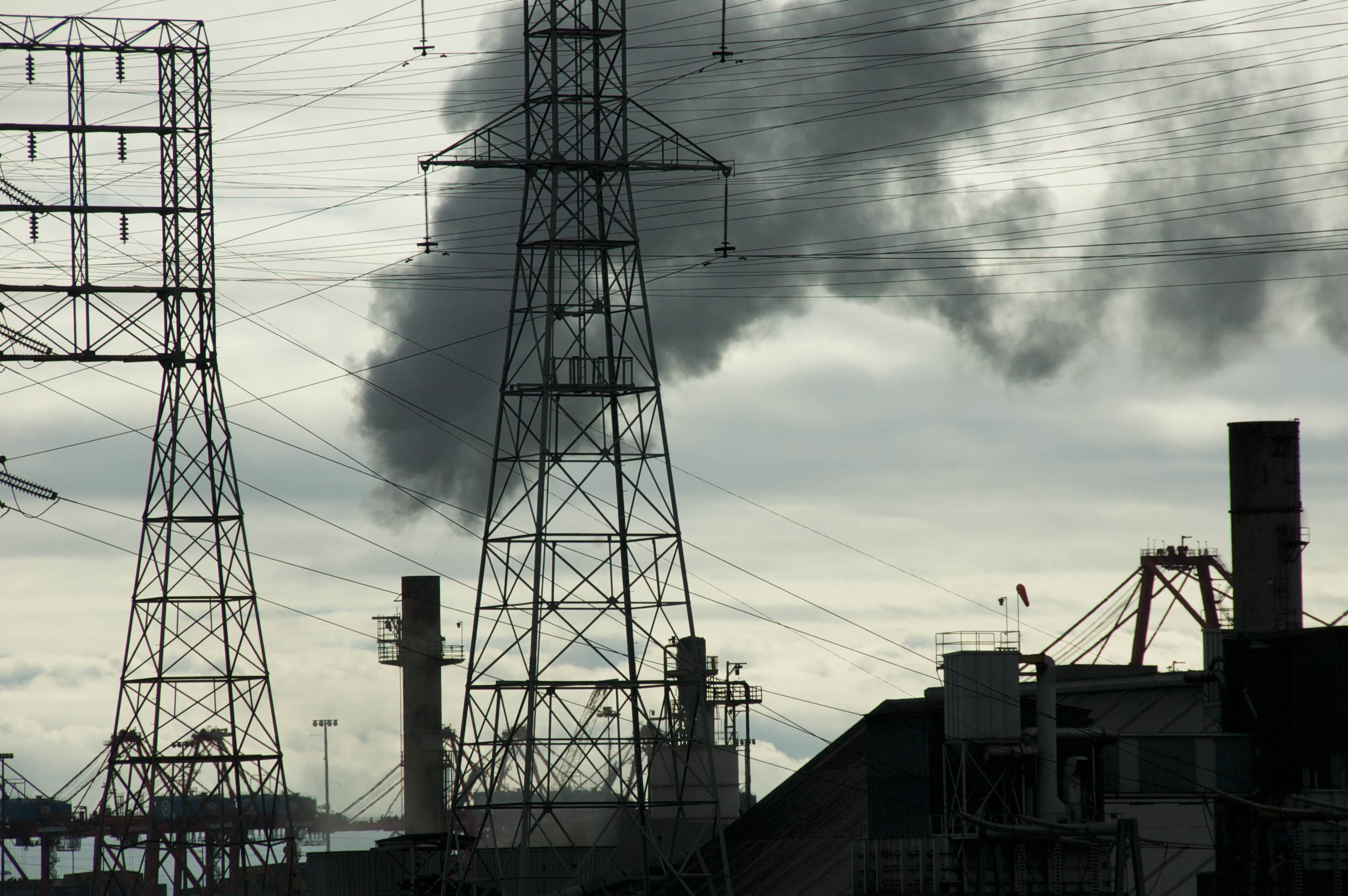
On Wednesday night I got back from a week spent visiting some of the most polluted parts of southern California, and in some cases the country. These are communities surrounded by ports, refineries, freeways, train tracks, warehouses and other industrial facilities. They live with air pollution, asthma, cancer, dust, flares, the constant rumbling of machinery and trucks, and bright lights at night. Over the course of the week I heard stories of what it is like to live there. I heard about explosions, fires, police checkpoints, and the not-so-distant history of the Klu Klux Klan. But I also heard stories of improvements made, lawsuits won and protections put in place.
My dissertation research covers the growth and changing nature of environmental justice advocacy in California over the past three decades. Although I’ve been working loosely in this field for much of the past 14 years, my prior work has focused on the San Joaquin Valley and the international arena. And as a dedicated northern Californian, I find I have little knowledge of the southern half of my home state. So, this trip was an important opportunity to expand my understanding of environmental justice advocacy, and to connect across the gentle rivalry that sometimes divides north from south.
I’ve included photos and a description of my trip here in the hopes that through my eyes you too might better understand my state and the problems we face.

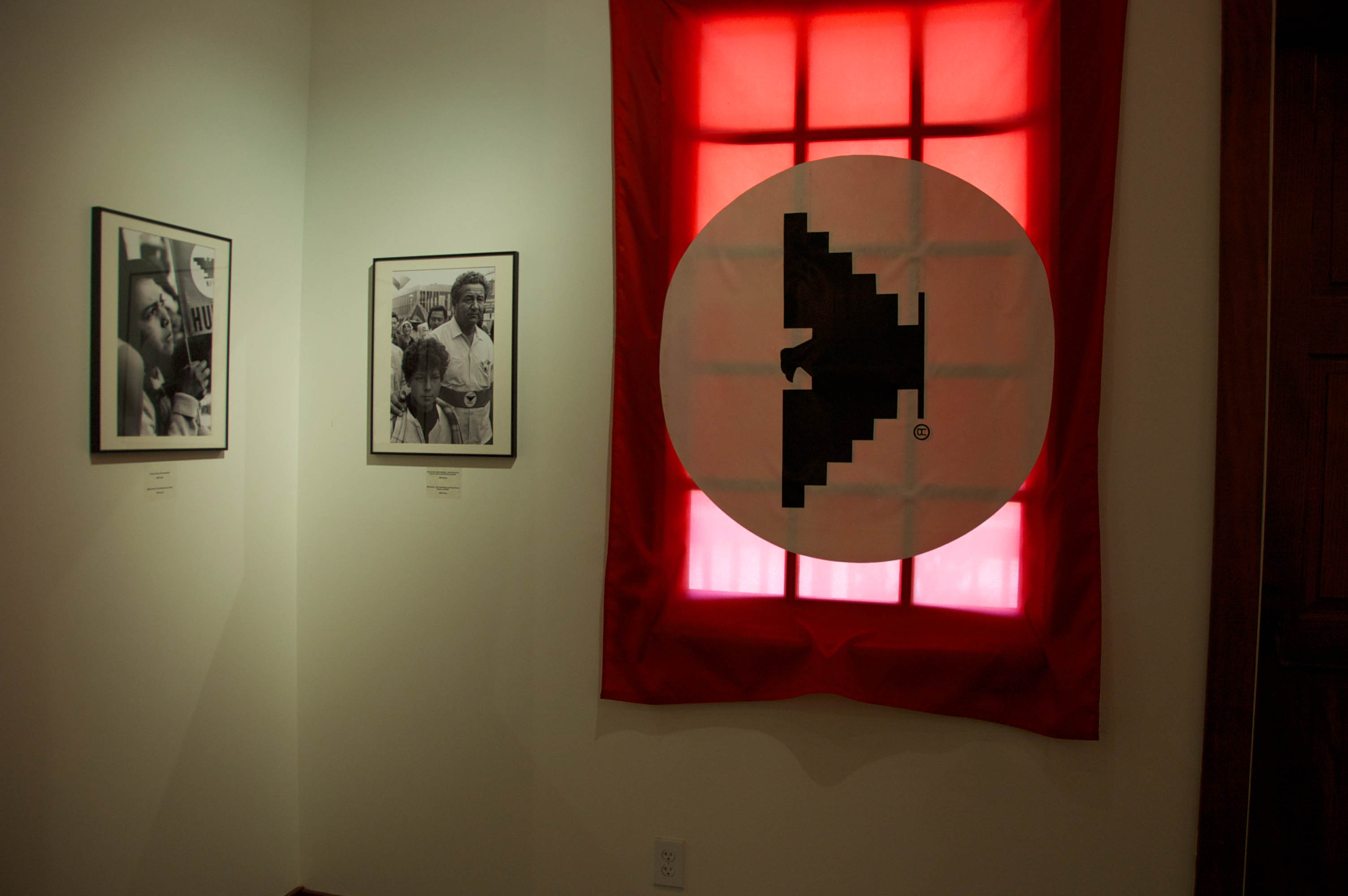
Day 1: Instead of driving south over the I-5, I went up and over the mountains that divide the Central Valley from Los Angeles through Cajon Pass. I wanted to visit the César Chávez National Monument in Keene, which President Obama dedicated just last year. Environmental justice advocates in the San Joaquin Valley have rich ties to the United Farmworkers of America, and César Chávez continues to be a potent political symbol there. The national monument houses his grave, a garden, and a visitor’s center that was showing a photo exhibit of the 1965 Delano grape strike the day I visited.
National monuments are administered by the National Park Service. Because I associate the park service with national forests and camping trips, it was jarring to see their familiar signage next to images of César Chávez, farmworkers, and artifacts from the picket line. I’m pleased to see César Chávez and the farmworkers’ movement get this level of attention and legitimacy, but also uneasy to see a memorializing process that makes it easy to think the problems they worked on are things of the past.

The drive through the rest of the mountains was beautiful. The Santa Ana winds had blown the air pollution away so I had an uncommon view of the stunning desert vistas around me. I didn’t see them again for the rest of the trip.
I ended the day happily in Riverside at a 35th Anniversary Gala Event for the Center for Community Action and Environmental Justice (CCAEJ). CCAEJ got its start through a fight against the Stringfellow Acid Pits above Glen Avon. The site contaminated local groundwater, and on several occasions released liquid hazardous waste into a canyon that carried it into the streets of Glen Avon. Activism around the site led to the creation of the California State Superfund Program and to the birth of CCAEJ. It is still being cleaned up.
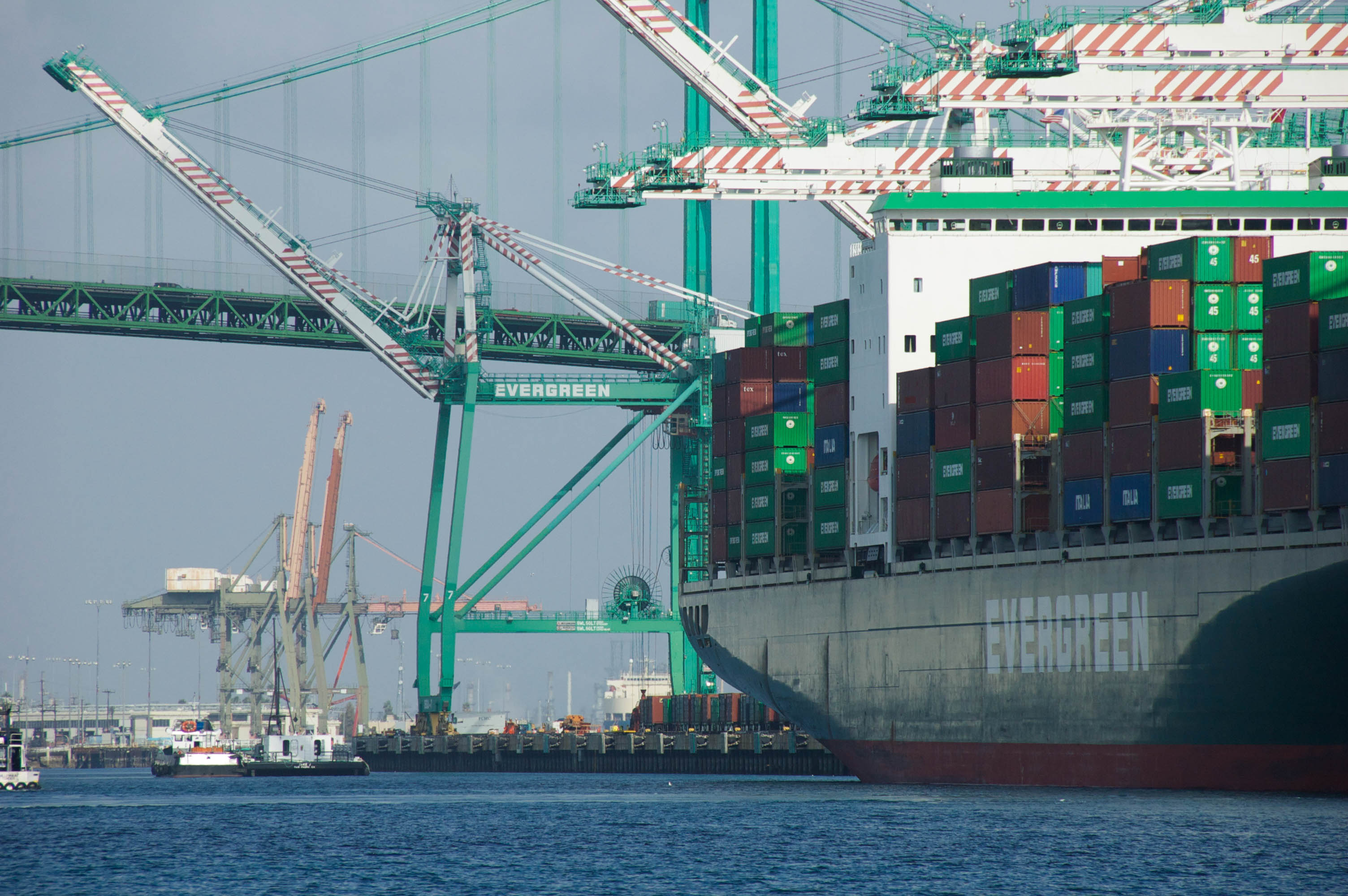
Day 2: On Friday I woke up to soak in the beauty of a nearby desert rock formation visible from my motel. Then I drove to the Los Angeles Port to attend the Harbor Community Benefit Foundation‘s public meeting in San Pedro. The LA Port is the largest industrial port in the country, and the diesel exhaust from the ships, equipment and trucks that operate there are the largest source of air pollution in the region. The Foundation was funded by the port after years of activism by local residents and a lawsuit over the negative impacts of the port on the surrounding communities. The day I visited the board was discussing the $506,000 worth of grants they were giving to support local community initiatives.

After leaving the port I drove north to Pacoima, where I had a great time interviewing Veronica Padilla and Yvette Lopez from Pacoima Beautiful. They’ve offered to drive me around Pacoima to see their work in person, so I’m looking forward to seeing them again on my next visit!

Day 3: Saturday was a welcome day of rest. I organized my notes and audio files, scheduled more interviews, and hung out with my cousin at his office in Glendale (where I slept for the majority of the trip). I had it on my list to clean out my car too, but didn’t quite get to it. You know you’re a Ph.D. student when you open the car door and books fall out!
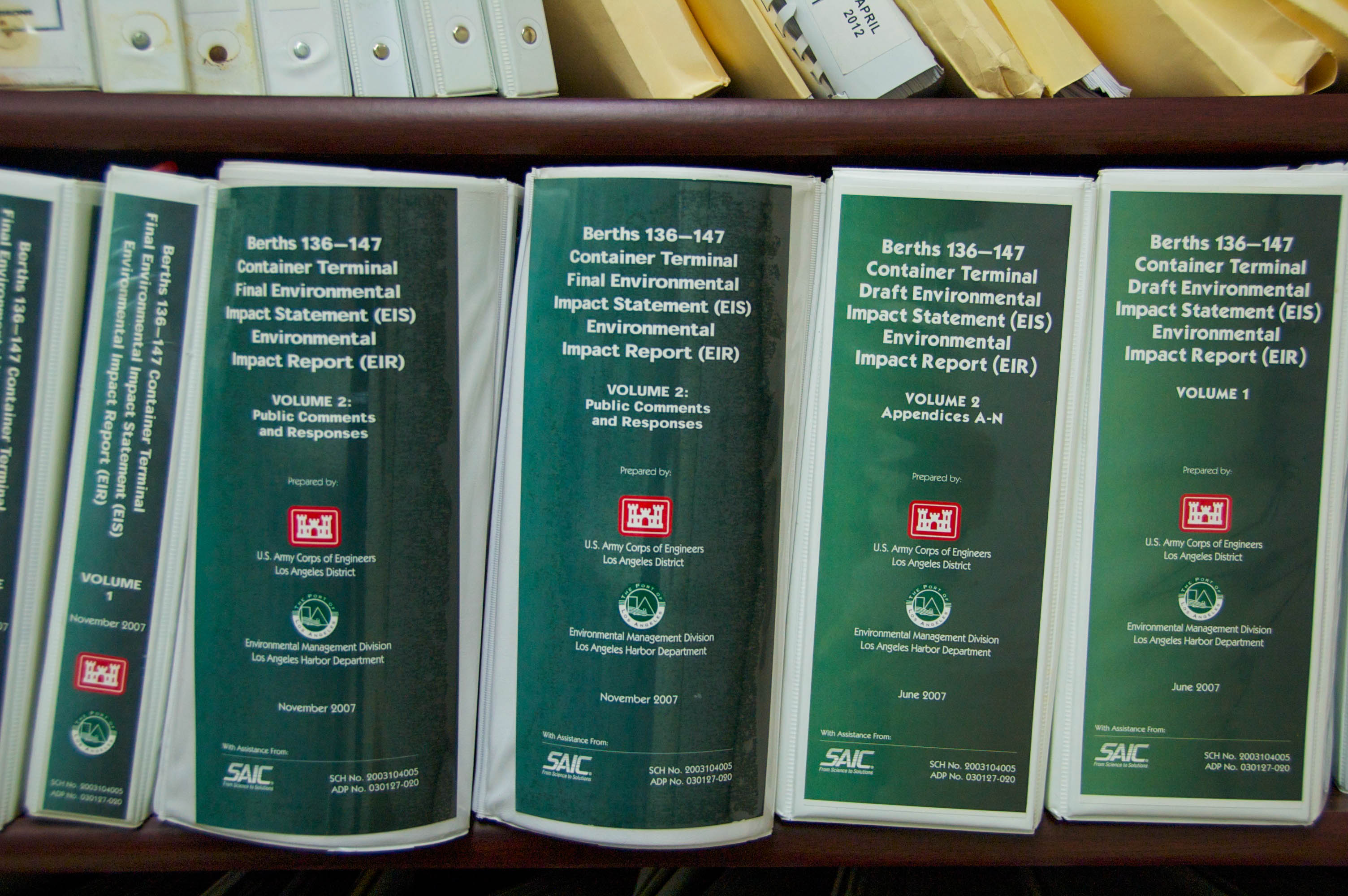
Day 4: On Sunday I headed back to the area around the Los Angeles Port to interview Jesse Marquez from Coalition for a Safe Environment. Jesse grew up in Wilmington and works to protect his community from the pollution released by its neighboring ports, refineries and other industrial operations. While he printed out reports and campaign materials for me, I poked around his office. There were water samples and soot in jars, maps of the area with callouts pointing to the various projects of industrial expansion, and lots of books. I always find it instructive to peruse people’s bookshelves, and Jesse’s were no exception. The vast quantities of highly technical environmental impact reports spoke volumes about the maze of government regulations and science that he navigates in his day-to-day work.

After leaving Wilmington, I headed to Maywood to sit in on a meeting between residents and their lawyers at the local Denny’s. Maywood residents have been engaged in a long battle against a polluting battery recycling plant run by Exide Technologies. The plant has been repeatedly cited for releasing lead and arsenic into the air above legal limits. See coverage by the Los Angeles Times here.

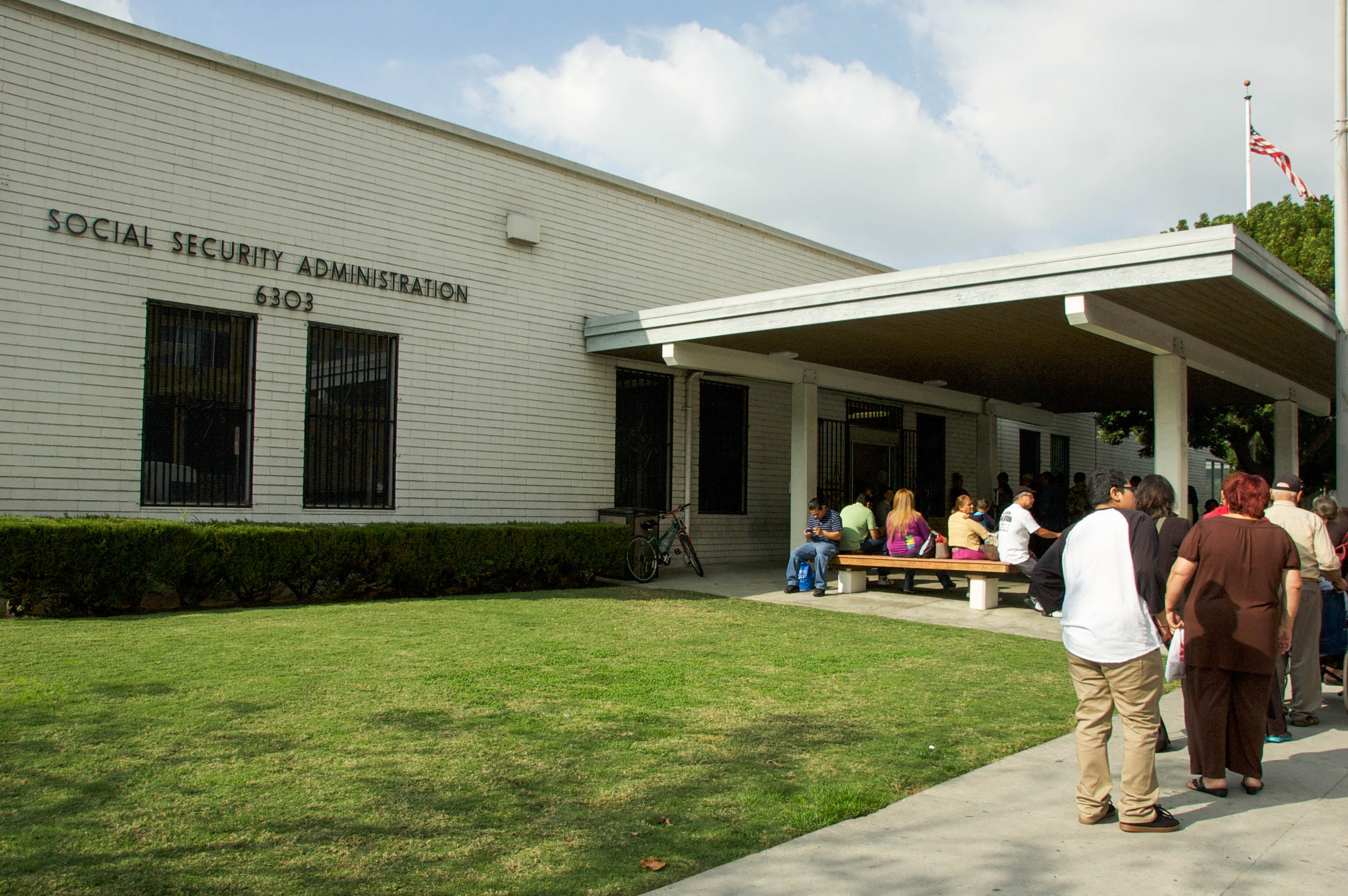
Day 5: On Monday I made my first trip to Huntington Park and strolled through the downtown, which was bustling with activity. I met with Strela Cervas from the California Environmental Justice Alliance, a coalition of six California environmental justice groups. We discussed the challenges and opportunities of scaling up local battles into statewide policy work in Sacramento. I heard more about their campaign to pass a Green Zones initiative and their support of AB 1330, which would increase enforcement of environmental law in communities overburdened with pollution, and also channel more resources to them. I also learned more about about their “Solar for All” campaign to provide clean energy and jobs in low-income communities through investment in rooftop solar energy production. The need for environmental clean up as well as jobs in the communities in which environmental justice advocates work was poignantly underscored when I passed by long lines of people outside the Social Security Administration building on my walk back to the car.

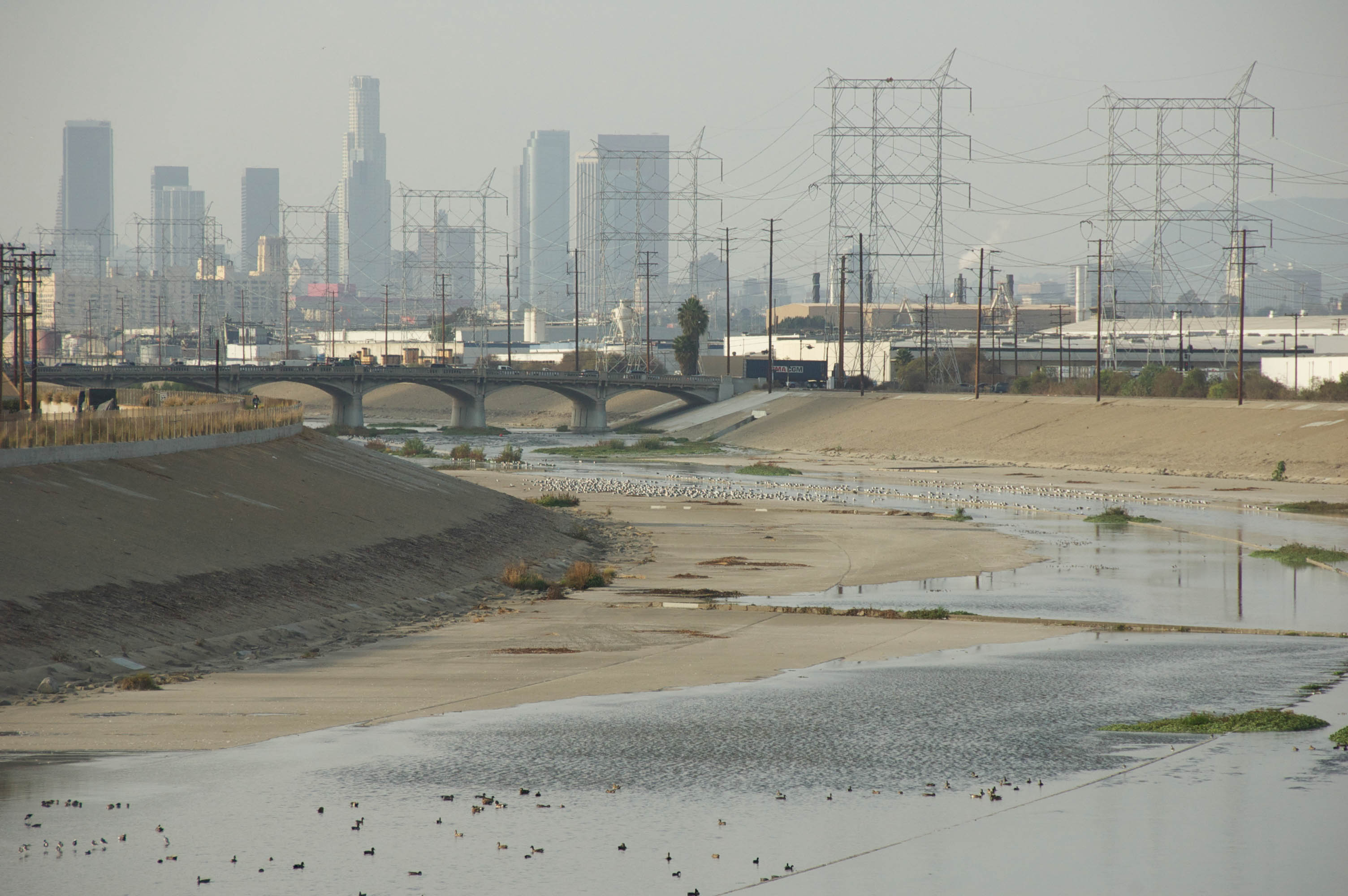
I had a bit of free time before my next meeting, so I drove by the Los Angeles River to take a few photos. It looks more like an industrial flood channel than a river, but I found it strangely attractive nonetheless and enjoyed taking photos of it. Check out long-term plans to revitalize an 11-mile stretch of the river here.
My next interview was with Felipe Aguirre from the Comité Pro Uno in Maywood. Over the din of the trucks passing outside, we spoke about his many years of activism, his role on the Maywood city council, and the air pollution and contaminated drinking water faced by Maywood residents. Felipe told me that he first got involved in environmental justice advocacy when he found out that pollution where he lived was so bad that an administrator at a local school made a habit of referring the kindergarteners from his neighborhood to doctors who screened them for lead poisoning.
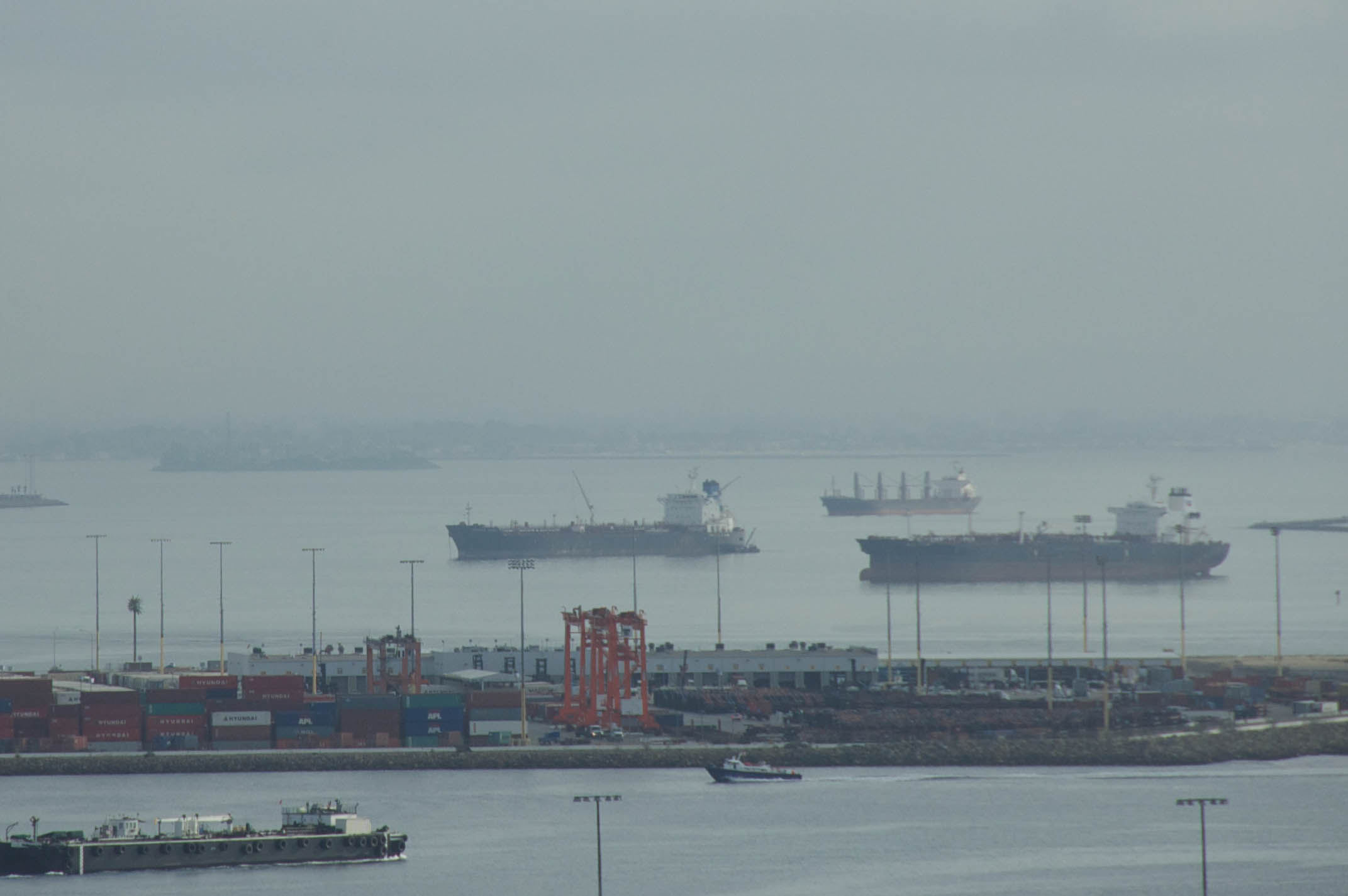
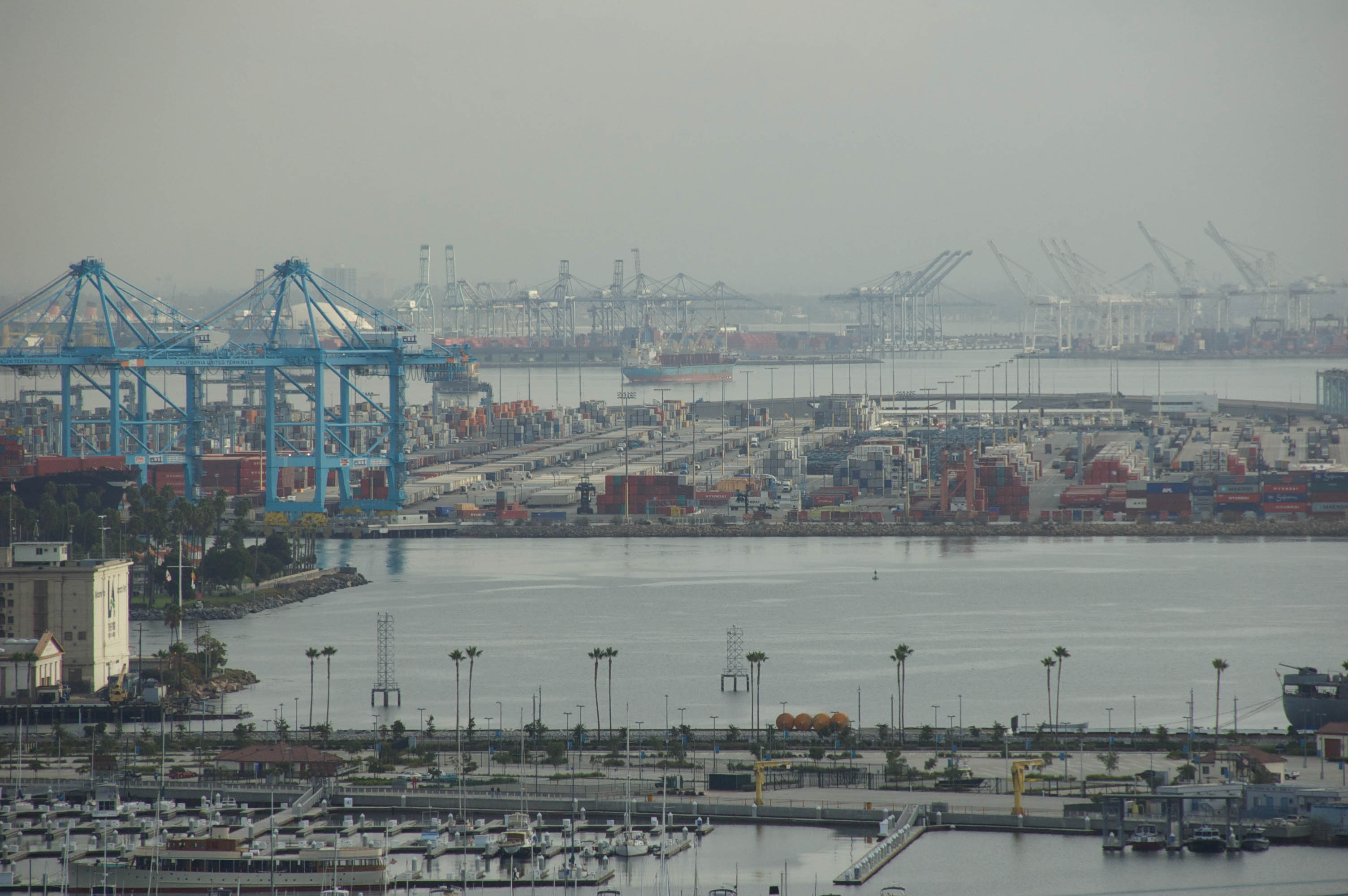
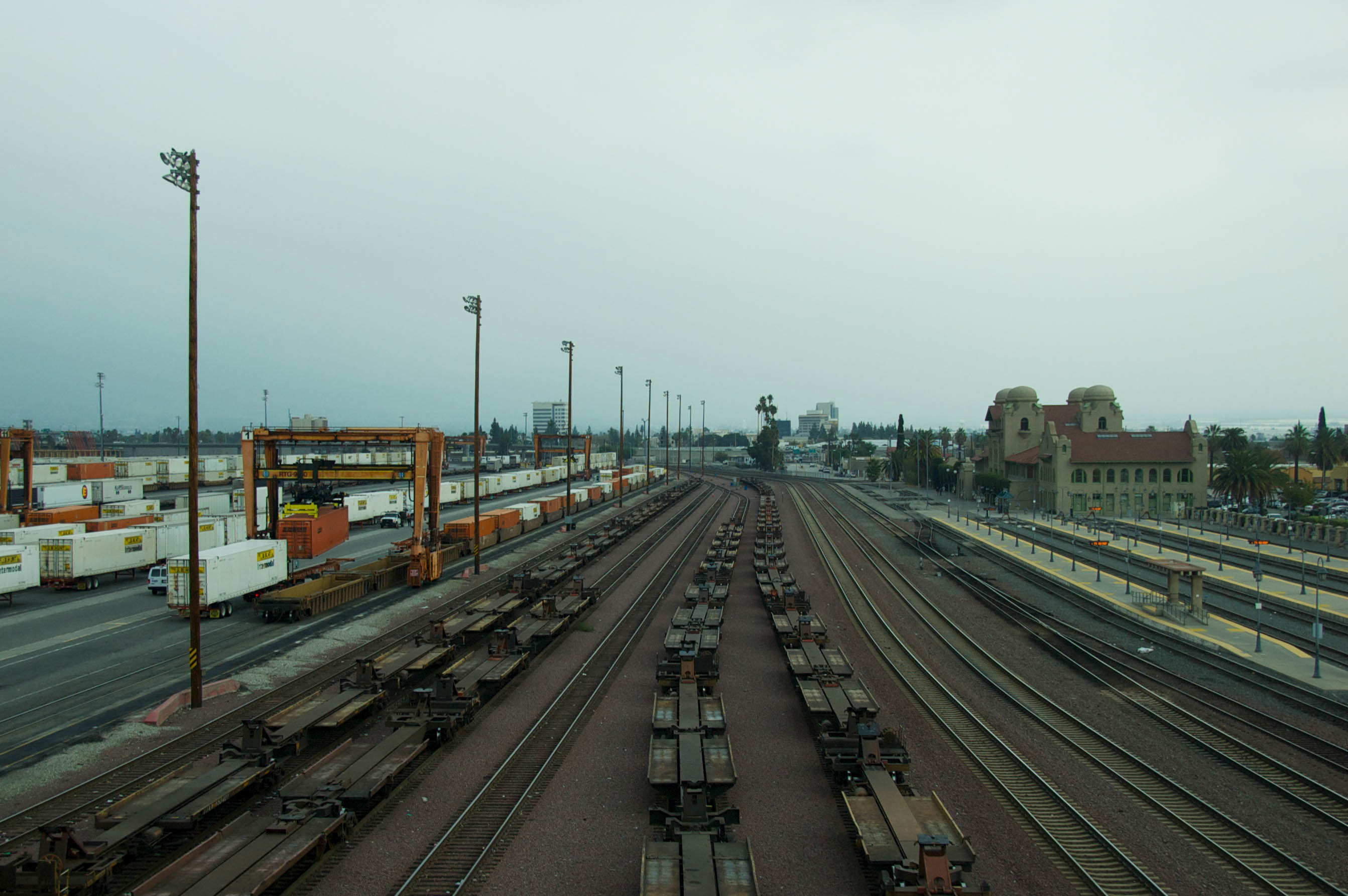
Day 6: On Tuesday I joined a visiting group of environmental justice activists from Houston on a tour of the ports, railroads, freeways and warehouses in Los Angeles and the Inland Empire. This transportation system moves a vast quantity of goods every day. The neighboring communities suffer the consequences through air pollution, asthma, cancer and sometimes even fires and explosions. Over the course of the day we:
- Visited the Los Angeles Port and learned about ongoing advocacy there from Andrea Hricko and Jesse Marquez.
- Stopped by a picket line to support a truckers’ strike at Green Fleet Systems.
- Learned about the 710 corridor and the Southern California International Gateway railyard from Angelo Logan and Mark Lopez.
- Had lunch at the offices of East Yard Communities for Environmental Justice in Commerce.
- Drove by the warehouses and railyards in Loma Linda and West San Bernadino where Penny Newman explained the impact on local residents of the heavy truck traffic servicing the warehouses.
- Wrapped up the day with a visit to the office of the Center for Community Action and Environmental Justice in Jurupa Valley.


Tracing the infrastructure of the global “logistics industry” from sea to mountain was daunting. I already knew that environmental injustices are deeply embedded in global commerce, but watching the massive quantities of goods moving through the area brought it home in a concrete way I’ve never felt before. These lists of exports and imports through the area give a taste of just how deeply entrenched our society is in the international flows of goods:
Top imports coming through the LA and Long Beach ports:
- Clothing
- Furniture
- Auto parts
- Electronics
- Shoes
- Crude oil
- Plastics
- Chemicals
Top exports exiting through the LA and Long Beach ports:
- Food
- Scrap metal
- Scrap paper
- Animal feeds
- Cotton
- Resins
- Petroleum coke and other petroleum products
- Coal
- Chemicals
Over the course of the day we used the buddy system to make sure nobody got left behind when we got back on the bus after each stop. My buddy for the day was Juan Parra of Texas Environmental Justice Advocacy Services. We discovered we had a few friends in common, and I enjoyed hearing about the early days of environmental justice advocacy in Texas and the Southwest from him. We also spent part of the drive looking at the Google Map on my smart phone. We used the satellite view to zoom in on the port of Houston and the neighborhood of Manchester where some of his group lives. Juan pointed out a house that we could see was surrounded on three sides by oil tanks and other industrial facilities.
The irony of spending the day driving and using electronics to learn more about environmental justice problems that result in part from pollution due to driving and electronics manufacturing was not lost on me. But although we’re all implicated in the planet’s environmental crisis, some of us are less implicated than others. Low-income communities of color usually contribute less to the problem while suffering its impacts more. And like all advocates, we do the best we can with the tools at hand while working towards something better.
Day 7: On Wednesday I joined the group from Houston again as they met with an array of local environmental justice advocates and scholars. After our morning meetings concluded, we went on one final “tour.” Alicia Rivera from Communities for a Better Environment drove us through Wilmington, mostly to parts of the town I had not seen before. At one of our stops Francisco Vargas saw us and came out of his home to talk with us. He lives next to the Warren E & P urban oil-drilling site we were looking at. Francisco described how the drilling shakes the earth and has cracked his home’s windows and foundation. He told us that in response to his requests for financial help fixing the damage the company offered him vouchers to get his car washed instead. In spite of his hardships, Francisco shared a few laughs with us before we went on our way. See page 6 of this report for background information on the drilling site.


The immensity of the powers arrayed against communities trying to protect themselves from the pollution I saw in LA and the Inland Empire was staggering. That’s why it was so inspiring to learn about the issues alongside the group of advocates from Houston, who are anticipating port expansion projects of their own. They were here to get a sense of what port expansion can mean, trade ideas, and learn from what California advocates have been able to accomplish. Although I’ve lived in California since I was five, the fact that I was born in Houston made me feel a special kinship with this group. I’m grateful to them for sharing their learning experience with me, and to the Los Angeles environmental justice community for their hospitality and warm welcome.














 Tracy Perkins