Teaching Environmental Inequality: 2016 Syllabus

This post is the first of several about the the Environmental Inequality class that I finished teaching at Howard earlier this month. It was my third time teaching the class.  I wrote about its first incarnation at UC Santa Cruz in 2012 here, and shared my Howard University syllabus from 2015 here. Here’s what I did this time around:


The first time I taught the class, I kept the assignments simple with pop-quizzes and take-home essay exams. The second around, I had students do research and writing on websites they built themselves. You can find an overview of that assignment and all of the prompts I gave the students to complete it here.

This year we did a community-based research project. I’ve wanted to do a class project like this for a long time but the timing has never been right. The first time I taught Environmental Inequality at UC Santa Cruz I was filling in for my advisor for one semester only. It didn’t seem to make sense to do an intricate community-based project when I couldn’t design the project to last over multiple semesters. Also, it was my first time teaching my own college-level class as a graduate student. Also, my dad was ill. The second time I taught the class, last fall, I was brand new to Washington D.C. and didn’t yet have local contacts with whom to collaborate. This fall the timing was finally right. I had put some time into getting to know local organizations, and thought I could use the project to continue to get my bearings on the world of Washington D.C. environmental justice activism. Here’s the project overview from the syllabus above:

This semester we will work on a collaborative research project with the Smithsonian Anacostia Community Museum, Empower DC, and ANC commissioner Rhonda Hamilton from the neighborhood directly adjacent to Buzzard Point in Washington, D.C. Buzzard Point is currently being redeveloped. It will be the site of the new DC United Soccer Stadium and many other new construction projects. Our work will involve conducting oral history interviews with residents living near Buzzard Point to document their family history in the neighborhood, relationship to the community and to the adjacent Anacostia River, and experiences with pollution and development. We will host guest speakers as well as go on field trips and conduct off-campus research activities as part of this project. The Anacostia Community Museum will then add the transcripts to their archives and create a booklet based on your interviews to distribute to research participants in the winter of 2017. When the booklet is ready (early 2017), there will be an optional reception at the Smithsonian Anacostia Community Museum to which you will be invited. This effort is a pilot project to upon which I hope to build a longer-term research relationship with our off-campus partners. You will be provided with detailed assignment prompts to guide each stage of your work as the course progresses.

In the next few posts, I’ll share reflections on the boat tour we took as a class on the Anacostia River, the interviews the students conducted, and some of our in-class activities. Some of the posts will also have slideshows. Stay tuned!

“Toxic tour” of Baltimore

Last fall Mike Ewall and Dante Swinton of Energy Justice Network led my students and me on a “toxic tour” of Baltimore. Toxic tours are one way that environmental justice activists do political education. They involve bringing politicians, environmental agency staff and others into the communities where activists live and/or work to build awareness of the problems there and find ways to support local activists in trying to solve them. In our case, Mike and Dante led the students in my fall Environmental Inequality classes to see some of the contested sites where they work. This gave the students a better way to visualize the things we had been reading about, and to learn about their local applications.

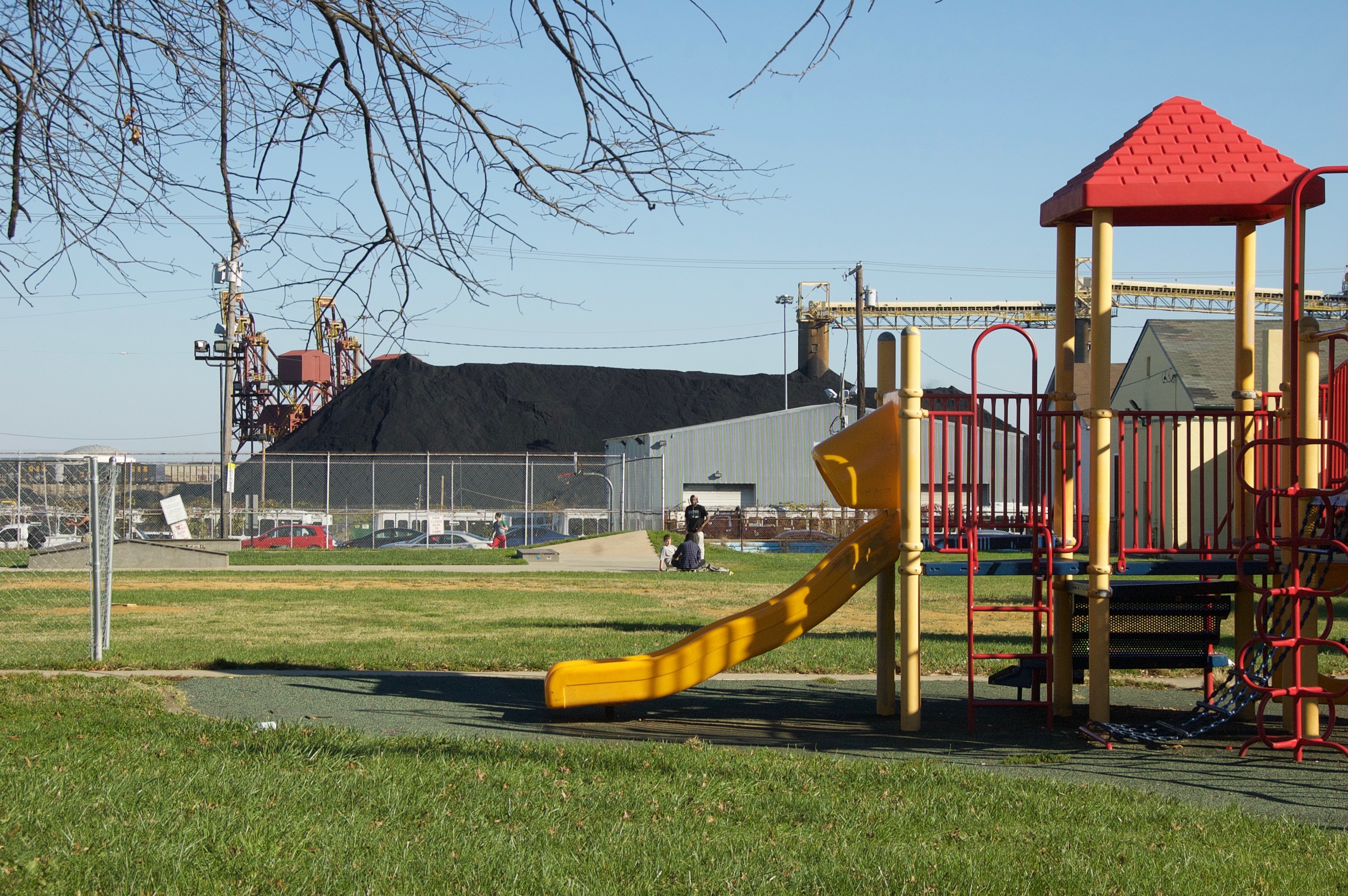
We started at the Wheelabrator Baltimore trash incinerator. We were immediately reminded of the environmental justice slogan that defines the environment as “the places we work, live and play” by the sight of families picnicking at the park directly adjacent to the incinerator. We moved on to the site of a proposed new incinerator (for trash, tires, shredded cars and wood waste), a coal and steam-fired electrical generating station, a closed hazardous waste landfill, the port (piled high with coal), the nation’s largest medical waste incinerator and a municipal waste landfill, among other industrial sites.

Since our visit, the proposed new incinerator that we learned about has been defeated, at least for now. Baltimore resident Destiny Watford, co-founder of the student group Free Your Voice, became the 2016 recipient for North American of the international Goldman Prize for her leadership role in the campaign.

My students got a lot out of the trip. They had read about the problems of industrial pollution and the people who live right next to polluting industries, but walking those landscapes seemed to make the issues much more real for them. For my part, I was saddened to see again in Baltimore many of the same problems I am familiar with from my research in California. It’s one thing to know about national trends, and another to see for oneself that they are, indeed, national.

The photos below show some of the places we went. They depict Mike Ewall and Dante Swinton from Energy Justice Network, as well as my students from Howard University – Olivia Byrd, Jesse Card, and Gerlene Toussaint. Sign up for the Energy Justice newsletter or “like” the Free Your Voice Facebook page to find out how you can plug in.


DSC_0107DSC_0083DSC_0045DSC_0021DSC_0003DSC_0163DSC_0052DSC_0064DSC_0070DSC_0066DSC_0061DSC_0102DSC_0072DSC_0087


Goodbye, UC Santa Cruz. Hello, Howard University!

This summer I graduated with my Ph.D. from UC Santa Cruz, packed up my home, and drove across the country to Washington DC. Since August 16th I have been working as an Assistant Professor at Howard University‘s Department of Sociology and Anthropology. The department is in developing an area of expertise in environmental justice scholarship, and next year the campus will launch a major in environmental studies. So, it’s an exciting time to join Howard’s faculty. I’m also looking forward to helping to bridge the new emphasis on environmental justice with the department’s existing expertise in medical sociology through research on environmental health. I hope to continue to collaborate with environmental justice/health scholars and activists in California and also make new connections here in Washington D.C.

When I left UC Santa Cruz, the campus was in the final stages of becoming a federally designated “Hispanic Serving Institution.” In the Sociology department, about 65% of the undergraduate majors were part of the first generation to go to college in their family. I enjoyed working with first-generation college students and the campus’s growing population of undocumented students, and am proud to now work at a historically black university also committed to populations underserved by higher education.

This year I am teaching “Introduction to Sociology” and “Environmental Inequality.” Over the next few years I plan to develop new courses in “Sociology of Environmental Health” and “Sociology of Food and Agriculture.” We are in our second week of classes already and the students have been great. But, I’ll miss being able to say that my school mascot is a banana slug!

If you are in the area, drop me a line to say hello!

My new professional home - Frederick Douglass Memorial Hall.

My new professional home – Frederick Douglass Memorial Hall.

The Environmental Justice Legacy of the United Farm Workers of America

Screen Shot 2015-05-18 at 4.59.42 PM

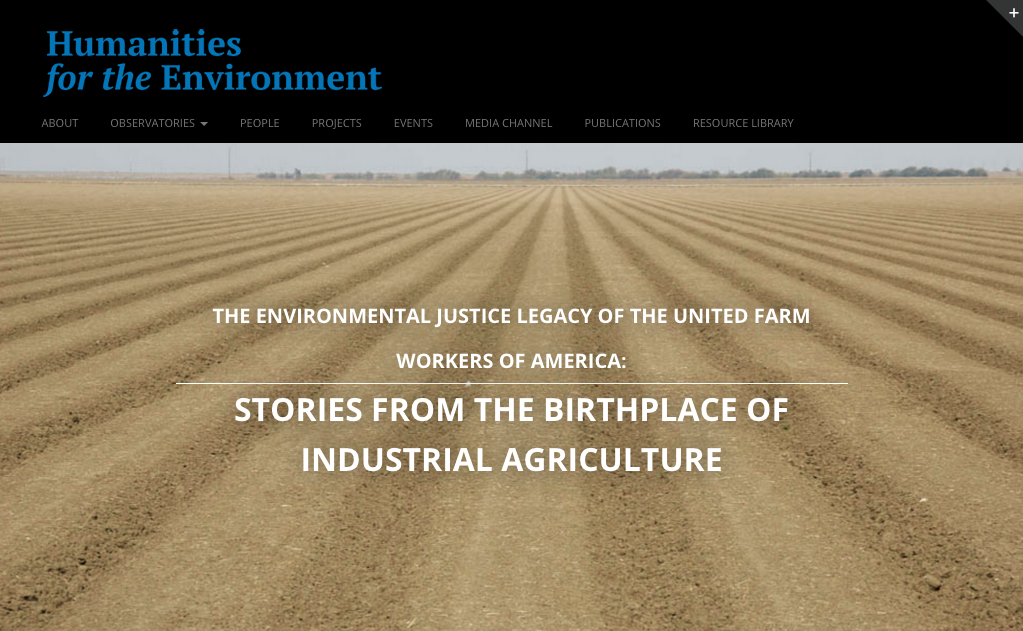
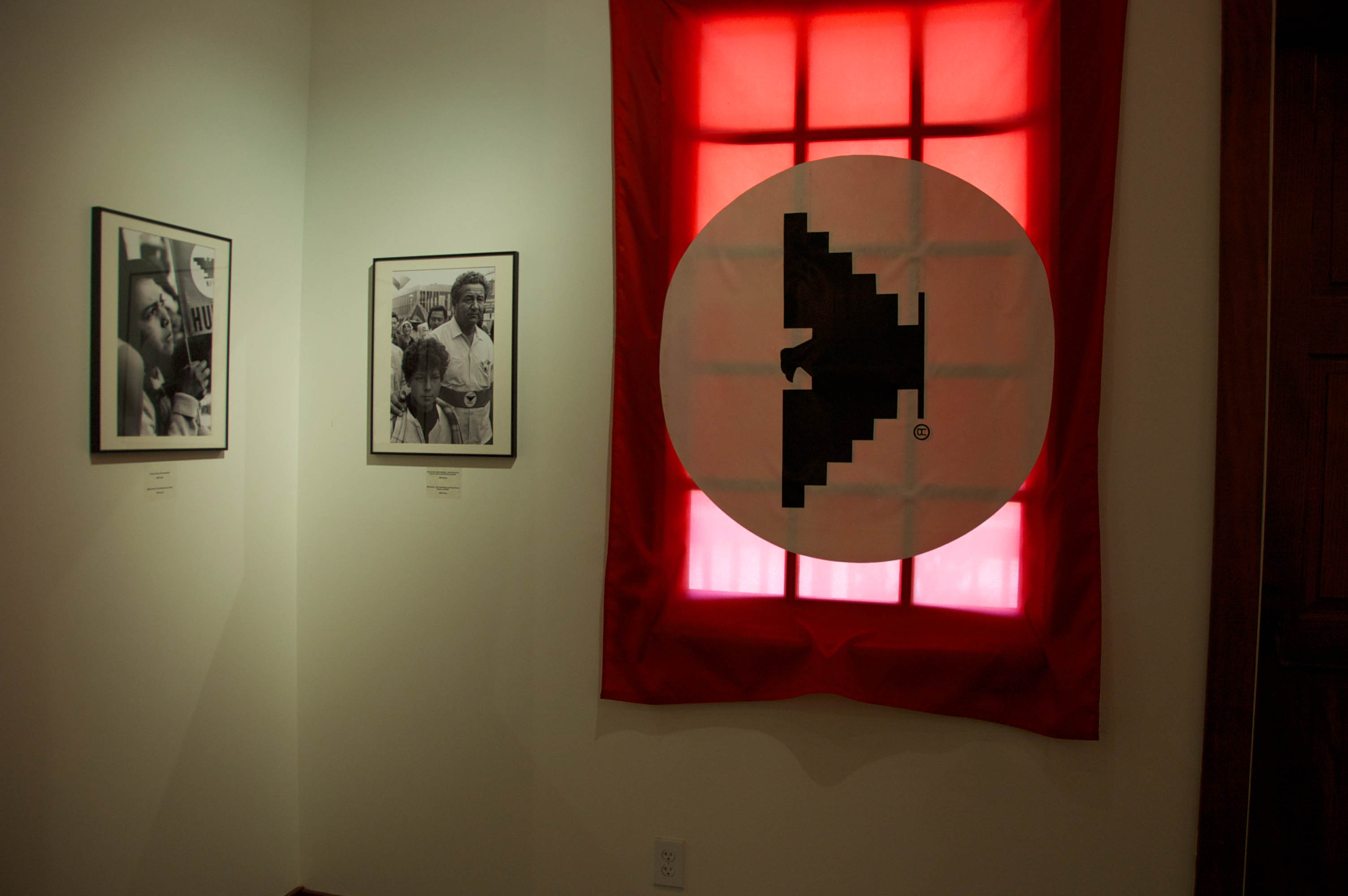
I’m happy to share my digital essay “The Environmental Justice Legacy of the United Farm Workers of America: Stories from the Birthplace of Industrial Agriculture.” It is published on the new “Humanities for the Environment” web platform funded by the Mellon Foundation, the Consortium of Humanities Centers and Institutes and by Arizona State University’s Institute for Humanities Research. I’m particularly excited to share the reflections of activists Lupe Martinez, Mary Lou Mares, Sarah Sharpe and Enrique Martinez in it. Thank you also to Zachary Singer for allowing me to use his photos of environmental justice activism in the 1980s and early 1990s.

Note (6.6.18): The Humanities for the Environment website continues to be redesigned. Find the latest url to my contribution here.

New digital project in honor of Teresa De Anda

Today I released a new digital project to honor the memory of California pesticides activist Teresa De Anda, and to help educate the public about the problem of pesticide drift. In Her Own Words is an expansion of the blog post I wrote the day before Teresa’s memorial service last fall. It includes photography, new and previously published oral history, suggestions for readings to use with the website in college classrooms, links to resources to help address the problem of pesticide drift in community settings, and a short essay I wrote about Teresa.

Thank you, Valerie Gorospe, for allowing me to continue to work with your mother’s stories, and to share them with others so they might learn from everything she accomplished. Thank you also for your support Linda MacKay, Lauren Richter, Tracey Brieger, Sarah Aird, Tracey Osborne, Rachel Deblinger, Zoe Stricker and Evelyn Torres Arellano.

DSC_0153 copy

With Teresa, in front of a photo I took of her, at an exhibit of my photography in Fresno. February 10, 2011.

In Memory of Teresa DeAnda

I first met Teresa DeAnda in 2007 when I sat in on one of the monthly meetings of the Center on Race, Poverty and the Environment’s Delano Advisory Board. I was there to describe my master’s research and ask the community leaders on the advisory board if they would be willing to participate in it. At that time Teresa was the group’s president, and she was quick to say yes. I learned over time that this generosity of spirit was core to who she was.

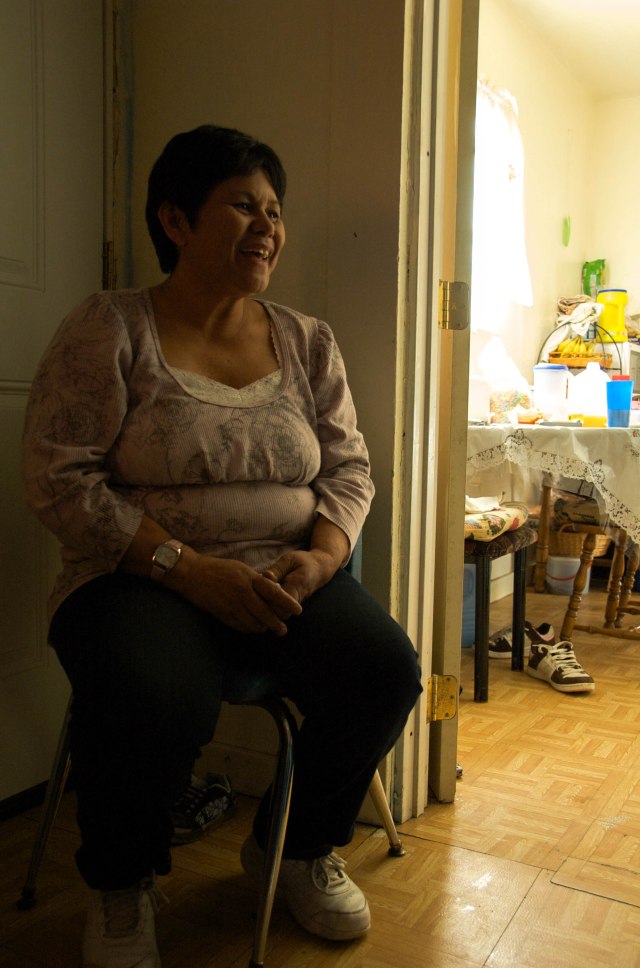
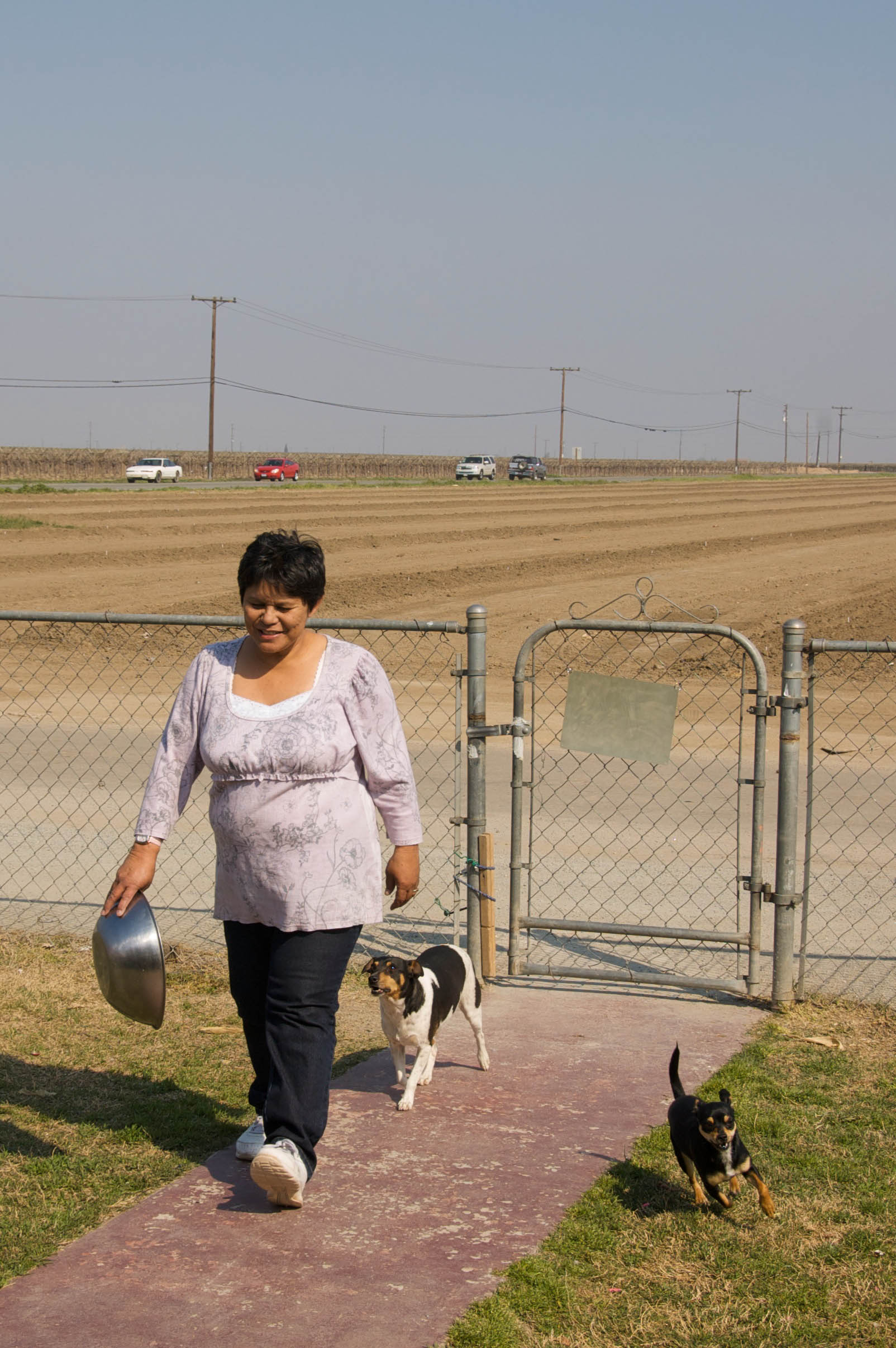
As she has done for so many others, Teresa invited me into her home to tell me about her life and her work. Over the years I continued to get to know Teresa through photographing her, through her participation in Voices from the Valley (formerly called 25 Stories from the Central Valley), and through the many other environmental justice events that led our paths to regularly cross. I came to know her as generous, fierce, and a lot of fun.

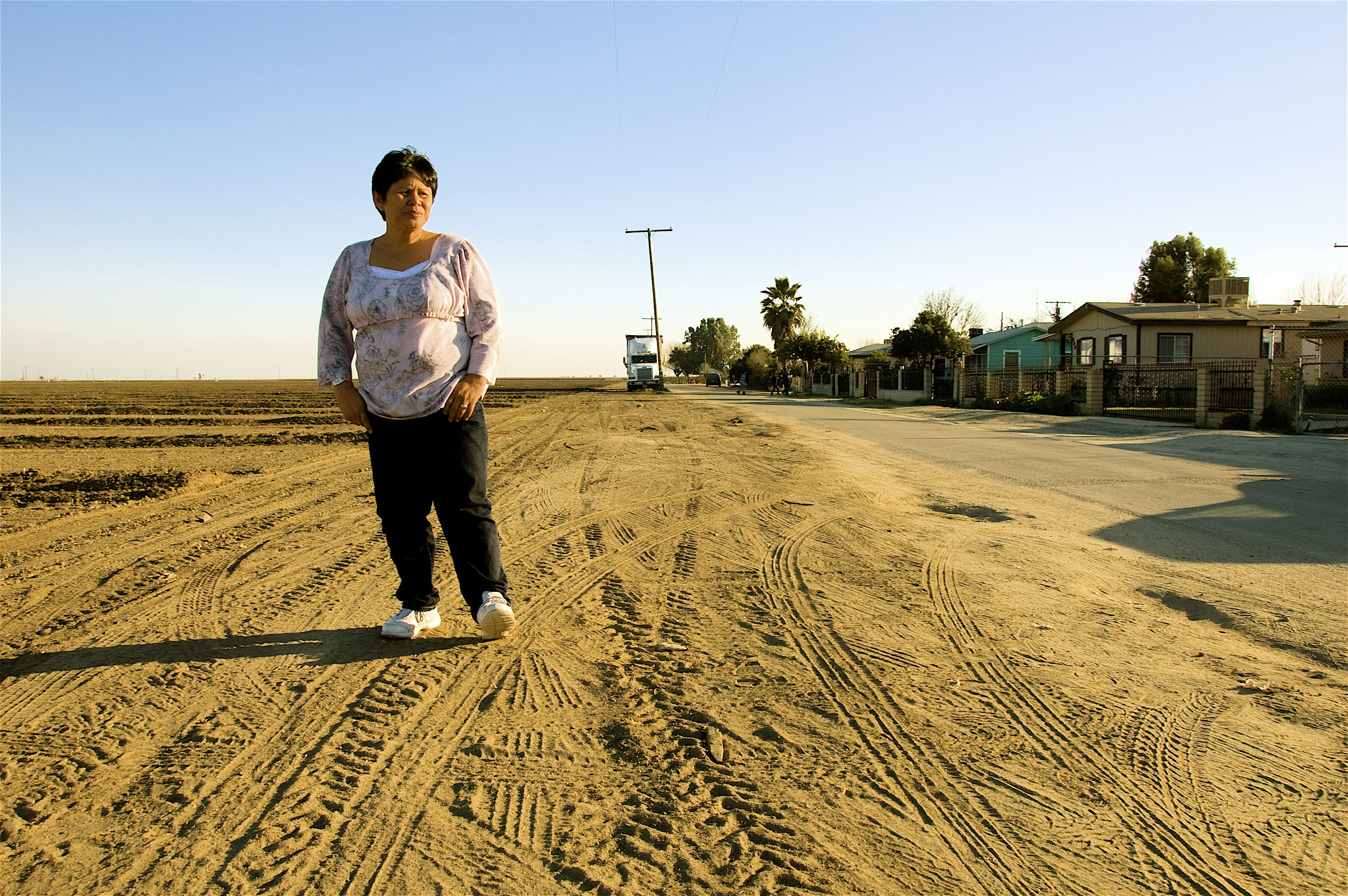
Teresa lived next to vast fields of industrial agriculture. When we first met she told me about the regular pesticide drift she experienced in her home in Earlimart. She told me about how many people in her community had cancer.

She later got cancer herself. Her death at 55 is made doubly tragic by the fact that it is hard to think of her illness as random, rather than as part of a consistent pattern of toxic exposure in politically marginalized communities. Much of her life’s work involved changing this pattern. Her efforts helped put protections into place that limit the drift of pesticides into residential areas in a number of San Joaquin Valley counties, and that improve emergency response to pesticide drift incidents statewide. She was a bright light whose loss will be deeply felt.

So others might also know of her life and her legacy, I have collected below previously published excerpts from my 2007 interview with Teresa, along with some of my favorite photos of her. I have also included links to other testaments to her life, as well as information for her memorial service in Delano tomorrow morning.

TeresaOutFront copy

Our street was the first street to get evacuated [after the pesticide drifted off the fields and into our neighborhood]. I’d driven to Delano, and when I came back there was a sheriff standing at our gate. It had just gotten dark, and my husband said, “We need to get out, because there’s something happening.” I smelled it a little bit, but I didn’t smell it that strong. But I was still very disturbed. It’s a horrible feeling, getting told you’ve got to get out, that there’s something that you shouldn’t be smelling. I got the kids, and we left in the van. My husband got my blind uncle and my 87-year-old compadre, and then we drove. But I was just so fearful for the people that were staying.

Days later, we found out what happened to everybody. I had read the newspaper, but it didn’t mention what happened to the people that Saturday night, November 13, 1999. On Wednesday the UFW [United Farm Workers] had a meeting and they had all the agencies there: the county air commissioner, the fire department, an expert on pesticides, Pesticide Watch. It was just packed with mad, angry people. That night, I found out what had happened when we left.

[When the pesticide drifted over the town] the people who were the sickest, they were told to go to the middle school. And at the middle school they told the men, women, and children to take off their clothes and go down the decontamination line. Keep in mind: these people were vomiting and had burning eyes, just coughing and coughing, and so they were scared to death. They were given no privacy, just two tarps on either side, and they were told to take off their clothes. And the people didn’t want to.

One lady said, “Where’s my rights? Where’s my rights?” They told her, “Listen, you have no rights tonight; you’ve lost your rights.” And so she took off her clothes, and she said that that was the worst feeling in the world, because her kids had never seen her without her clothes, and they could see her. This is indicative of how they did the decon [decontamination]. She took off everything, absolutely everything, but she wouldn’t take off her underwear, so they yanked it off. They yanked off her Nikes, and so there she goes through the decontamination line, which was a fire-department water hose, on a cold November night. A fire-department water hose with a guy standing there holding it. She went through one line and then the other, but they didn’t wet her hair. At the end of the decon line they were supposed to have ambulances waiting, but the ambulances weren’t there yet, so they just gave them little covers and told them to sit on the ground.

So I’m finding all this stuff out at the meeting. All these mad people are just yelling at the agencies, telling them, “How could you do this to us?” And then they told us what had happened at the hospital. The people did get transported to the hospital. Some went to Tulare Hospital, some went to Porterville Hospital, some went to Delano Hospital. Well, the lady with a lot of kids, she was baby-sitting kids too, they couldn’t take all of her kids to the same place, so they wrote their phone numbers on their stomachs, like they were animals. At the hospitals, they took their information, their names, their number, their address, but they didn’t even triage them. The doctor called poison control, and poison control said, “There’s nothing happening to them, just tell them to go back home but to try not to get re-exposed.” That’s all poison control told them. So they were sent on their way and they were given the clothes that they had been in before they got decontaminated. They just gave them back to them. Didn’t have them cleaned.

So I started learning more and getting more and more angry. I couldn’t sleep at night, ’cause I was so upset at how it had changed my kids’ health and my health. When I was growing up, my dad had always said, “Trust the government. The government’s never going to lie; the government’s good,” and all that. And I thought, “No, they’re not,” because they really let us down that night, they really, really let us down. So much for trusting the government. I couldn’t sleep at night because it bothered me so much that it happened and that still nothing was being done about the people who had gotten sick. I learned a lot about pesticides. And then at press conferences they would always ask me to speak. Even though I wasn’t one of the victims that got deconned, I was one of the ones speaking all the time. They were calling me for meetings and conferences and stuff to talk about what had happened.

WTeresaKitchen copyhat happened in Earlimart was in November, so by September, UFW and us, we had formed El Comité Para el Bienestar de Earlimart [Committee for the Well-Being of Earlimart]. All of the people were victims of the accident. They were all mostly farm workers. Just a couple weren’t. We started having meetings, our own meetings without UFW, still supporting UFW in any press conference they wanted us to, but then we started having our own meetings. And then in September of 2000 we asked the farmer and the chemical applicator to pay the medical payments for the people that had asthma. It was coming out that people had gotten asthma—didn’t have it before that night in 1999—just like that, from that night, that exposure. And it had gotten in their mucus membrane and then in their lungs. And so they needed long-term treatment. We got Wilbur-Ellis [the company hired by the farm to apply the pesticide] to pay for that.We had a big press conference, right here at the house. And that was a big victory. The State of California Department of Pesticide Regulation gave Wilbur-Ellis the biggest fine that had ever happened. It’s still peanuts compared to other fines for toxic spills and stuff, but it was the biggest for pesticides. [Note: Pesticide specialists later told the activists from Earlimart that the particular chemical they had been exposed to is activated by water and that they should not have been hosed down as part of the decontamination process.]
– Source: Perkins and Sze, 2011 

***
Once there was a guy spraying, it was May, 1999, and he was spraying over there and the fog was in the house.  He wasn’t even turning off the tractor rig when he was coming up the road.  The stuff he was spraying, it was in the house.  My kids were all puking, my husband was out of town, so it was just me here.  I didn’t know to pick them up, take them to the van, and get them out of there. It looked like London fog out there, and in here it looked like San Francisco fog.  I didn’t know whether to leave them sleeping, or to take them out to more danger.  So I called the fire department, the sheriff, and they both said the same thing: “The farmer has a right to farm.  You can’t complain about this.”  And I said, “But I don’t know if we’re going to die or live or what.  This stuff, it’s really bad out here.  I know he’s got to spray, I realize that, just tell him to turn the things off when he’s coming out of the vineyards.”  You know what a tractor rig looks like?  Kind of like a monster.  It’s a noise, and then you look out, and then there’s lights.  It was in the night, so they said that they couldn’t come out.  I said that you’d better come out here and at least look at this.  I wanted it on record that I called them.
***

The next day was a Saturday, and they applied the pesticide again.  This time instead of going west, it went south.  And south, there was a low income housing complex,  I guess about 100 people live there.  They began smelling it, and they began getting sick, a bunch of kids out on the lawn vomiting.  A bunch of people from that place were calling 911, calling for help.  And basically, this is what happened from Flores’ point of view, Flores Baptista.  She said she was baby-sitting her nine month old nephew.  She was holding him in her arms.  She has a lot of kids, all of her kids were outside, vomiting.  And the baby was in her arms, and she was on the phone with 911, and she told them, “My kids are outside vomiting, there’s something going on here, we think it’s the spray.  You need to come do something about it.  Everybody’s kids are outside vomiting, and we just need some help out here.”  And the operator told her, “Just hold on, we’re trying to figure out what’s going on.  Just calm down.  I think your being calm will have a big impact on your kids, and you need to just calm down.”  And so Flores said, “OK, well I’m trying to relax, but my kids are out here, and they’re getting sicker and sicker.  And the baby I’m baby-sitting is breathing really weird, and I’m really worried about him.  I don’t know if he’s going to make it or not.  And my nephew’s looking real bad.”  And the operator kept telling her, “Look, you’re hysterical.  You need to calm down.”  This went on for 45 minutes.  They kept them on the phone for 45 minutes.  And so after 45 minutes, Flores said, you know what, and she said some bad words, and she said “I’m just going to get out of here.  I’m not going to wait for your guys.  You guys obviously aren’t coming, and I don’t know what you’re doing, but everybody’s about to die here.  We need to get out of here.  It smells so bad.”

So she got in her van, and she drove out.  And at that time, other people slammed the phone down.  When they saw people leaving, they slammed their phone down, and they got out, and they were leaving too. And so there was a caravan of vans.  They drove out to Sunset and Weed Patch. And on the corner, it was barricaded.  It’s called a stop and freeze, or freeze and keep whatever is contaminated in. They were telling people “Go back, go back, you can’t come out.”  And they’re like “No, we’re sick, and need our kids to get to the doctor.  We’re going to drive them ourselves, cause we’re not going to wait for you any more.  We were on the phone for close to an hour with that lady, and she was just telling us to sit down, to calm down, and that we were talking crazy and stuff, but no, we’re going to get out.”  And there was a lot of people that spoke Spanish.  So one of the men just went on the dirt and drove off.  Broke the barricade.

– Source: Voices from the Valley

***

Teresa.OnRoadTeresa describing visiting residents of Arvin, CA, after a pesticide poisoning incident there in 2002:

I wanted to talk to the people and let them know that when the doctors and the agencies, like the fire department or whatever, tells you it’s nothing… because they will, they’ll tell you it’s nothing.  They’ll say “Oh, it’s mass hysteria, you’re hung over,” or, “It’s just something you ate that’s making you nauseous.”  No, it’s the pesticides, and don’t doubt it.  It’s the pesticides.  Then I always want to tell them that they need to report drift.  It’s state law, drift is illegal, it shouldn’t happen.  The farmers spray the field, it leaves the field, goes on your car, goes on your property, goes on the park when you’re there. You need to report it.  I’m trying to get it across, but people still don’t call.  The numbers are so low for reports.

***
I was at a meeting with the county agricultural commissioner, and we were looking at maps of the agricultural land. I saw these little red dots on the map and asked what they were. He said, “Those mark where the bees are, they’re the buffers.” I said, “The bees have buffers and we don’t?!” He said, “Teresa….,” but I was serious.
***
I had no idea what an activist was. Now I know there’s a name to it, not just “troublemaker.”
 Teresa.InNeighbor'sHosue

Teresa.LecturingTeresa.Frontyard

Slideshow: The faces of public participation

As part of my second research trip to Los Angeles, on Saturday I attended a hearing at the South Coast Air Quality Management District (SCAQMD). At issue was the Exide Technologies battery recycling facility in Vernon, and the lead and arsenic it is emitting into the air. The decision-makers heard from lawyers on both sides of the case, and then opened the hearing up for testimony by residents and other interested parties.

Public participation is a key part of much environmental decision-making, and over time advocates have convinced many decision-making bodies to provide translation services. This helps the many Spanish-speaking residents who live near polluting facilities to participate in the environmental decisions that profoundly affect their lives. Being able to participate in environmental descision-making does not necessarily mean that that their voices will actually influence decisions, but it is an important first step.

This slideshow requires JavaScript.

See coverage of the hearing by the Los Angeles Times here, and its broader coverage of the company here.

Research trip to Los Angeles

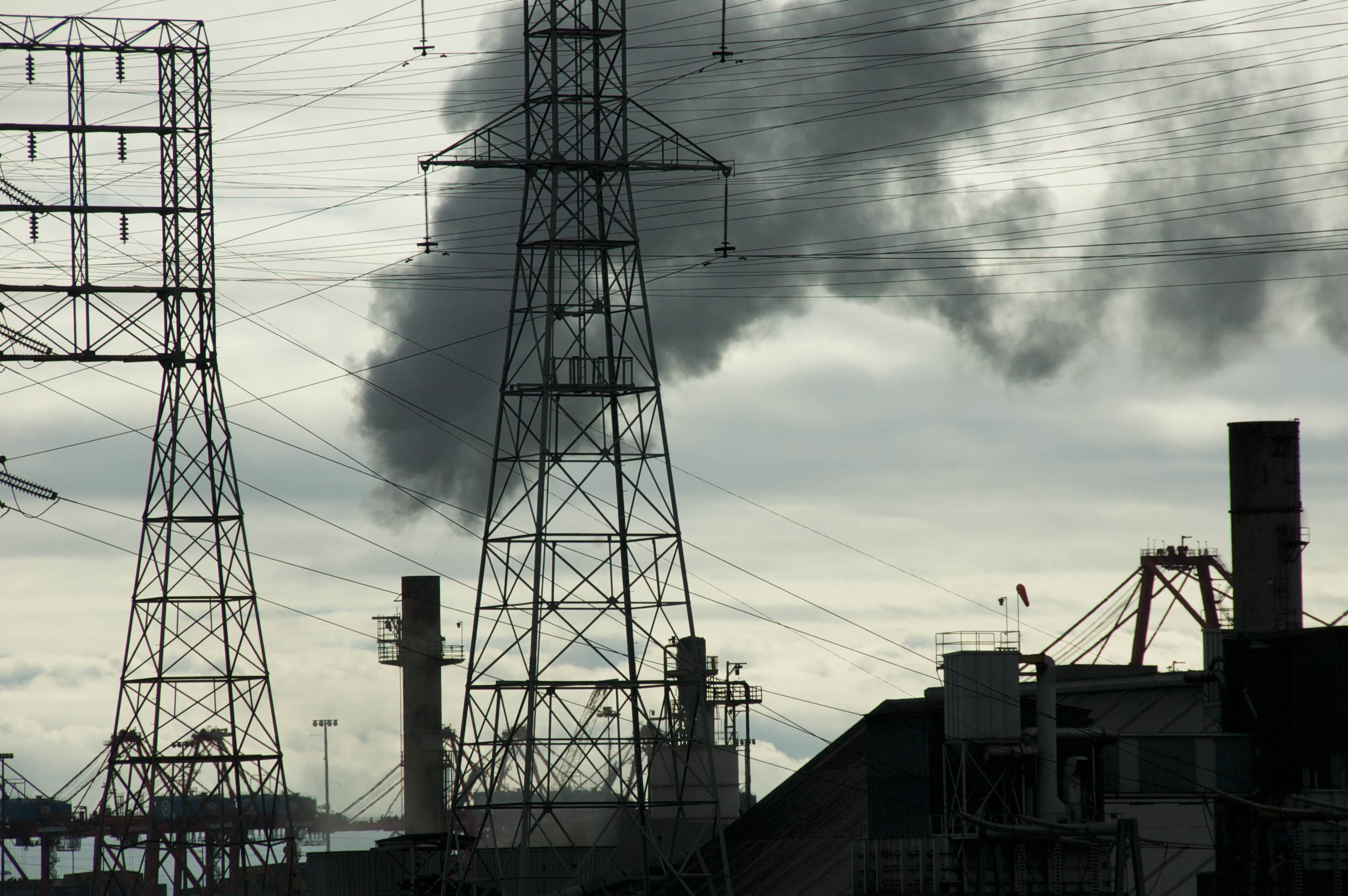
On Wednesday night I got back from a week spent visiting some of the most polluted parts of southern California, and in some cases the country. These are communities surrounded by ports, refineries, freeways, train tracks, warehouses and other industrial facilities.  They live with air pollution, asthma, cancer, dust, flares, the constant rumbling of machinery and trucks, and bright lights at night. Over the course of the week I heard stories of what it is like to live there. I heard about explosions, fires, police checkpoints, and the not-so-distant history of the Klu Klux Klan. But I also heard stories of improvements made, lawsuits won and protections put in place.

My dissertation research covers the growth and changing nature of environmental justice advocacy in California over the past three decades. Although I’ve been working loosely in this field for much of the past 14 years, my prior work has focused on the San Joaquin Valley and the international arena. And as a dedicated northern Californian, I find I have little knowledge of the southern half of my home state. So, this trip was an important opportunity to expand my understanding of environmental justice advocacy, and to connect across the gentle rivalry that sometimes divides north from south.

I’ve included photos and a description of my trip here in the hopes that through my eyes you too might better understand my state and the problems we face.

César Chávez National Monument

Day 1: Instead of driving south over the I-5, I went up and over the mountains that divide the Central Valley from Los Angeles through Cajon Pass. I wanted to visit the César Chávez National Monument in Keene, which President Obama dedicated just last year. Environmental justice advocates in the San Joaquin Valley have rich ties to the United Farmworkers of America, and César Chávez continues to be a potent political symbol there.  The national monument houses his grave, a garden, and a visitor’s center that was showing a photo exhibit of the 1965 Delano grape strike the day I visited.

National monuments are administered by the National Park Service. Because I associate the park service with national forests and camping trips, it was jarring to see their familiar signage next to images of César Chávez, farmworkers, and artifacts from the picket line. I’m pleased to see César Chávez and the farmworkers’ movement get this level of attention and legitimacy, but also uneasy to see a memorializing process that makes it easy to think the problems they worked on are things of the past.

César Chávez National Monument

César Chávez National Monument

The drive through the rest of the mountains was beautiful. The Santa Ana winds had blown the air pollution away so I had an uncommon view of the stunning desert vistas around me. I didn’t see them again for the rest of the trip.

I ended the day happily in Riverside at a 35th Anniversary Gala Event for the Center for Community Action and Environmental Justice (CCAEJ). CCAEJ got its start through a fight against the Stringfellow Acid Pits above Glen Avon. The site contaminated local groundwater, and on several occasions released liquid hazardous waste into a canyon that carried it into the streets of Glen Avon. Activism around the site led to the creation of the California State Superfund Program and to the birth of CCAEJ. It is still being cleaned up.

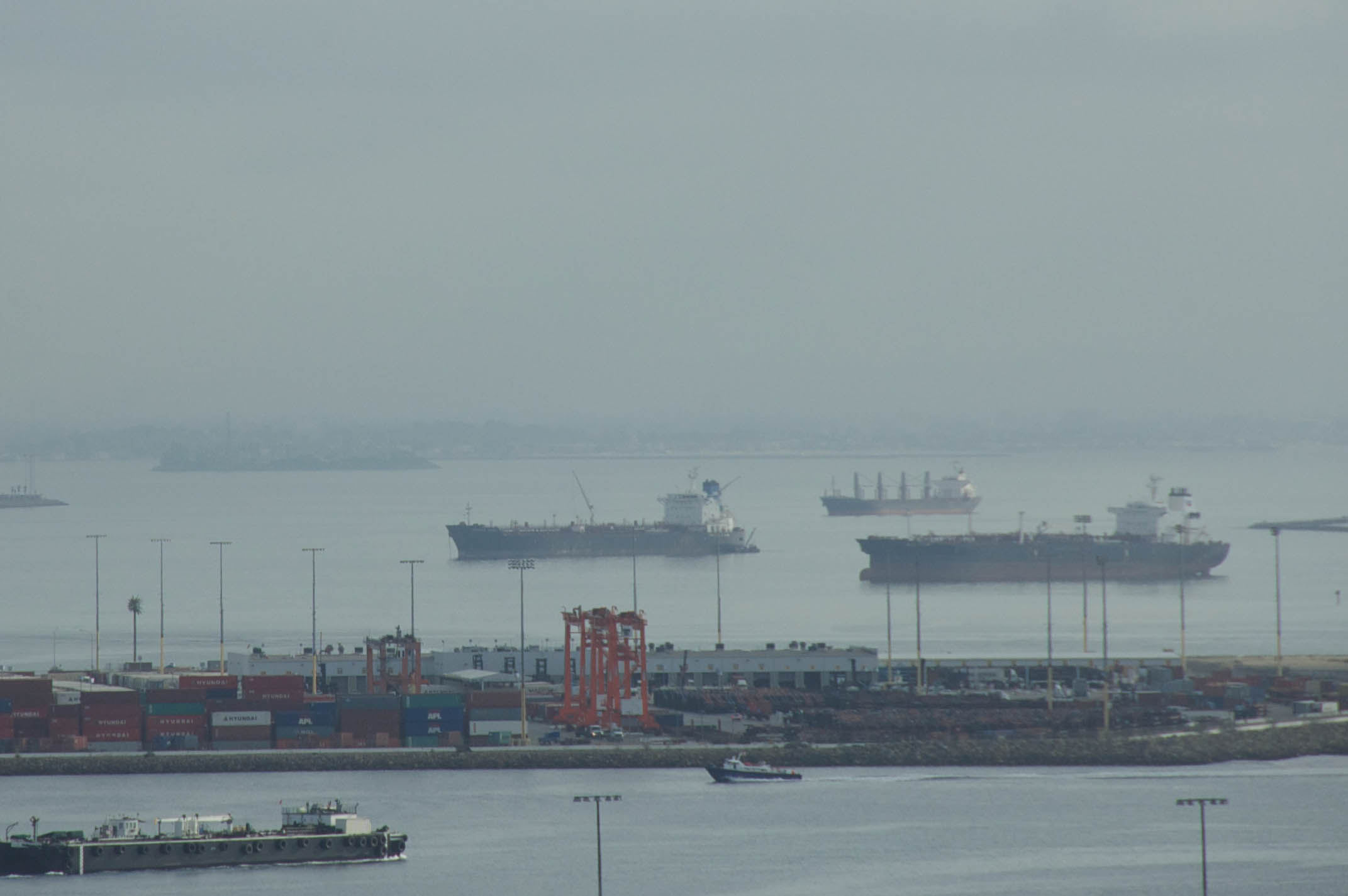
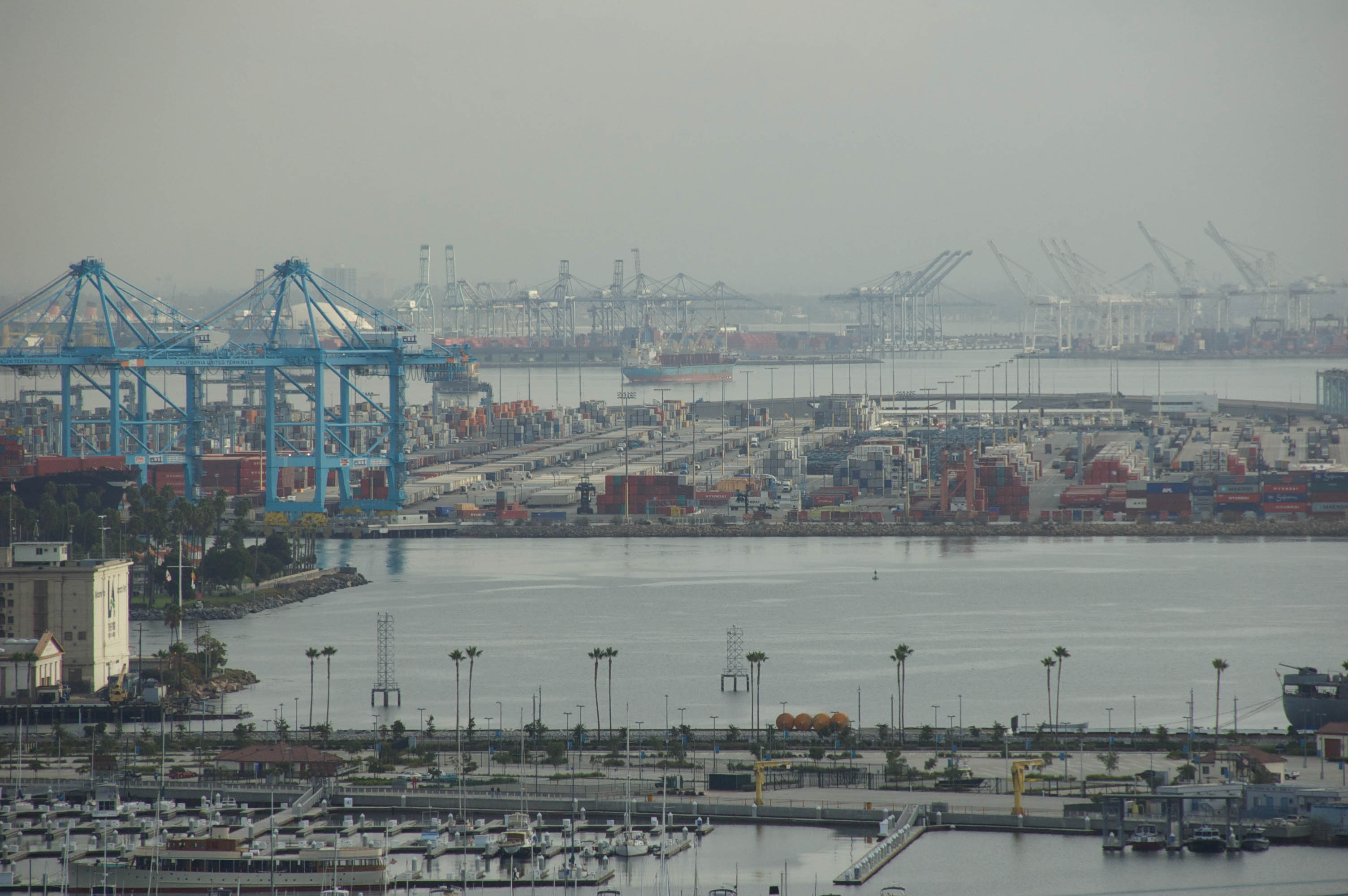
Day 2: On Friday I woke up to soak in the beauty of a nearby desert rock formation visible from my motel. Then I drove to the Los Angeles Port to attend the Harbor Community Benefit Foundation‘s public meeting in San Pedro. The LA Port is the largest industrial port in the country, and the diesel exhaust from the ships, equipment and trucks that operate there are the largest source of air pollution in the region. The Foundation was funded by the port after years of activism by local residents and a lawsuit over the negative impacts of the port on the surrounding communities. The day I visited the board was discussing the $506,000 worth of grants they were giving to support local community initiatives.

The view from San Pedro

The view from San Pedro

After leaving the port I drove north to Pacoima, where I had a great time interviewing Veronica Padilla and Yvette Lopez from Pacoima Beautiful. They’ve offered to drive me around Pacoima to see their work in person, so I’m looking forward to seeing them again on my next visit!

My car

Day 3: Saturday was a welcome day of rest.  I organized my notes and audio files, scheduled more interviews, and hung out with my cousin at his office in Glendale (where I slept for the majority of the trip). I had it on my list to clean out my car too, but didn’t quite get to it.  You know you’re a Ph.D. student when you open the car door and books fall out!

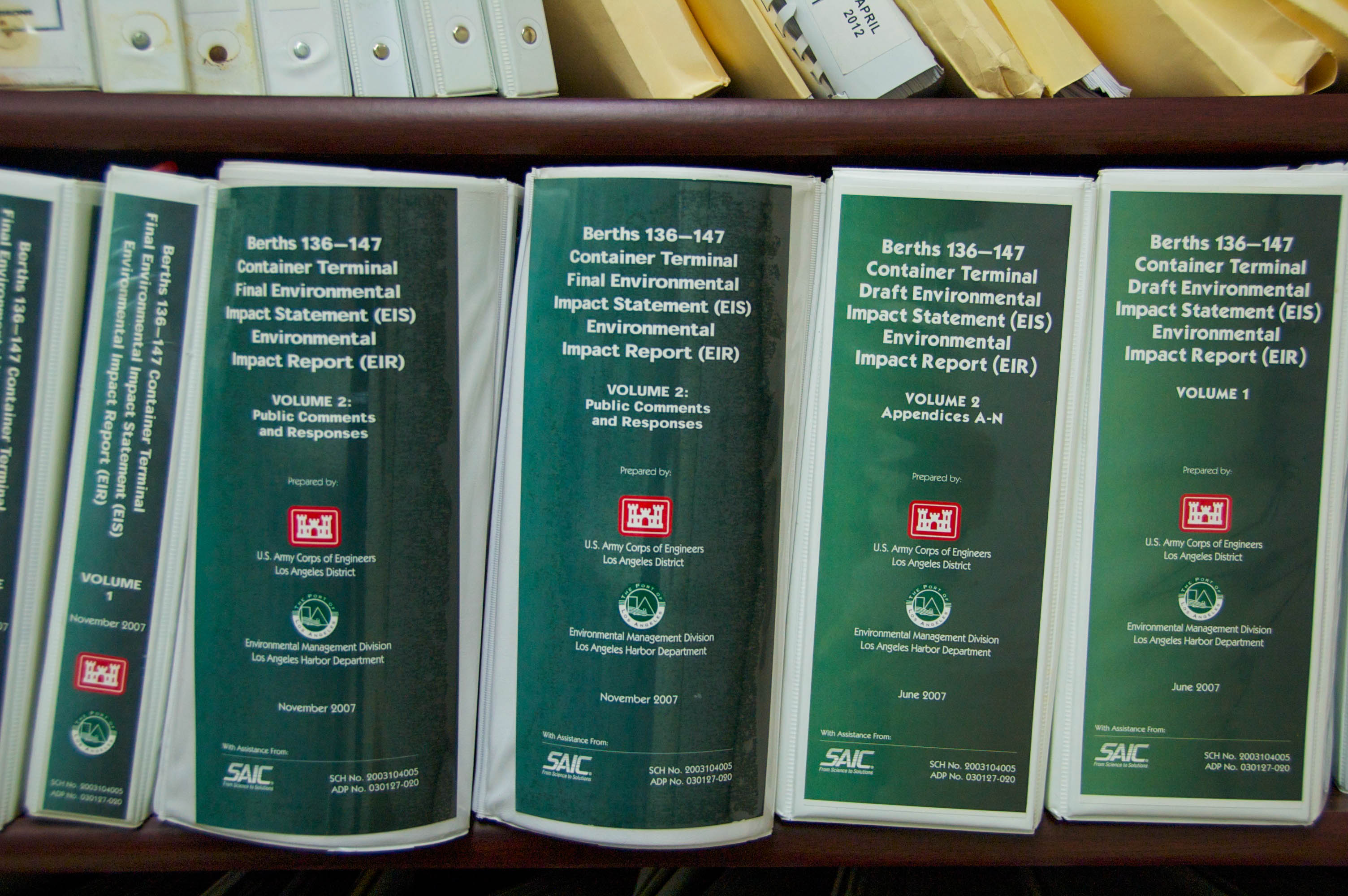
Day 4: On Sunday I headed back to the area around the Los Angeles Port to interview Jesse Marquez from Coalition for a Safe Environment. Jesse grew up in Wilmington and works to protect his community from the pollution released by its neighboring ports, refineries and other industrial operations. While he printed out reports and campaign materials for me, I poked around his office. There were water samples and soot in jars, maps of the area with callouts pointing to the various projects of industrial expansion, and lots of books. I always find it instructive to peruse people’s bookshelves, and Jesse’s were no exception. The vast quantities of highly technical environmental impact reports spoke volumes about the maze of government regulations and science that he navigates in his day-to-day work.
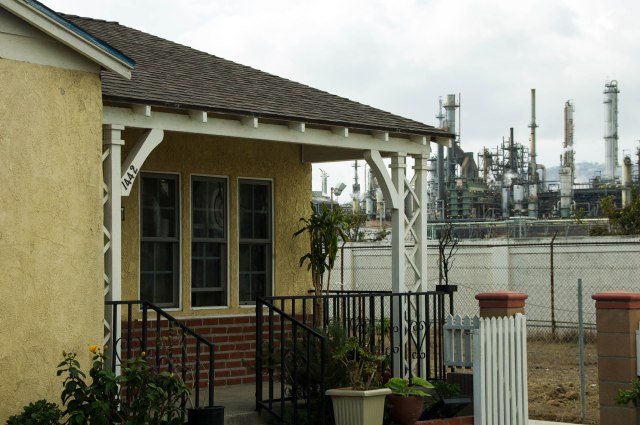
Wilmington

The bookshelves at the offices of Coalition for a Safe Environment.

After leaving Wilmington, I headed to Maywood to sit in on a meeting between residents and their lawyers at the local Denny’s.  Maywood residents have been engaged in a long battle against a polluting battery recycling plant run by Exide Technologies. The plant has been repeatedly cited for releasing lead and arsenic into the air above legal limits. See coverage by the Los Angeles Times here.
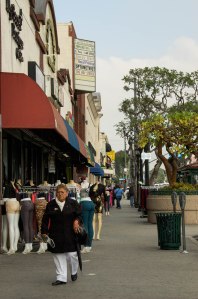
Downtown Huntington Park

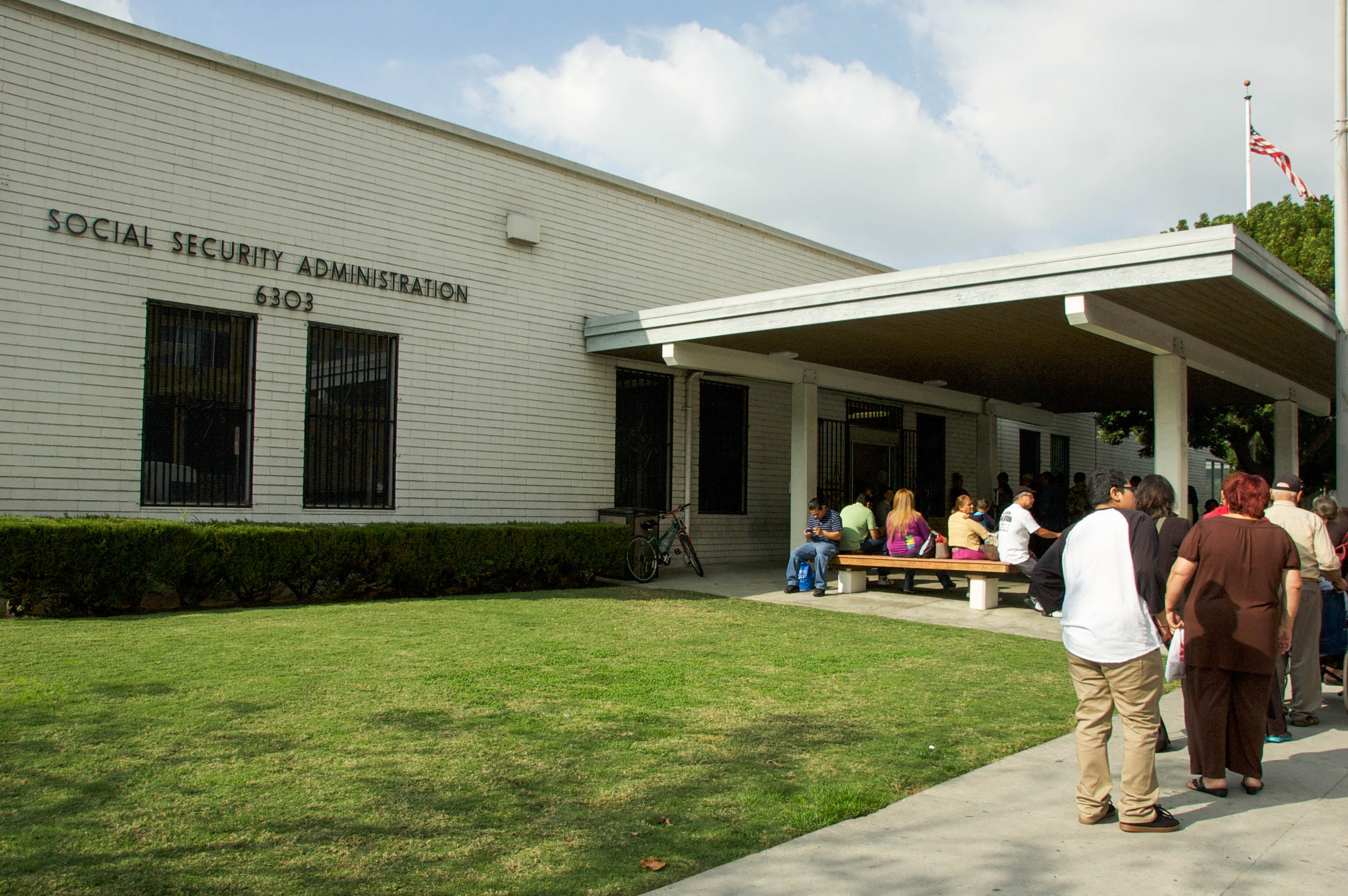
Day 5: On Monday I made my first trip to Huntington Park and strolled through the downtown, which was bustling with activity. I met with Strela Cervas from the California Environmental Justice Alliance, a coalition of six California environmental justice groups. We discussed the challenges and opportunities of scaling up local battles into statewide policy work in Sacramento. I heard more about their campaign to pass a Green Zones initiative and their support of AB 1330, which would increase enforcement of environmental law in communities overburdened with pollution, and also channel more resources to them. I also learned more about about their “Solar for All” campaign to provide clean energy and jobs in low-income communities through investment in rooftop solar energy production. The need for environmental clean up as well as jobs in the communities in which environmental justice advocates work was poignantly underscored when I passed by long lines of people outside the Social Security Administration building on my walk back to the car.

Line at the Social Security Administration building in Huntington Park

The Los Angeles River

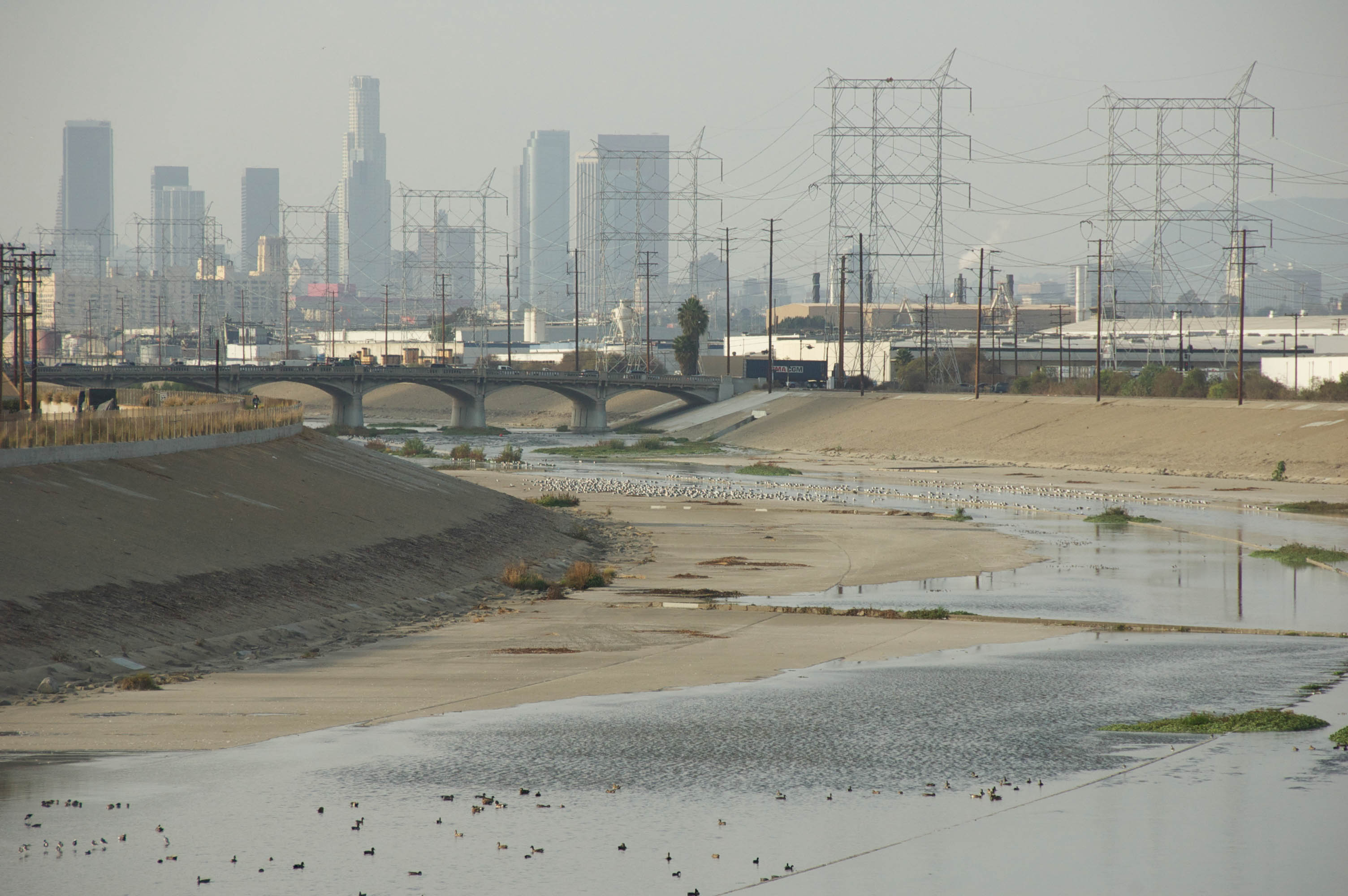
I had a bit of free time before my next meeting, so I drove by the Los Angeles River to take a few photos. It looks more like an industrial flood channel than a river, but I found it strangely attractive nonetheless and enjoyed taking photos of it. Check out long-term plans to revitalize an 11-mile stretch of the river here.

The Los Angeles River

My next interview was with Felipe Aguirre from the Comité Pro Uno in Maywood. Over the din of the trucks passing outside, we spoke about his many years of activism, his role on the Maywood city council, and the air pollution and contaminated drinking water faced by Maywood residents. Felipe told me that he first got involved in environmental justice advocacy when he found out that pollution where he lived was so bad that an administrator at a local school made a habit of referring the kindergarteners from his neighborhood to doctors who screened them for lead poisoning.  

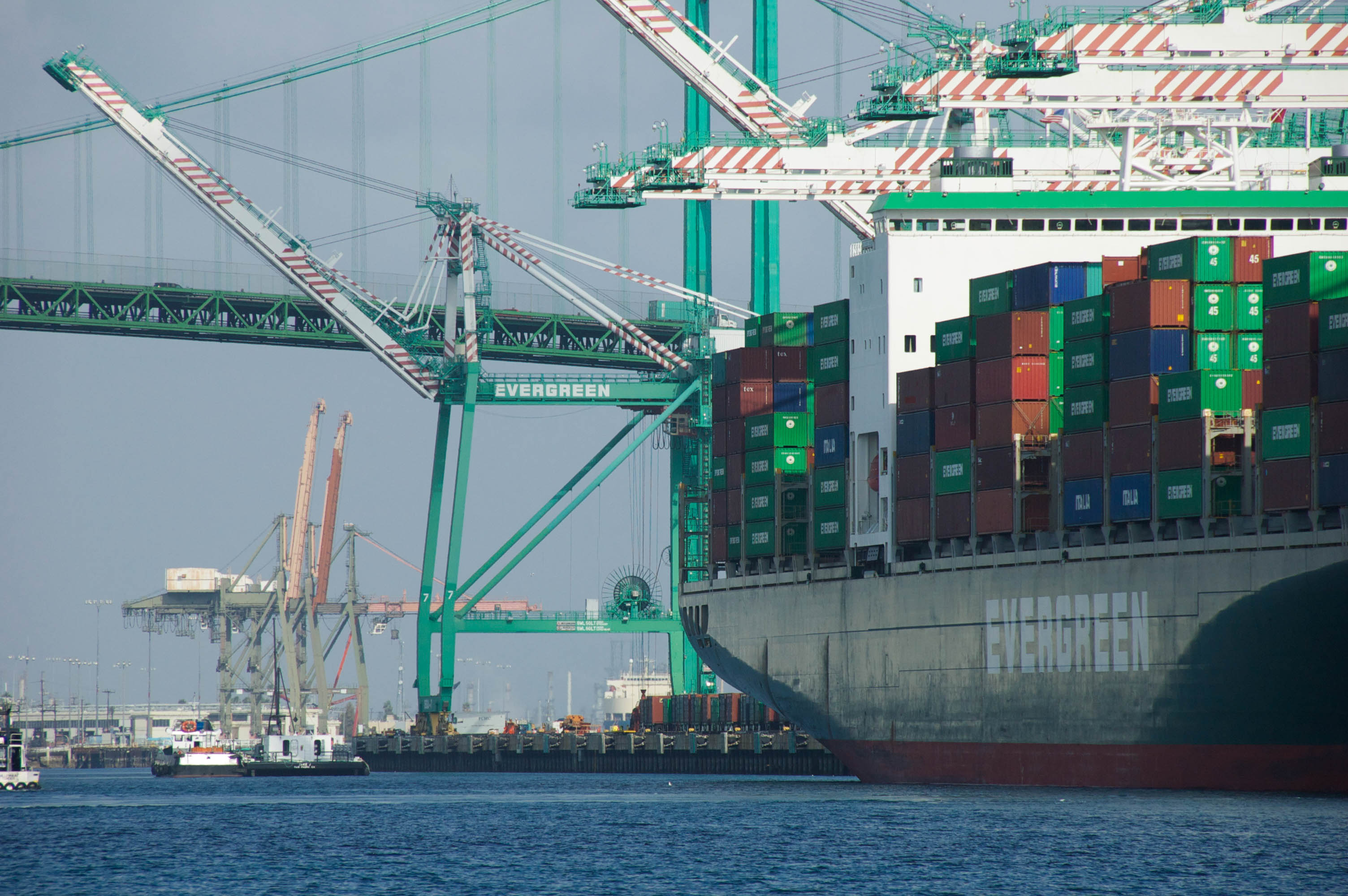
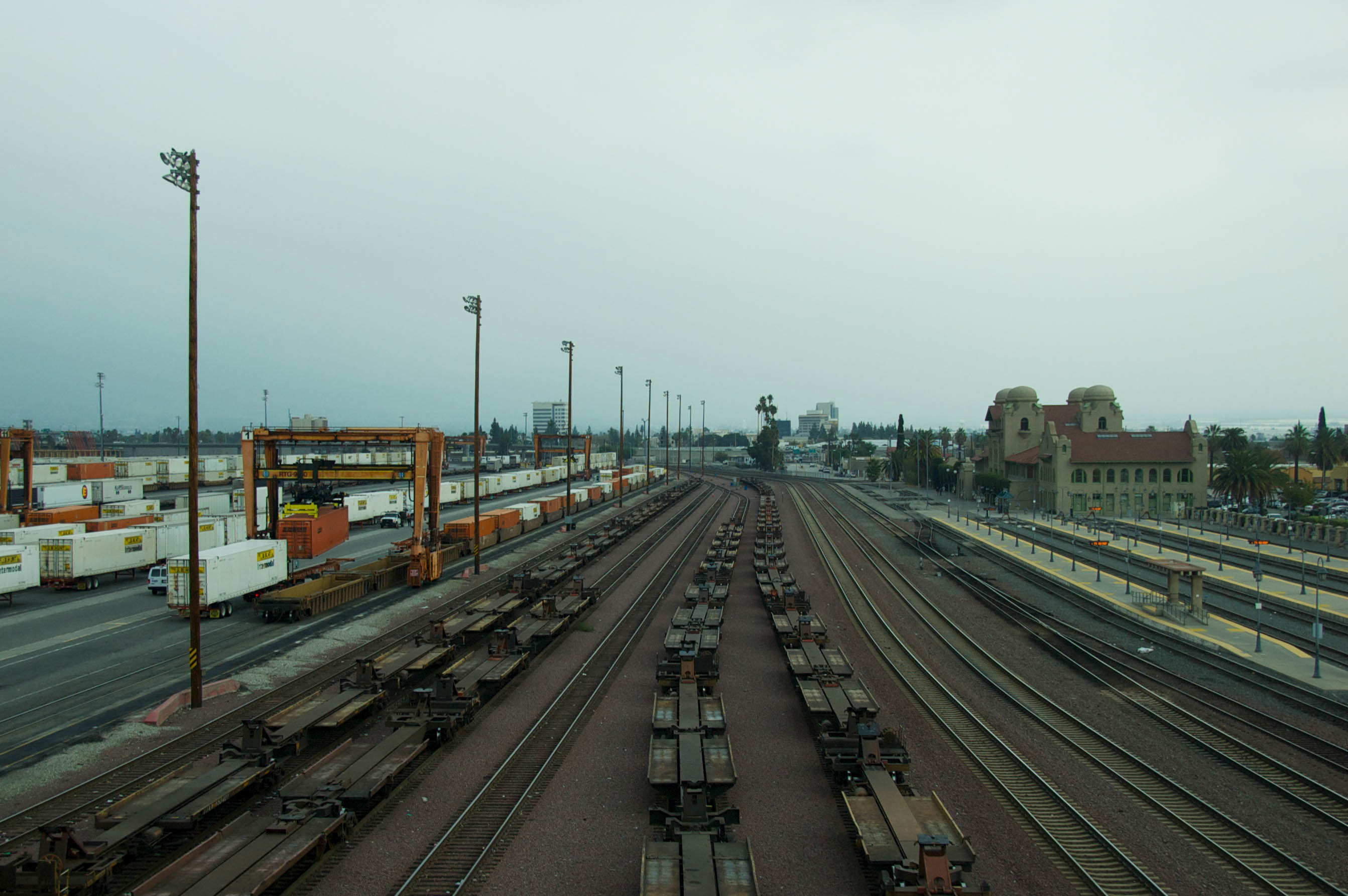
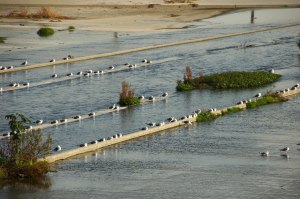
Day 6: On Tuesday I joined a visiting group of environmental justice activists from Houston on a tour of the ports, railroads, freeways and warehouses in Los Angeles and the Inland Empire.  This transportation system moves a vast quantity of goods every day. The neighboring communities suffer the consequences through air pollution, asthma, cancer and sometimes even fires and explosions. Over the course of the day we:
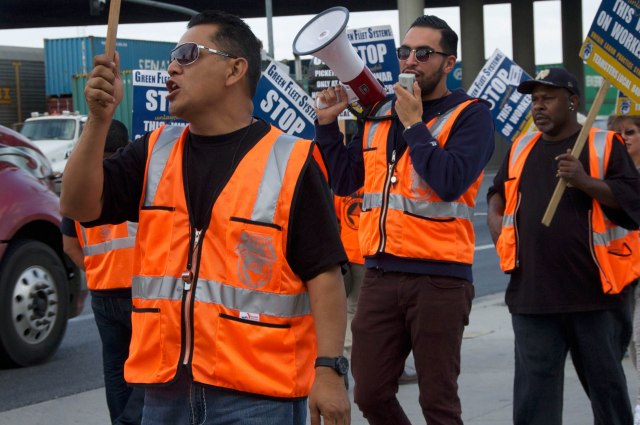
Picket line in front of Green Fleet Systems

Teamsters Local 630

Truck drivers taking a break from the picket line (names withheld by request)

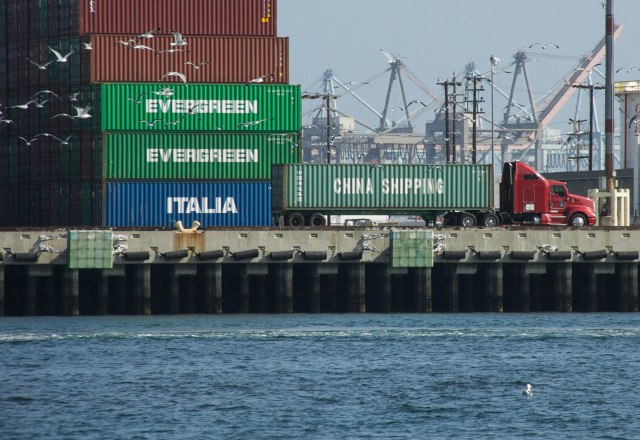
Tracing the infrastructure of the global “logistics industry” from sea to mountain was daunting.  I already knew that environmental injustices are deeply embedded in global commerce, but watching the massive quantities of goods moving through the area brought it home in a concrete way I’ve never felt before. These lists of exports and imports through the area give a taste of just how deeply entrenched our society is in the international flows of goods:

Top imports coming through the LA and Long Beach ports:

  • Clothing
  • Furniture
  • Auto parts
  • Electronics
  • Shoes
  • Crude oil
  • Plastics
  • Chemicals

Top exports exiting through the LA and Long Beach ports:

  • Food
  • Scrap metal
  • Scrap paper
  • Animal feeds
  • Cotton
  • Resins
  • Petroleum coke and other petroleum products
  • Coal
  • Chemicals

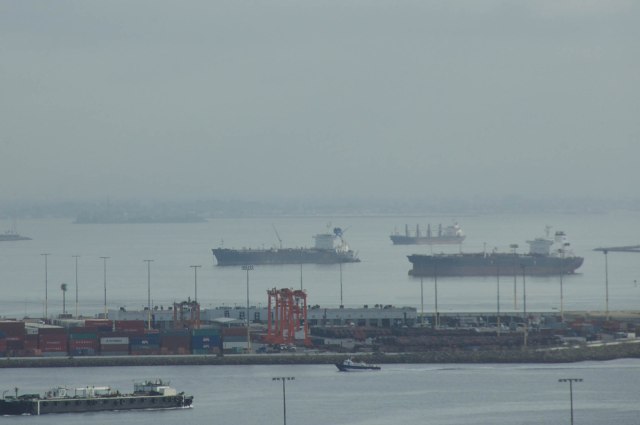
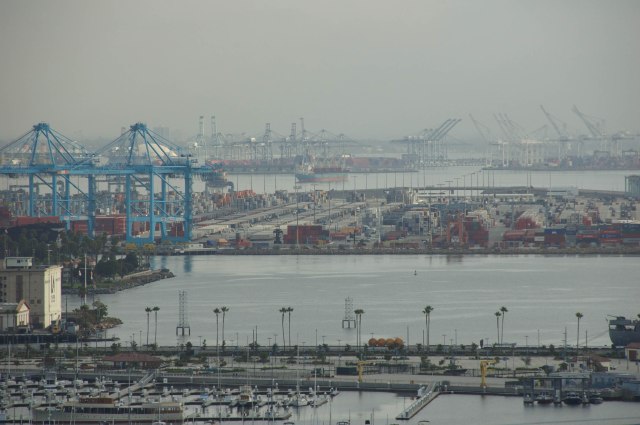
Cargo ships at the Port of Los Angeles

The Los Angeles and Long Beach ports

Railroads cary cargo inland from the ports

Over the course of the day we used the buddy system to make sure nobody got left behind when we got back on the bus after each stop.  My buddy for the day was Juan Parra of Texas Environmental Justice Advocacy Services. We discovered we had a few friends in common, and I enjoyed hearing about the early days of environmental justice advocacy in Texas and the Southwest from him. We also spent part of the drive looking at the Google Map on my smart phone.  We used the satellite view to zoom in on the port of Houston and the neighborhood of Manchester where some of his group lives. Juan pointed out a house that we could see was surrounded on three sides by oil tanks and other industrial facilities.

The irony of spending the day driving and using electronics to learn more about environmental justice problems that result in part from pollution due to driving and electronics manufacturing was not lost on me. But although we’re all implicated in the planet’s environmental crisis, some of us are less implicated than others.  Low-income communities of color usually contribute less to the problem while suffering its impacts more. And like all advocates, we do the best we can with the tools at hand while working towards something better.

Day 7: On Wednesday I joined the group from Houston again as they met with an array of local environmental justice advocates and scholars.  After our morning meetings concluded, we went on one final “tour.”  Alicia Rivera from Communities for a Better Environment drove us through Wilmington, mostly to parts of the town I had not seen before. At one of our stops Francisco Vargas saw us and came out of his home to talk with us. He lives next to the Warren E & P urban oil-drilling site we were looking at. Francisco described how the drilling shakes the earth and has cracked his home’s windows and foundation. He told us that in response to his requests for financial help fixing the damage the company offered him vouchers to get his car washed instead.  In spite of his hardships, Francisco shared a few laughs with us before we went on our way. See page 6 of this report for background information on the drilling site.

View from the car in Wilmington

DSC_0033Francisco Vargas and Alicia Rivera at the Warren E & P drilling site in Wilmington

The immensity of the powers arrayed against communities trying to protect themselves from the pollution I saw in LA and the Inland Empire was staggering.  That’s why it was so inspiring to learn about the issues alongside the group of advocates from Houston, who are anticipating port expansion projects of their own. They were here to get a sense of what port expansion can mean, trade ideas, and learn from what California advocates have been able to accomplish. Although I’ve lived in California since I was five, the fact that I was born in Houston made me feel a special kinship with this group.  I’m grateful to them for sharing their learning experience with me, and to the Los Angeles environmental justice community for their hospitality and warm welcome.

The Houston group

Link roundup: Resources for teaching environmental justice

I’ve come across a variety of intriguing online resources in past months that I keep meaning to write-up into a variety of teaching tools. But time is short so instead I’m posting them all here, with a few short ideas on how they might be used in the classroom. Happy teaching!

Race and the outdoors

  • Stuff white people like: camping A tongue-in-cheek send-up of camping, camping culture, and the disproportionate participation of white people in camping. Could be a great way to stimulate classroom conversation about outdoor activities and race. I could see reading the post aloud and asking the following kinds of questions to get the conversation rolling: How many of you like camping?  How many of you don’t? Does this post ring true to your experience of camping or not camping? Does this post seem like an accurate representation of camping? Does this post seem like an accurate representation of who camps? Why do you think white people are the dominant participants in so many recreational activities in the outdoors?
  • Diversity and the outdoors – google hangout with Allison Chin (Sierra Club), Audrey Peterman (Legacy On the Land), Javier Sierra (Sierra Club en Español), Juan Martinez (Children and Nature Network), Rue Mapp (Outdoor Afro) and Rusty White (surfer). People of color outdoor-leaders discuss how they got interested in the outdoors and how to get more people to join them. This video would be a good follow-up to the “Stuff white people like” blog post described above because it contradicts it in some ways. You could ask students to consider how the leaders featured in the google hangout might respond to the “stuff white people like” blog post.  Would they agree or disagree with its content?
  • America’s forgotten black cowboys This article could help students question racialized narratives of the American West, as well as to consider the historical experiences of people of color in the American outdoors.

Race, Nation, and Agriculture: The “God Made a Farmer” Videos 

I could imagine showing the first video without any introduction and asking the following questions at the end of it:  Did you notice anything odd about this video?  Was anything missing? If the students can’t think of anything, show the second video and ask them the question again. The point would be to launch into a discussion of the video’s startling use of white people to represent farming in America, in spite of the fact that the vast majority of people working in this industry are Latino. This could be a fruitful jumping off point for discussion about framing, narrative, representation, race, the history of farming in America, or any number of other juicy topics. Be sure to discuss what the difference between a “farmer” and a “farmworker” is. Child labor could make for an interesting and relevant topic for a follow-up conversation too.

Data

Other data sources. See this activity for ideas on how they could be used.

Multimedia 

I’m not sure how I would use these in the college classroom, but wanted to post them here for future reference.