I recently attended Greenaction’s second annual Walk for Health and Environmental Justice in San Francisco’s beautiful Golden Gate Park. We had a great time connecting with and honoring the people who don’t get to live near such green parts of the city and state. Here are a few photos:
Category Archives: Photography
Photos showing at the Fresno Regional Foundation
I got word today that the photos in my 25 Stories from the Central Valley collection have been hung and are already generating good conversation at the Fresno Regional Foundation. I haven’t seen how they look yet so if you are visiting their offices while they are on display over the next six months, snap a photo of them and send it to me!
Visions of the San Joaquin Valley
I spent time yesterday looking at Barron Bixler’s photographs of agriculture in the San Joaquin Valley. He’s arranged his photos into a beautiful slideshow set to music called A New Pastoral: Views of the San Joaquin Valley. I’ve formed my own vision of the San Joaquin Valley over the last few years, and it’s fascinating to see how someone else views and presents the region. Some of Bixler’s photos depict scences familiar to me – stark landscapes of row-crops, orchards with factories in the background, agricultural machinery, railroads and storage facilities. I loved seeing these familiar places through his eye. Others show places I’ve never been, like the inside of an industrial milking facility.
Bixler’s photos are entirely devoid of people – they depict industrial agriculture through the landscape and built environment it creates. Matt Black’s photos, on the other hand, center on the immigrants and farmworkers living and working in the San Joaquin Valley. They are entirely human. I enjoyed checking his captions to see if the small towns he has depicted were places I’ve spent time in too (mostly not). He has also created a powerful digital project about the birth defects in Kettleman City.
David Bacon’s work doesn’t focus on the San Joaquin Valley per se, but he has a number of photo collections of farmworkers, immigrants, and UFW advocacy set there. See his work here and here.
Finally, Ken Light’s new photographic book, Valley of Shadows and Dreams, will be published soon by Heyday Press. I saw some of his work on this project when I took his documentary photography class several years ago at UC Berkeley, and can’t wait to see the finished product. Check out the photo on the book’s cover, it’s gorgeous.
And, here’s a link to my own humble efforts to photograph the San Joaquin Valley. I try to show the grave environmental health problems facing this region, but also the hard work being done by its residents to change things. I also try to convey my sense of this under-appreciated part of our state as beautiful in its own right. An updated version of this collection will be online soon, as well as a nifty new collage that combines new photos with oral history.
San Joaquin Valley olive harvest
I took photos of the olive harvest outside of Exeter yesterday morning with Juan Gomez and his crew:
Day at the newest UC
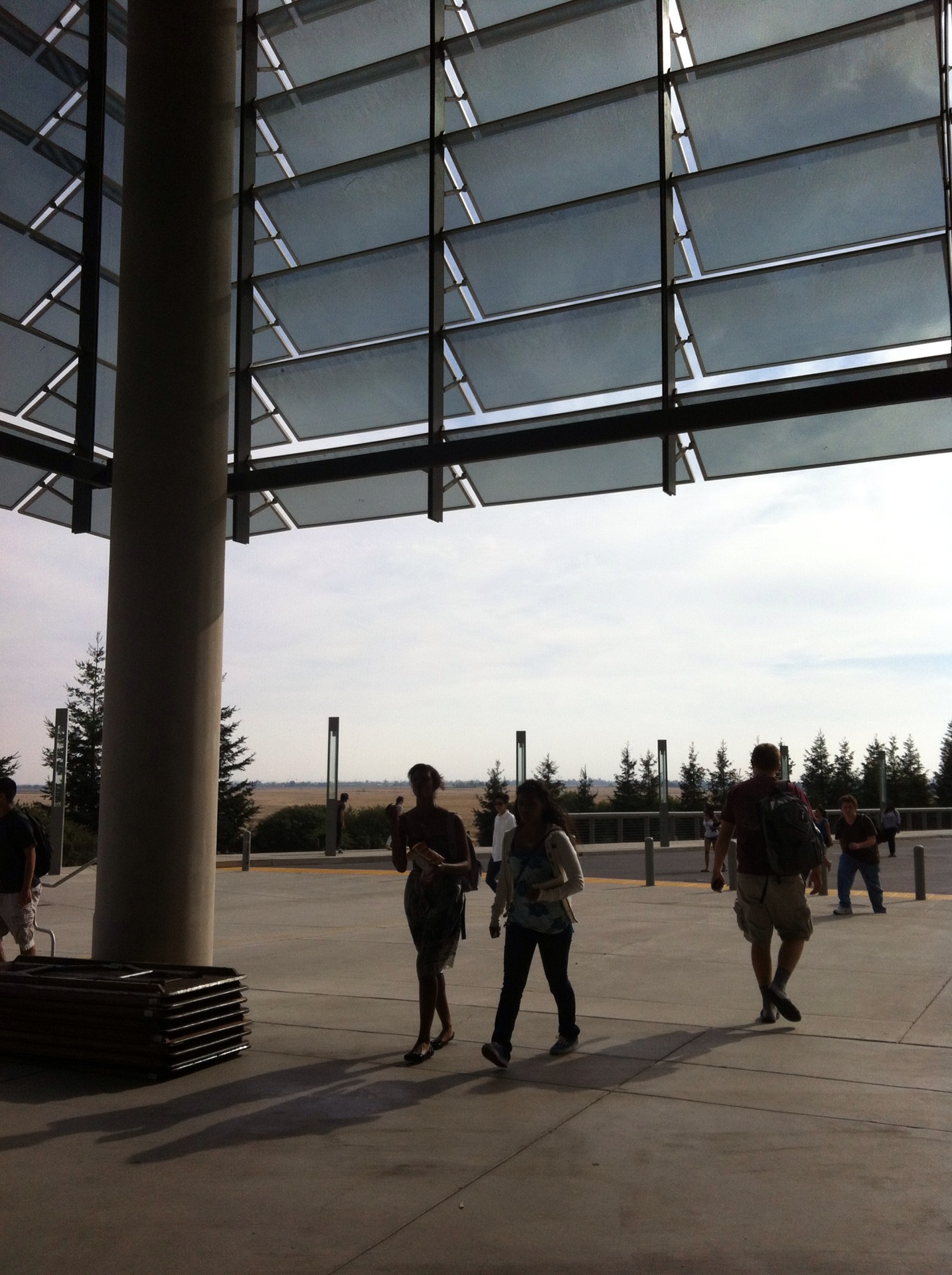
I spent yesterday visiting UC Merced – the state’s newest University of California campus, and the first in the San Joaquin Valley. It’s small but quite impressive! They have about 5,000 students, mostly undergraduates, and will grow into a larger university over time. Here are a few shots of their modern buildings and grounds. (The buildings are all LEED certified. Check out the reflective panes attached to the walls of the library to reduce cooling costs, and the gravel parking spots that reduce runoff.)


Doing sociology in Las Vegas
Las Vegas. 106 degree heat. 6,000 sociologists. Put them together and what do you get? The 2011 annual meeting of the American Sociological Association! Here are the highlights, lowlights and general weirdness from my six hot, loud, strange days in Las Vegas:
– Gave three talks in three days. : (
– Got some awards! : )
– Indoor smoking.
– Paid $14 to print a two page document.
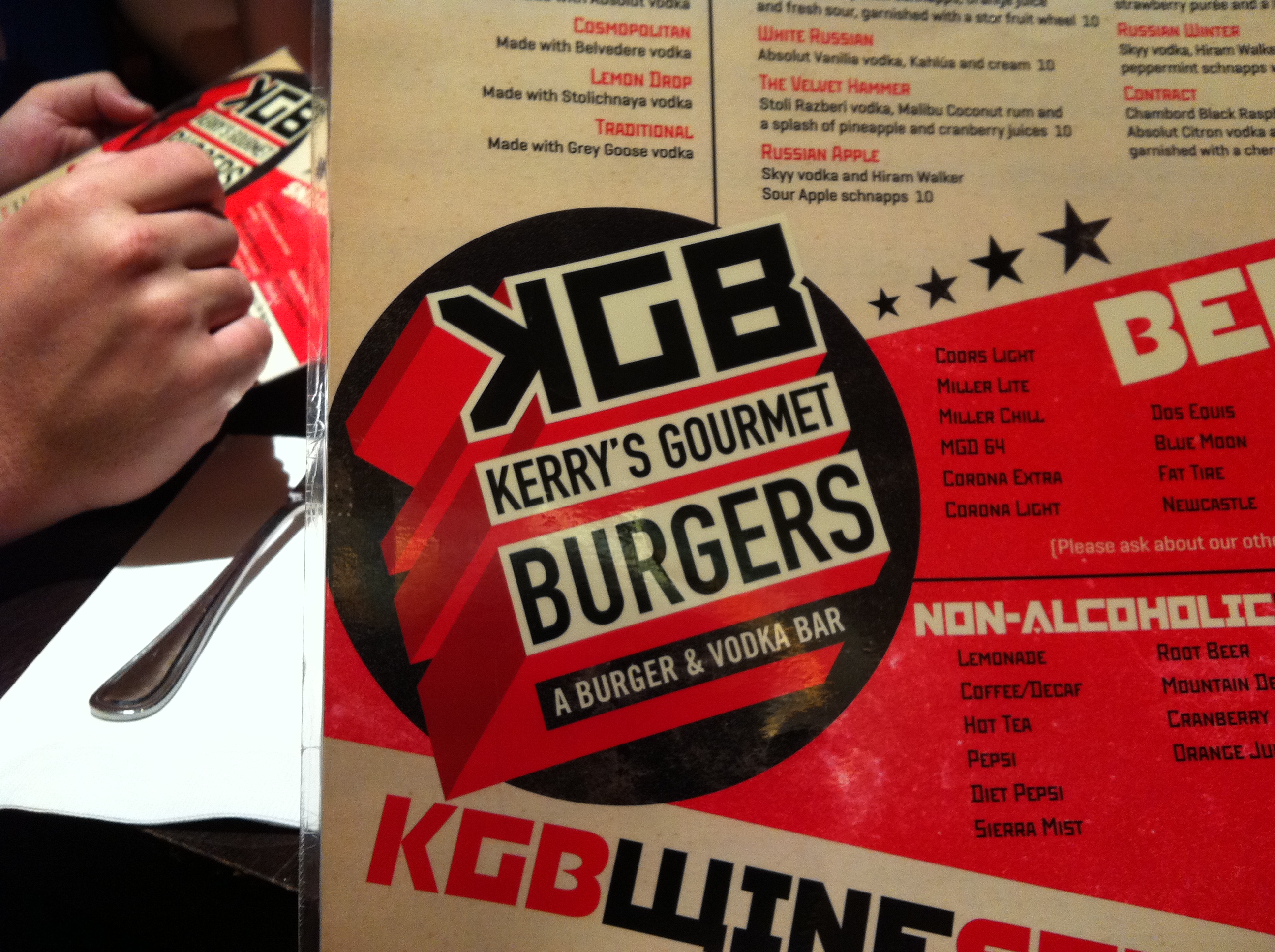
– Had dinner at the “KGB Burger and Vodka Bar.”
– Beautiful, drought-resistant landscaping at the UNLV campus.
– Misters around town still going at 10 pm, and already on again at 8 am.

– Had my photo taken with Frances Fox Piven!
– Asked Dr. Piven how she handled the Glen Beck attacks and death threats from his followers. She turned down personal armed guards but did have them posted outside the door of her classroom to protect her students. : (
– Attended a great talk on blogging by the creators of Sociological Images. They have something like 600,000 visitors a month and 12,700 Facebook fans. Check out their recent post on the US Postal Service stamp that features a patriotic close-up of the Statue of Liberty…. the one in Las Vegas.
– Went to the ASA blogger party and met the author of this neat blog on teaching sociology. Check out his “Dead Grandmas and Teaching Research Questions” post.
– Heard my advisor Andy Szasz talk about the military’s stance on climate change (it’s real) and what they think needs to be done about it (a lot). Riley Dunlap pointed out that climate change deniers have given the military a wide berth on this topic. Andy’s point was that the military could be a strong ally to environmentalists.
– Heard the most articulate, eloquent speech of the conference given by a woman from the Las Vegas chapter of the Sex Workers’ Outreach Project.
– $5 “express lane” lines to get into restaurants faster.
– Lounge chairs by the pool that you have to pay to sit on.
– A massive billboard of a woman’s butt at the intersection of Las Vegas Boulevard and Flamingo Road.
– Watched the “Hot Babes Direct To You!” billboard truck go by countless times. The idea that you could have a woman delivered to your front door like a package was somehow less distressing than the claim that these are “Girls that want to meet you.”

– Was really glad to come home to my own personal brand of weird in beautiful Santa Cruz.
24 hours with 5th Crow Farm
When I moved to Santa Cruz one of the first friends I made was a woman named Teresa Kurtak. Teresa and her business partners Mike Irving and John Vars were looking for land to lease so they could start a small organic farm. They found what they were looking for in Pescadero, and are now in their third growing season there.
Most of the photos I see of small-scale organic farms present them as rural idylls – beautiful, bucolic, peaceful. My experience watching 5th Crow Farm grow is that organic farms may be beautiful but usually entail working long, hectic days. My urban lifestyle is probably a lot more peaceful! Certainly that’s what I thought after tagging along with Teresa while she worked this weekend. Here are some of my photos and a blow-by-blow account of what we did…
****
8:30 pm, Saturday night: I stop at the grocery store on my way to the farm to buy dinner for Teresa and Mike. They’ve been harvesting for the Sunday farmers’ markets all day and haven’t had time to think about dinner yet.
9:15 pm: I arrive at Mike and Teresa’s yurt on the farm.
9:30 pm: Teresa and Mike have dinner, and then Teresa starts to prepare the printed materials she needs for the next day’s special event at the California Academy of Sciences.

10:00 pm: The printer isn’t working so Teresa heads out to find a working printer elsewhere. I go to bed.
Midnight: Teresa goes to bed.
3:16 am, Sunday morning: Roosters start crowing. : (
4:30 am: Alarm goes off. : (
4:45 am: Teresa and I get in the market truck, which they loaded yesterday, and hit the road.

5:30 am: We stop to pick up coffee to help keep us awake on the road. I also buy a pastry for my breakfast.
5:43 am: Dawn.
6:10: We’re the first ones to arrive at the site of the Inner Sunset Farmers’ Market in San Francisco. I try not to feel too guilty for taking photos instead of helping Teresa unload the truck and set up her stand…

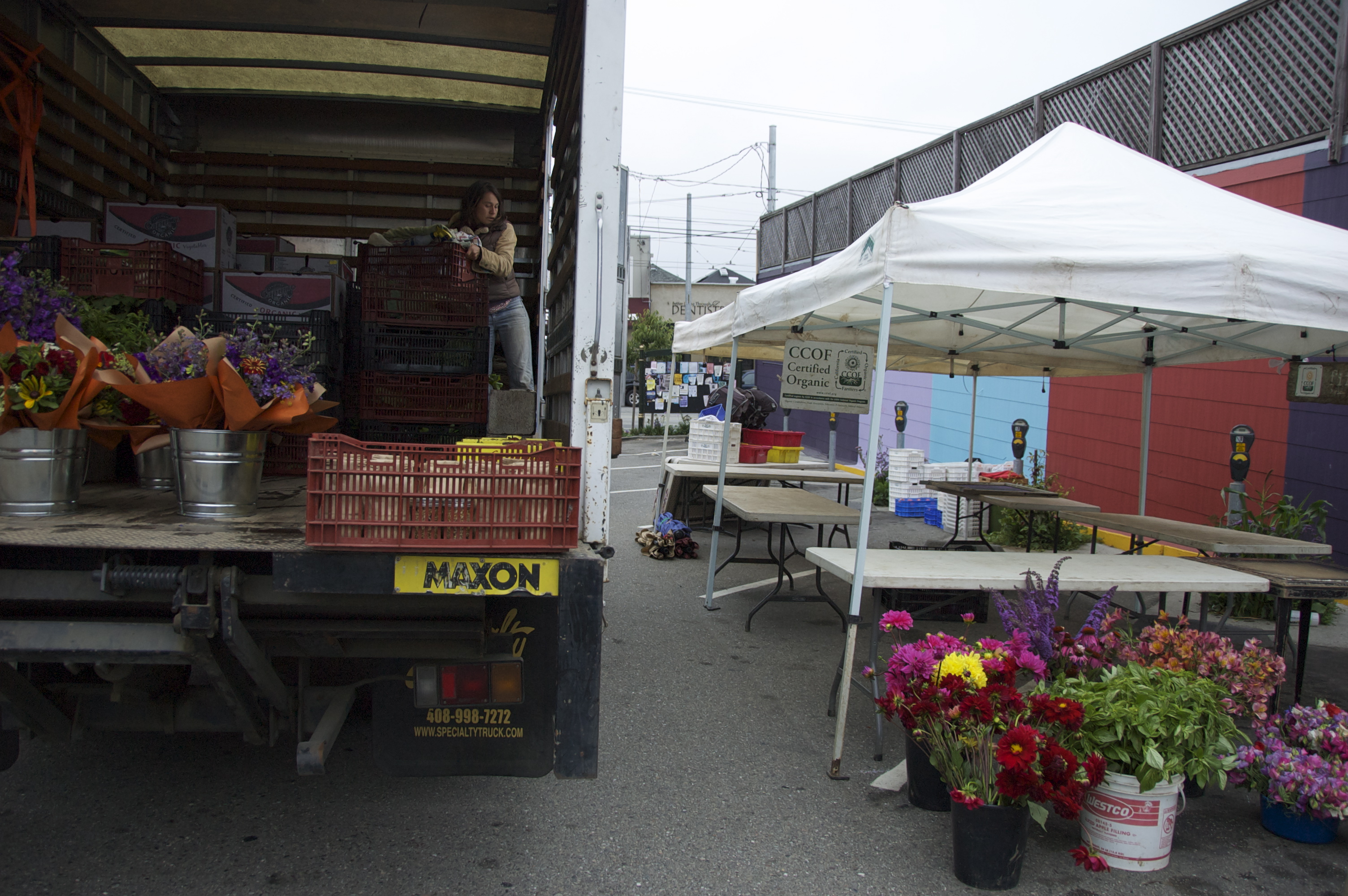
7:00 am: Teresa’s market helper, Anne, shows up and pitches in.
8 am: After they’ve unloaded the truck, we repark it in Golden Gate Park, and go back to finish setting up Teresa’s stand.
8:15 am: Robert MacKimmie of City Bees shows up and begins to set up his stand next to ours. Robert has become a good friend of the farm and is Teresa’s regular post-market dinner date. Today he’ll also be featured at the California Academy of Sciences’ first Local Bites event after the market.
8:35 am. I go across the street to Arizmendi Bakery to buy more coffee to help Teresa and Robert get through the morning rush. By the time I get back the market is officially open for business and there’s already a long line at the 5th Crow stand. Teresa spends the rest of the market lifting crates of produce and answering questions from the customers while Anne handles the money.

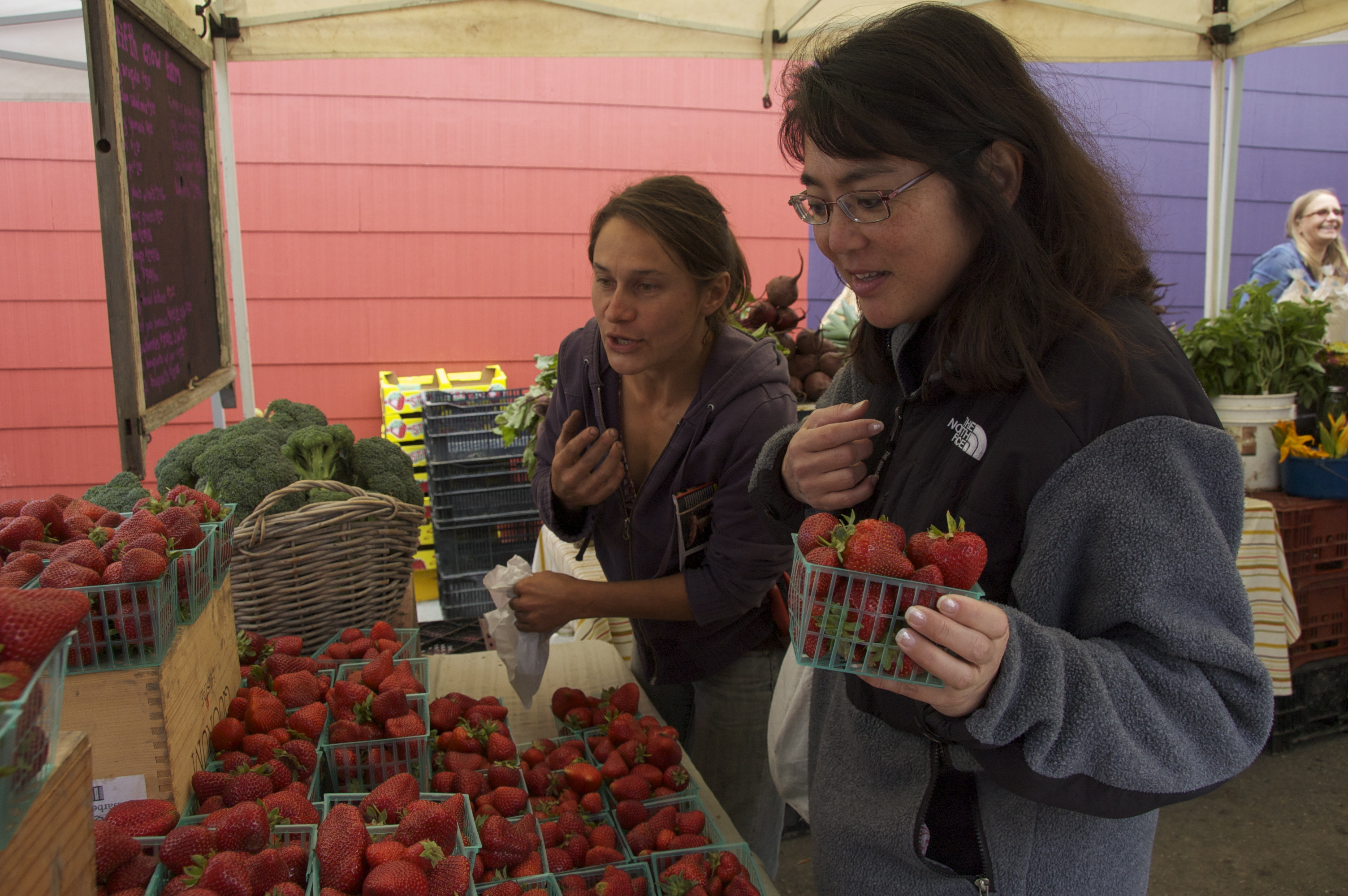

12:00 pm: Two of Teresa’s dedicated regular customers show up to help out, giving Teresa and me a chance to get her strawberry samples out of the truck in Golden Gate Park and walk over to the California Academy of Sciences to get the lay of the land.


1:00: By the time we’re done at the Academy of Sciences, the market has officially closed so we pick up the truck and drive it back to the market to load. Teresa, her helpers and Robert all pitch in to load the truck in a hurry. We drive it over to the Academy of Sciences, unload onto small carts and wheel the goods into the event-space. The vendors aren’t allowed to sell their products at the event, but Teresa brings some for display to give the guests a sense of what she grows. We get there late and set up her table while the band plays and the guests are moving around tasting the samples. Teresa gives out samples of strawberries, edible flowers and kholrabi, while continuing the lifting and talking that she’s been doing all day.
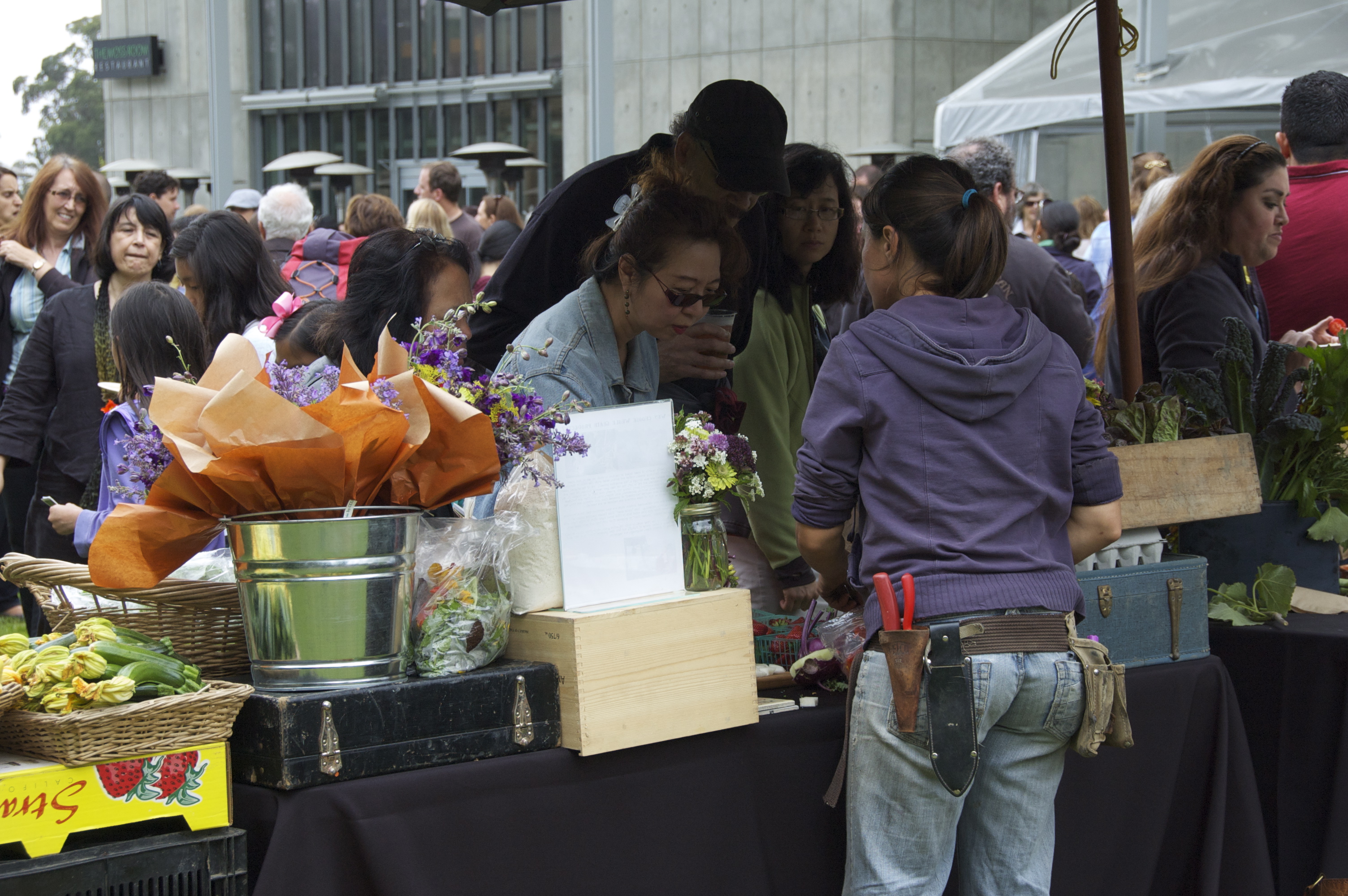
3:00: Bathroom breaks are hard to come by!

4:30: The event winds down early and we start packing up the produce, loading it back onto the carts, and wheeling it out to the truck to reload. 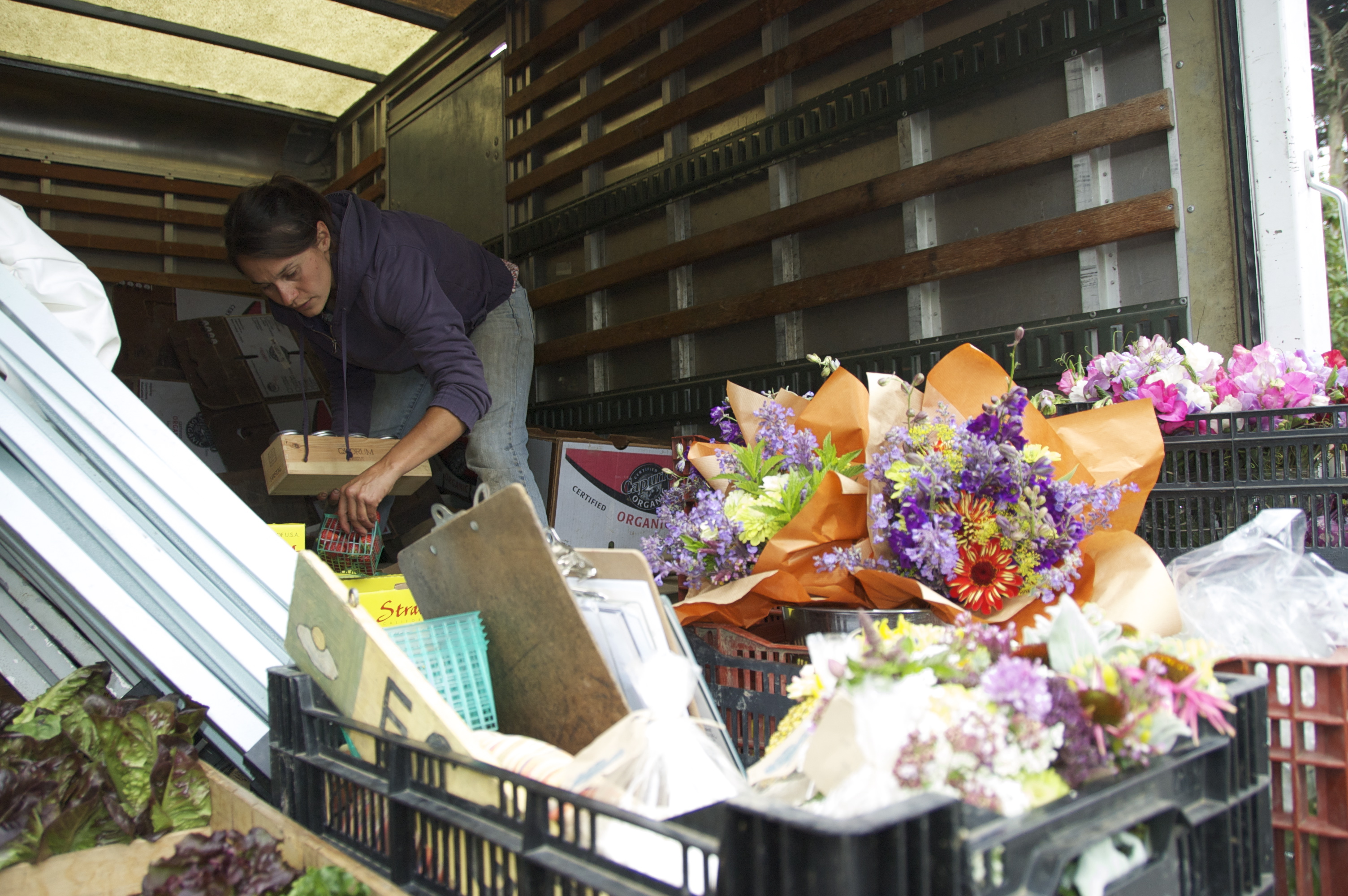
5:30 We take a break to stand around and talk with the helpers. Then we drive the truck back to the market site, which is once more a parking lot, unload Robert’s stuff into his own car, and find a place to eat. Teresa talks with her hands a lot.
6:15: Dinner! This is the first time Teresa has sat down since getting out of the truck at 6:10 in the morning. Robert is still wearing his bee antennae : )

7:30: We walk to a cafe to buy coffee to help Teresa stay awake on the drive home and get back on the road.

8:44: Dusk
9 pm: We get back to the farm. Teresa decides to postpone unloading the truck until tomorrow morning and I drive home.

******
To see more photos from my day with Teresa, click here.
Academics and the creative process

Mike commenting on a finished work.
This week I got a personal tour through New Mexico artist Mike Bell’s paintings. Now, artists and academics are usually depicted as two entirely different types of people. Artists are free-thinking, soulful and sometimes a little wild, while academics are uber-rational eggheads who delight in flow-charts, facts and logic (right?!).
Nonetheless, I think academics have a lot to learn from artists. We don’t usually talk about our work as a creative endeavor, but the process of shaping our own ideas, making unexpected connections between events and ideas, and writing about the social world involves a touch of mystery that artists seem much better equipped to think about than academics are.
The more I hear Mike and other writers, sculptors and creative types talk about their work process, the more I learn about my own. We all need to find ways to keep our creative juices flowing in spite of other, often more pressing, demands on our time. We struggle to value our ideas enough to try to realize them, to learn who is helpful to discuss early-stage ideas with and whose commentary will have toxic impacts on our work, to navigate the pressure to be our own best publicist with competing instincts to be humble. Sometimes we think our creations are terrible as we are making them and then come back later and realize they aren’t half bad.
Beginning scholars in particular need all the help we can get in navigating the creative terrain of our work. I’d love to find ways to bring us more formally into conversation with artists! In that spirit, please send in any of your own creative practices and tips!
My creative process involves lots of post-its…
Research assistant asleep on the job

Californians without clean drinking water – slideshow
When I talk to people about my research in the San Joaquin Valley, one of the things they are surprised to learn is that many small communities there don’t have safe drinking water. It’s the kind of problem people associate with third world countries, not the USA. Nonetheless, pollutants from pesticides, fertilizers, mega-dairy sewage and old pipes as well as naturally occurring arsenic get into the drinking water in some Valley towns. Sometimes what comes out of the tap is brown and smells like sewage.
In our interviews, some women described the notices they get in the mail that tell them their drinking water is contaminated, but is safe to keep drinking. Further down the page, however, the flyer often states that if they drink the water for many years they could be more likely to get cancer. For women who had already been drinking the tap water in these towns for many years, these notices were frightening to say the least. Other women described having their water systems shut down, driving long distances to purchase bottled water, or having skin problems and hair loss.
So, I’ve been pleased to see the drinking water problems in the Valley getting more attention recently. Yesterday California Watch reported on the “Human Right to Water” package of bills now in Congress. Schwarzenegger vetoed many of them in the past, but perhaps they’ll have better luck with Gov. Brown. Earlier this year the UN Special Rappoteur on the Human Right to Water and Sanitation also visited the Central Valley to raise the visibility of drinking water problems.
Press
- Clean Water Advocates Try Again for Reform by Jamie Hansen, California Watch, May 3, 2011
- Farmers: Do your part on pollution by Bill McEwen, The Fresno Bee, April 18, 2011
- Video: UN Expert Learns About Valley’s Drinking Water Problems by Rebecca Plevin, Harvesting Health, March 3, 2011
- UN Studies Tulare Co. Town’s Tainted Water by Mark Grossi, the Fresno Bee, March 1, 2011
- Lost in the Valley of Excess by John Gibler, Earth Island Journal, Winter 2011
- Not a Drop to Drink, by John Gibler, Terrain Magazine, Winter 2005
Videos
- Contaminated drinking water in California’s Central Valley Produced by Jim Downing, Switzer Network News, March 2011
- … and not a drop to drink Los Angeles Times, 2010
Reports
- The Human Costs of Nitrate-contaminated Drinking Water in the San Joaquin Valley Pacific Institute, March 2011
- Water and Health in the Valley: Nitrate Contamination of Drinking Water and the Health of San Joaquin Valley Residents Community Water Center, 2010
- Thirsty for Justice: A People’s Blueprint for California Water Environmental Justice Coalition for Water, June 2005
Organizations
 Tracy Perkins